Get Full Government Meeting Transcripts, Videos, & Alerts Forever!
Get email alerts on the Renewable Energy Geothermal topic
No spam. Unsubscribe anytime.
Geothermal exploration bill draws debate over CEQA exemption, tribal and water concerns
Summary
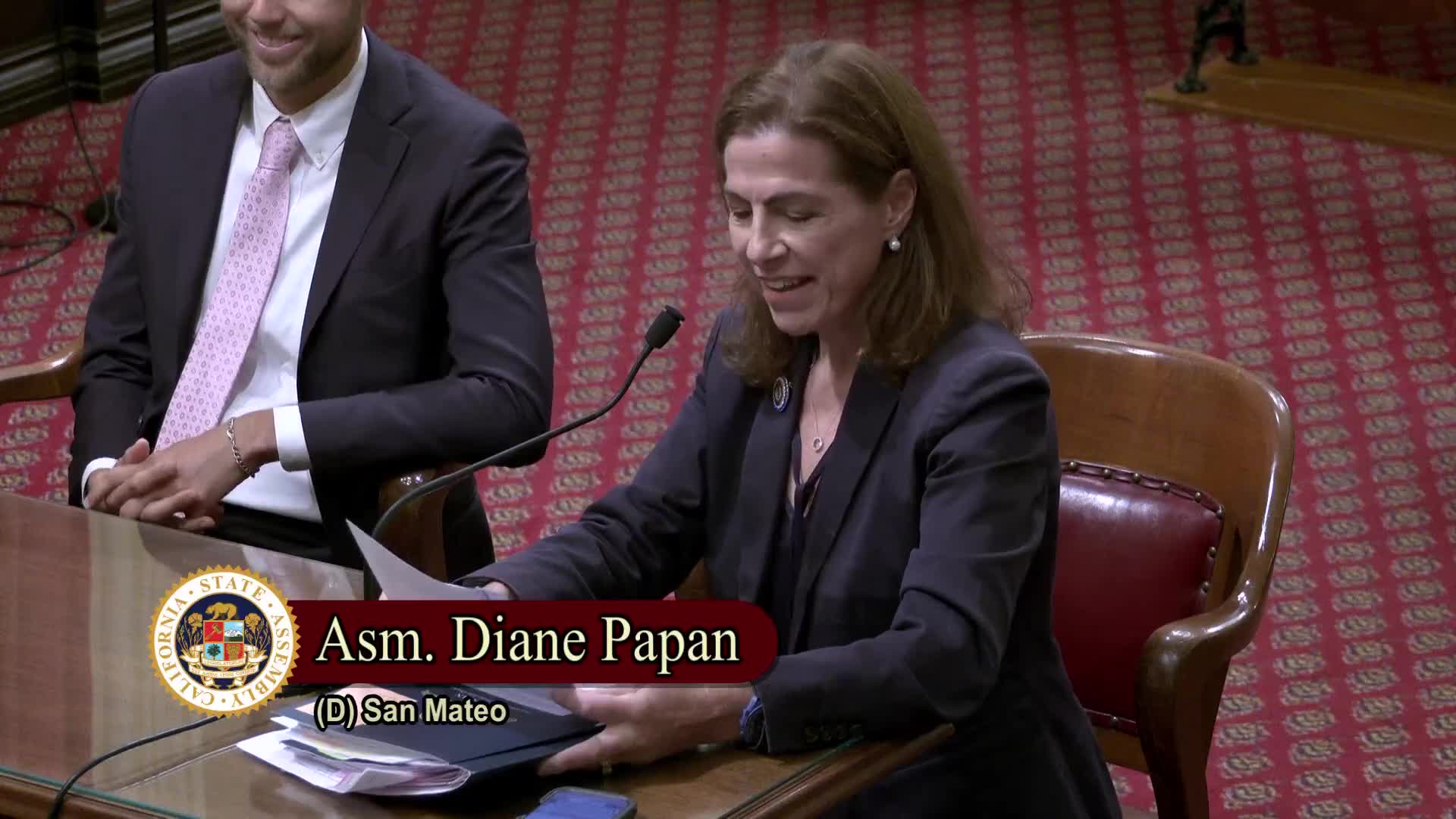
Assemblymember Pappen presented AB 527 to create a limited CEQA exemption for exploratory geothermal wells that meet environmental standards, aiming to reduce duplicative review and speed development of geothermal energy in California.
Assemblymember Pappen presented AB 527 to create a narrow CEQA exemption for exploratory geothermal wells that meet specified environmental protections. The author and supporters said the change would reduce duplicative reviews that currently treat exploratory and full projects as separate CEQA projects, slowing development and driving investment out of state.
Support testimony: Myles Horton of Sonoma Clean Power and Matt Cremins of the California‑Nevada Conference of Operating Engineers testified in support, saying geothermal (including newer enhanced geothermal systems, EGS) is a reliable renewable resource that complements solar and wind and can help the state reach climate goals. Supporters said the Biden administration and Council on Environmental Quality adopted federal categorical exclusions for similar exploratory projects and that California should align with that approach. Supporters emphasized safeguards including prohibitions on projects in wetlands or conservation lands, tribal protections and site reclamation requirements.
Opposition testimony: Kim Delfino representing Defenders of Wildlife and California Native Plant Society said significant concerns remain. Opposition cited three primary issues: (1) the bill’s allowance of up to 12 acres for an exemption (opposition noted conventional exploration average footprints of about 5 acres and said the larger area was driven by one company using hydraulic stimulation), (2) lack of clarity about protections for streams/riparian corridors and temporary roads, and (3) concerns about Enhanced Geothermal Systems (EGS) hydraulic stimulation and the chemicals used in fluids. Opponents urged that the public be able to access baseline information to participate in review.
Technical clarifications: Witnesses for proponents explained EGS differs from oil/gas fracking, describing a closed‑loop system drilled into hot solid rock, with chemicals used but operation designed so fluids are pumped in and contained in lined steel pipes and fractures rather than interacting with groundwater. Supporters pointed to permitting and reporting requirements to state regulators such as CalGEM and said the bill does not remove other permitting.
Committee action: The author accepted committee amendments that require baseline biological, hydrological and tribal surveys before the exemption can be applied. Several members said they appreciated the balance of protecting the environment while reducing duplicative review; some members remained concerned and reserved votes. The bill was advanced to Natural Resources and Water for further consideration.