Get Full Government Meeting Transcripts, Videos, & Alerts Forever!
Get email alerts on the Antitrust Algorithms topic
No spam. Unsubscribe anytime.
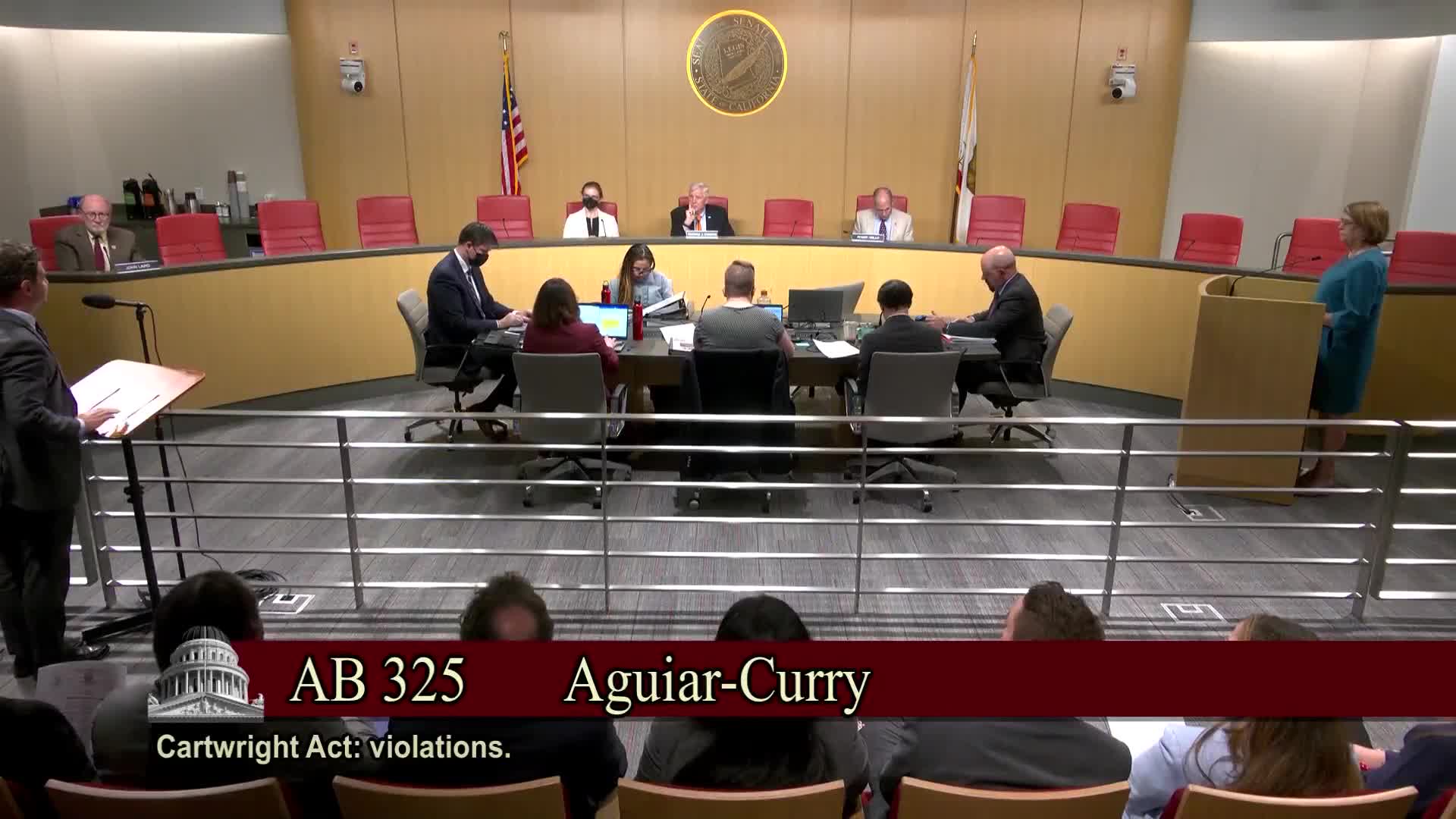
Senate Judiciary hears AB 325 to update antitrust law for algorithmic price-fixing
Summary
Lawmakers and advocates debated AB 325, a bill to modernize California antitrust law to address algorithmic and software-facilitated price fixing. Supporters said the bill protects small businesses and consumers from platforms that can coerce pricing; opponents urged tightened definitions and raised concerns about vagueness and litigation risk.
Assemblymember present the bill as AB 325, saying the state must update antitrust law to address modern tools that facilitate illegal price fixing. The author said amendments had been accepted to create safe harbors for good-faith business conduct, exempt end users who are not part of price fixing, remove joint-and-several liability for small businesses, and clarify certain data provisions.
Supporters described the problem as widespread. Lee Heppner of the American Economic Liberties Project told the committee that third‑party software platforms can act as “hubs” that remove independent decision‑making by businesses and that, in practice, algorithms have been used across markets from housing to groceries to coordinate prices. Doha Mecky, formerly the acting assistant attorney general at the U.S. Department of Justice, said algorithmic collusion is an evolving danger and urged prompt legislative action.
Opponents, including lawyers for the California Chamber of Commerce and business trade groups, said the bill remains overbroad in parts. Eric Ensign, representing CalChamber, said the coercion language is vague and not a traditional antitrust element, and warned the definition of a “common pricing algorithm” was too broad. The Civil Justice Association of California echoed concerns about ambiguity and potential remedies under the Cartwright Act. Trade associations representing tech companies and retail groups asked for narrower definitions and clearer standards for when software-based pricing advice becomes unlawful coercion.
Committee members asked about real-world examples, how platforms might coerce sellers (for example by conditioning marketplace access on the use of pricing tools), and whether the bill could capture ordinary competitive use of pricing algorithms that lower prices. Support witnesses described cases and alleged practices where sellers could face practical barriers to deviating from recommended prices.
The author closed by stressing the bill targets collusion and coercion, not ordinary pricing decisions, and asked for committee support so California law can “restore truly free market competition.”
Votes at a glance: The committee later moved AB 325 forward. (Motion recorded in the transcript; committee roll call recorded in the hearing transcript.)