Get Full Government Meeting Transcripts, Videos, & Alerts Forever!
Get email alerts on the Homelessness Camping Ban topic
No spam. Unsubscribe anytime.
Saratoga Springs adopts camping ban after hours-long public hearing amid legal challenges and dissent
Summary
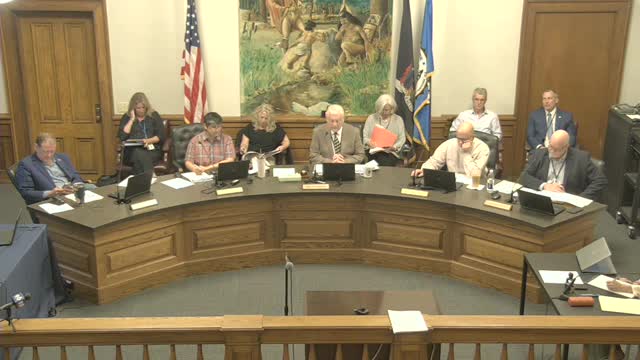
Saratoga Springs City Council voted 3-2 late Wednesday to repeal an older "sit/lie" sidewalk rule and adopt a new ordinance prohibiting camping, sitting or lying on certain public properties after a lengthy public hearing and sharply divided public comment.
Saratoga Springs City Council voted 3-2 late Wednesday to repeal a decades-old sitting-or-lying rule and adopt a new ordinance — chapter 95A of the city code — that prohibits camping, sitting or lying on specified public property, including sidewalks, parking garages, medians and gazebos.
The measure, introduced by Commissioner Tim Cole during a public hearing that drew scores of speakers, passed after heated public comments that ranged from personal stories of homelessness to warnings from legal and civil-rights advocates that the law risks criminalizing poverty.
Commissioner Tim Cole, the city—s public safety commissioner, told the council the ordinance is intended to "keep public spaces safe and accessible to all" and said the city would provide a notice period before enforcement and rely on the existing outreach court model to connect people to services. Cole said the ordinance imposes civil penalties — $100 for a first offense and $250 for subsequent violations — and does not create a criminal offense. He said police would give people roughly two weeks' notice before issuing citations and that outreach court under Judge Francine Vero could dismiss or conditionally dispose of cases, referring people to treatment or services.
Why this matters: The ordinance targets visible street camping and related activity in downtown public spaces during Saratoga's busy summer season, but opponents said the city lacks the shelter capacity and affordable housing alternatives to handle people who are cited. Multiple speakers, legal groups and service providers warned the law would funnel people into fines and court processes without guaranteeing housing or treatment.
Supporters including some downtown business owners and residents said the ordinance balances accessibility and compassion. "This ordinance takes a thoughtful and compassionate approach and includes clear exceptions for medical emergencies, public events, and ADA-compliant seating," said one downtown resident who identified herself as a local business owner, adding that warnings before citation mean enforcement emphasizes education over punishment.
Opponents were numerous and vocal. Melanie Trimble, regional director for the New York Civil Liberties Union—s Capital Region office, warned the draft ordinance "criminalizes not only real camping but a number of harmless behaviors" and quoted a line often cited in court challenges, saying in council chambers that "sleep is a biological necessity, not a crime." Several speakers pressed the council to delay action until the county or city secures more shelter capacity and affordable housing.
Several residents and service providers described limits on existing capacity: Cole cited a local code-blue emergency shelter that operates seasonally and said RISE Housing and Support Services operates a shelter on Adelphi Street with about 35 beds; Cole also told the council that during summer months a temporary facility had roughly 10 beds. Public commenters disputed those counts as insufficient to meet need.
Council deliberations focused on legal risk and operational details. City legal advisers and the council—s outside constitutional counsel were referenced during debate; council members split over whether the ordinance would expose the city to litigation or, alternatively, help the city manage public space problems. The council ultimately moved the ordinance to a vote following standard motions and a second.
The formal action: The council voted to "repeal Article 8B of Chapter 203 (Streets and Sidewalks — Sitting or Lying on Sidewalks) and enact Chapter 95A (Camping Prohibited on Certain Public Property)." The motion passed 3-2. The ordinance text establishes a notice period before enforcement, civil fines starting at $100 for a first violation and $250 for repeat violations, and exceptions for parks, medical emergencies and sanctioned public events.
What proponents say: Cole and several supporters framed the law as a tool to preserve public safety, increase accessibility for people with disabilities and give outreach efforts a clearer enforcement pathway that routes people into the existing outreach court rather than traditional criminal court.
What opponents say: Opponents, including the New York Civil Liberties Union, the National Homelessness Law Center (cited in public comment), and multiple local volunteers and service providers, said the city lacks adequate alternatives — permanent low-barrier shelter, sufficient shelter beds and affordable housing — and that the fine structure would trap people in debt or direct them into the justice system without resolving homelessness. Several speakers noted past community efforts to site a 24/7 low-barrier shelter that stalled amid zoning and neighborhood opposition.
Next steps: The ordinance includes an enforcement plan that begins with a notice period; specific department-level procedures, including how seized property would be handled, were not finalized on the council floor and will be addressed in administrative rules and interagency coordination. City staff said they expect to coordinate with county service partners and with outreach court operations to manage citations and potential conditional dispositions.
By the numbers and logistics (from council record and public comments): first-offense civil penalty $100; subsequent penalty $250; outreach court ("homeless court") referral expected in many cases; RISE shelter beds described in testimony as about 35; code-blue seasonal beds about 10 in summer months; public hearing attendance: dozens of speakers; council vote: 3-2 in favor.
Ending: The new ordinance takes effect as codified by the council vote and will be implemented under city administrative procedures; legal challenges or further legislative amendments are likely given the volume of public concern and national litigation trends around similar laws.