Get Full Government Meeting Transcripts, Videos, & Alerts Forever!
Get email alerts on the Logic And Accuracy Testing topic
No spam. Unsubscribe anytime.
Committee hears bill to preserve local control over logic‑and‑accuracy testing; clerks raise concerns about centralization
Summary
The Michigan House Committee on Election Integrity on July 1, 2025 heard House Bill 4602, a proposal intended to preserve local clerks’ authority over logic‑and‑accuracy testing and to prevent a single vendor from controlling the creation of test decks.
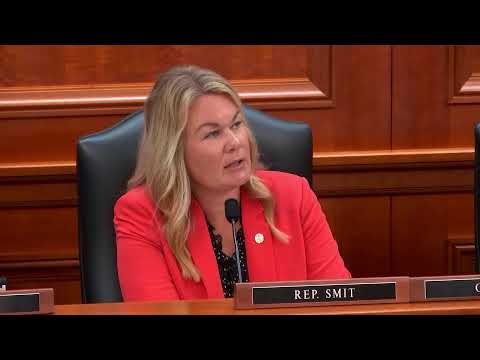
The Michigan House Committee on Election Integrity on July 1, 2025 heard testimony on House Bill 4602, legislation the sponsor described as preserving local clerk autonomy for logic‑and‑accuracy testing and preventing centralization of test‑deck generation. Chair Schmidt introduced the bill and framed it as a protection for locally administered election testing.
“Local clerks are the backbone of our election system,” Chair Schmidt said, arguing the bill would preserve flexibility, transparency and accountability by preventing a single vendor from monopolizing test‑deck generation.
Representatives of the Michigan Department of State told the committee the department has contracted through the Michigan Department of Technology, Management and Budget (DTMB) with BallotIQ to develop an expanded test deck and an electronic system to streamline ballot proof submission to the Bureau of Elections. Adam Fercasse, deputy director of elections for the Department of State, said the BallotIQ product is being developed as an option for clerks and that the department is still rolling out pieces of the system.
“We are not finished with this system. We are still in the works with it,” Adam Fercasse said. He described the BallotIQ test deck as an additional tool that would look for cross‑contest swaps across races beyond the current testing scope, and said the department is exploring ways to make this option available to clerks without cost.
County and municipal clerks and election administrators expressed concerns that the bill’s language is necessary because a sole‑source contract with BallotIQ could lead to de facto centralization. Clerks said centralized handling or storage of official ballots or ballot proofs outside the normal chain of custody raises security and transparency concerns. “A centralized depot of all of our official ballots could result in, a nefarious action where these ballots could be duplicated and then sent out,” said Lisa Postumas Lyons, Kent County clerk.
Clerks also described operational impacts from an expanded “robust” test deck. Lansing City Clerk Chris Swope said a pilot of the robust deck required roughly six or seven more ballots per precinct in a small local election and described the additional time and printing cost that would create at scale; Oakland County’s central early voting site, Swope and others noted, serves the equivalent of hundreds of precincts. “There are about 6 or 7 more ballots per precinct, and I have 32 precincts,” Swope said; he added that he did not have cost specifics at the hearing.
Department of State witnesses said the procurement was run through DTMB and that BallotIQ’s test deck would be peer reviewed and subject to standards, but they signaled willingness to work on clarifying language so the bill would not prevent legitimate oversight or the ability to adopt best practices if only one vendor initially met a new standard.
No committee vote was recorded on HB 4602; the bill was heard and multiple local clerks and county officials entered their positions into the record.