Get Full Government Meeting Transcripts, Videos, & Alerts Forever!
Get email alerts on the School Food Safety topic
No spam. Unsubscribe anytime.
House passes bill to restrict certain synthetic additives in school food
Summary
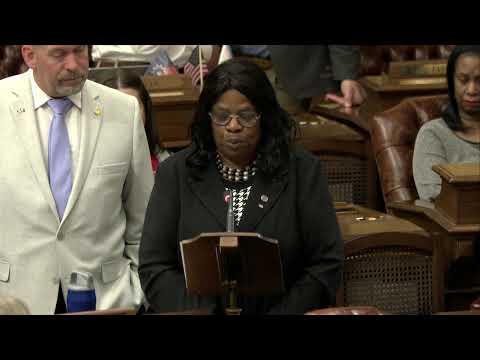
The Michigan House passed House Bill 4369 on July 1, 2025, a bill to amend the state Food Law to prohibit specified synthetic dyes and other additives in foods provided in schools; sponsor Representative Paquette framed the measure as a child-health and learning issue.
The Michigan House of Representatives on July 1, 2025 passed House Bill 4369, a measure to amend the Food Law to prohibit specified synthetic dyes and other additives in foods provided in public schools.
Representative Paquette, sponsor of the bill, told colleagues the measure targets ingredients ‘‘found to be detrimental to health and brain development’’ and argued school-provided food bought with taxpayer dollars should not contain those substances. ‘‘Food is medicine,’’ Paquette said. ‘‘We are what we eat.’’ He listed ingredients the bill would bar from school meals and snacks, including propylparaben, synthetic dyes, potassium bromate and brominated vegetable oil, saying ‘‘these ingredients are shown to be harmful and should not be found in food and drink provided by schools on the taxpayer dime.’’
Why it matters: the bill addresses what the sponsor described as a direct link between ingredients in some processed foods and student health and classroom performance. Paquette said the prohibition targets items commonly marketed to children and distributed in some school settings and that alternatives exist.
On third reading the House adopted an amendment and then voted to pass the bill. The clerk announced that a majority voted in favor and declared the bill passed. The majority floor leader moved for immediate effect, and the House ordered immediate effect.
The bill was described on the floor as an amendment to the Food Law; the transcript did not include the bill text or a full list of all products that would be affected. The sponsor said the legislation was written with input from toxicologists, nutritionists and parents, but the transcript did not include committee reports, fiscal notes or implementation details such as how school food contracts would be revised or how compliance would be enforced.
The House action completes legislative passage in the chamber; the bill’s further status (committee reports, companion measures in the Senate, or enactment timeline) was not specified on the floor during the recorded remarks.
Votes and next steps: the clerk announced the bill passed and immediate effect was ordered. The transcript shows a roll-call process was used for final passage, but the publicly recorded vote sheet and any committee analyses were not included in the spoken record on the floor.
Ending: The sponsor urged colleagues to support the bill as a step toward healthier school meals; the House gave the bill immediate effect and the chamber moved on to other business.