Get Full Government Meeting Transcripts, Videos, & Alerts Forever!
Assembly Health committee advances bills on maternity access, prenatal vitamin safety, data sharing and other public‑health measures
Summary
A California Assembly Health Committee hearing on July 1 advanced bills aimed at improving maternity‑care access, requiring testing and disclosure for toxic elements in prenatal vitamins, protecting parents’ birthplace privacy on birth certificates, strengthening valley fever surveillance, prioritizing local Medi‑Cal community providers, codifying nondiscrimination and prescribing rules for hormone therapy, and creating governance for statewide health data exchange.
A California State Assembly Health Committee hearing on July 1 advanced a set of bills addressing maternal health access, prenatal vitamin safety, public‑health surveillance and data sharing.
SB 32 (time and distance standards for perinatal units) and SB 646 (mandatory testing and public disclosure of toxic elements in prenatal vitamins) drew the most extended testimony on maternal‑health concerns. The committee also moved a bill to move parents’ birthplace information to a confidential section of birth records (SB 313), advanced a measure requiring annual identification of high‑incidence valley fever regions (SB 297), and voted to advance bills on Medi‑Cal contracting with local community providers (SB 324), codifying nondiscrimination protections and permitting 12‑month prescriptions for hormone therapy (SB 418), and creating a governance mechanism for California’s health data exchange framework (SB 660).
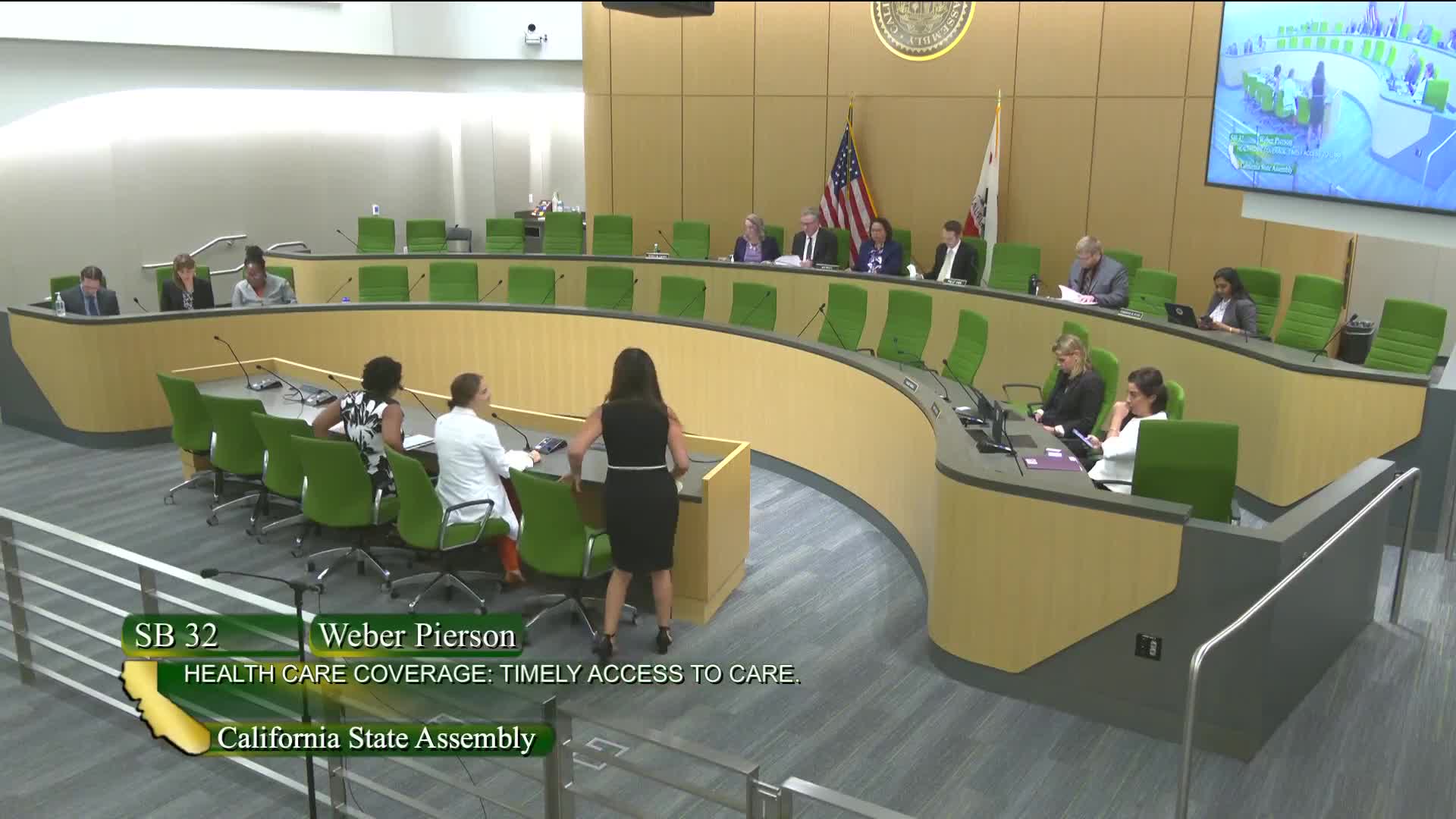
SB 32: time and distance standards for labor and delivery access Sen. presenting SB 32 told the committee the measure would require the Department of Health Care Services, the Department of Health, the Department of Managed Health Care and the Department of Insurance to run a stakeholder process and establish clear time and distance standards for access to hospital‑based labor and delivery (perinatal) units. Proponents said the state faces a maternal‑care access crisis after more than 50 hospitals closed or suspended labor and delivery services in the last decade, forcing many patients to travel long distances.
Doctor Patrice Trowbridge, an OB‑GYN representing ACOG District 9, testified in strong support: “A healthy pregnancy can escalate in minutes. … Immediate access to a property equipped with a labor and delivery unit isn’t a luxury. It’s a medical necessity.” Vanessa Gonzales of the California Hospital Association also testified that a specific time‑and‑distance standard for hospital‑based labor and delivery would help identify gaps in access and hold plans and providers accountable.
The committee recorded a motion to move SB 32 to Appropriations and the measure was advanced to that committee (motion recorded and roll called; outcome: advanced to Appropriations; detailed roll call appears in the hearing record). The author and supporters emphasized the bill is intended to increase network adequacy accountability…
Already have an account? Log in
Subscribe to keep reading
Unlock the rest of this article — and every article on Citizen Portal.
- Unlimited articles
- AI-powered breakdowns of topics, speakers, decisions, and budgets
- Instant alerts when your location has a new meeting
- Follow topics and more locations
- 1,000 AI Insights / month, plus AI Chat