Get Full Government Meeting Transcripts, Videos, & Alerts Forever!
Get email alerts on the Chromium 6 Water Systems topic
No spam. Unsubscribe anytime.
Assembly committee advances narrowly drawn immunity for water systems implementing chromium‑6 compliance plans
Summary
SB 466 would bar third‑party civil lawsuits against public water systems that are implementing State Water Resources Control Board‑approved chromium‑6 compliance plans, for the period of approved implementation. The committee passed the bill to judiciary after testimony from water districts citing multi‑million dollar treatment costs and concerns
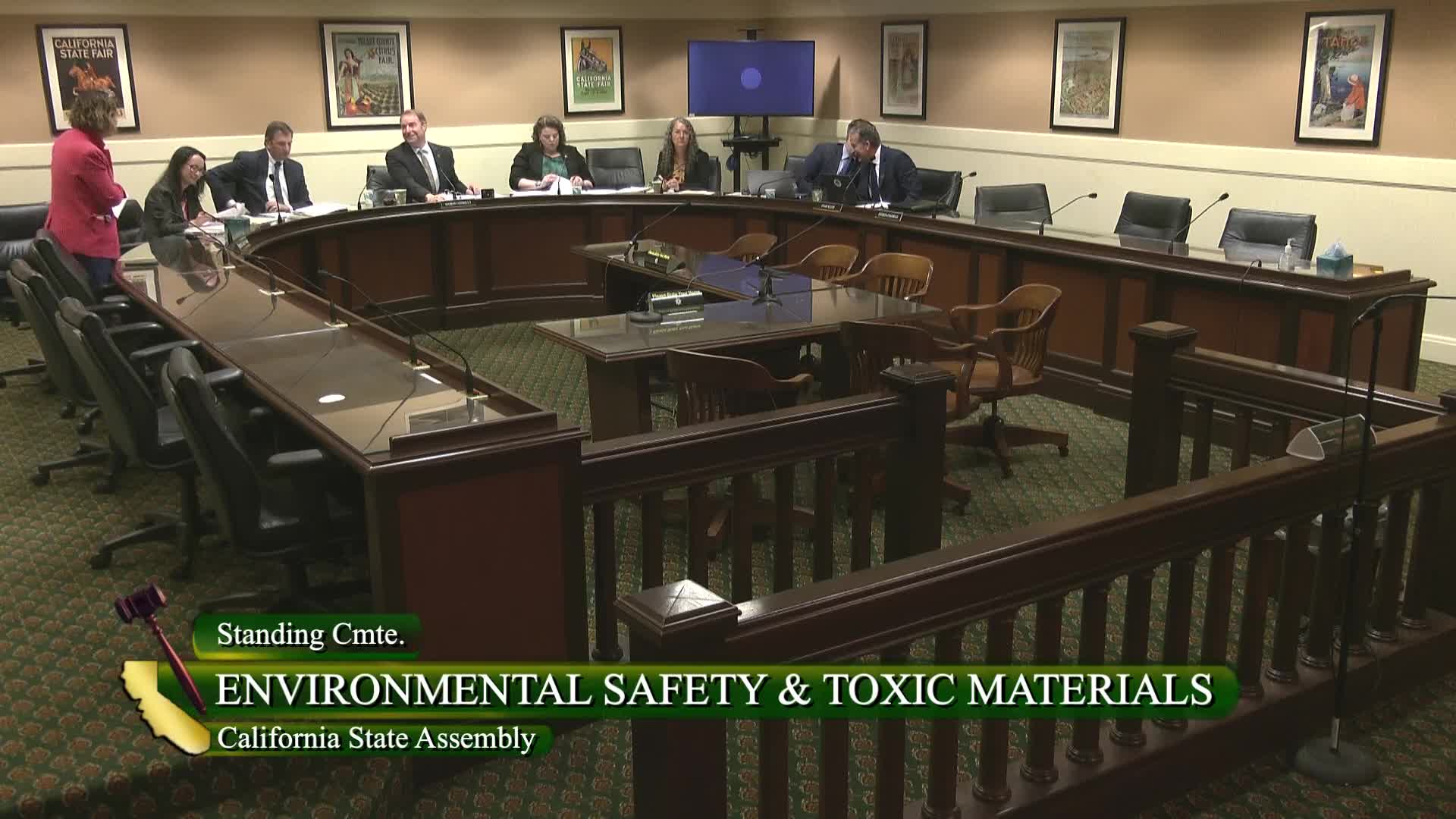
The Assembly Environmental Safety and Toxic Materials Committee voted to pass SB 466 to the Committee on Judiciary. The bill would provide limited legal protection to public water systems that are implementing State Water Resources Control Board‑approved compliance plans to meet the chromium‑6 maximum contaminant level (MCL).
Senator Anna Caballero, the bill—s author, said the measure is narrowly tailored to protect water providers from third‑party litigation while they implement compliance plans approved by the State Water Resources Control Board. Caballero and witnesses emphasized the protections apply only during the approved compliance schedule and do not affect the board—s enforcement authority or the attorney general—s authority to pursue actions where injury is alleged.
Witnesses representing small and large water agencies described the financial and logistical challenges of meeting the chromium‑6 MCL of 10 parts per billion, adopted by the State Water Resources Control Board in 2024. Michael Amabile, mayor of Los Banos (a co‑sponsor), said compliance for his city will require infrastructure investments he estimated at about $65,000,000. Scott Burrett of Coachella Valley Water District told the committee his agency expects about $400,000,000 in upfront costs and that domestic rates could double to finance compliance.
Supporters said the bill would let water systems focus on design and construction of treatment and replacement infrastructure rather than costly litigation triggered when systems report exceedances. Caballero and witnesses emphasized the bill does not shield agencies from suits alleging deliberate wrongdoing or from enforcement by the State Water Board or the attorney general; several amendments were described to clarify those limits.
Committee members sought clarity about the scope and duration of the immunity and whether private individuals would retain a remedy for demonstrable injury. The author and witnesses said the protection applies while a public water system is implementing an approved compliance plan and that the Water Board—s approval process sets the plan's schedule. They also said the attorney general retains the ability to bring enforcement actions where injury is alleged; members requested continued discussions about ensuring individuals could pursue remedies for actual harm.
The committee recorded the motion to pass SB 466 to the Committee on Judiciary.