Get Full Government Meeting Transcripts, Videos, & Alerts Forever!
Get email alerts on the Cannabis Regulation Online Commerce topic
No spam. Unsubscribe anytime.
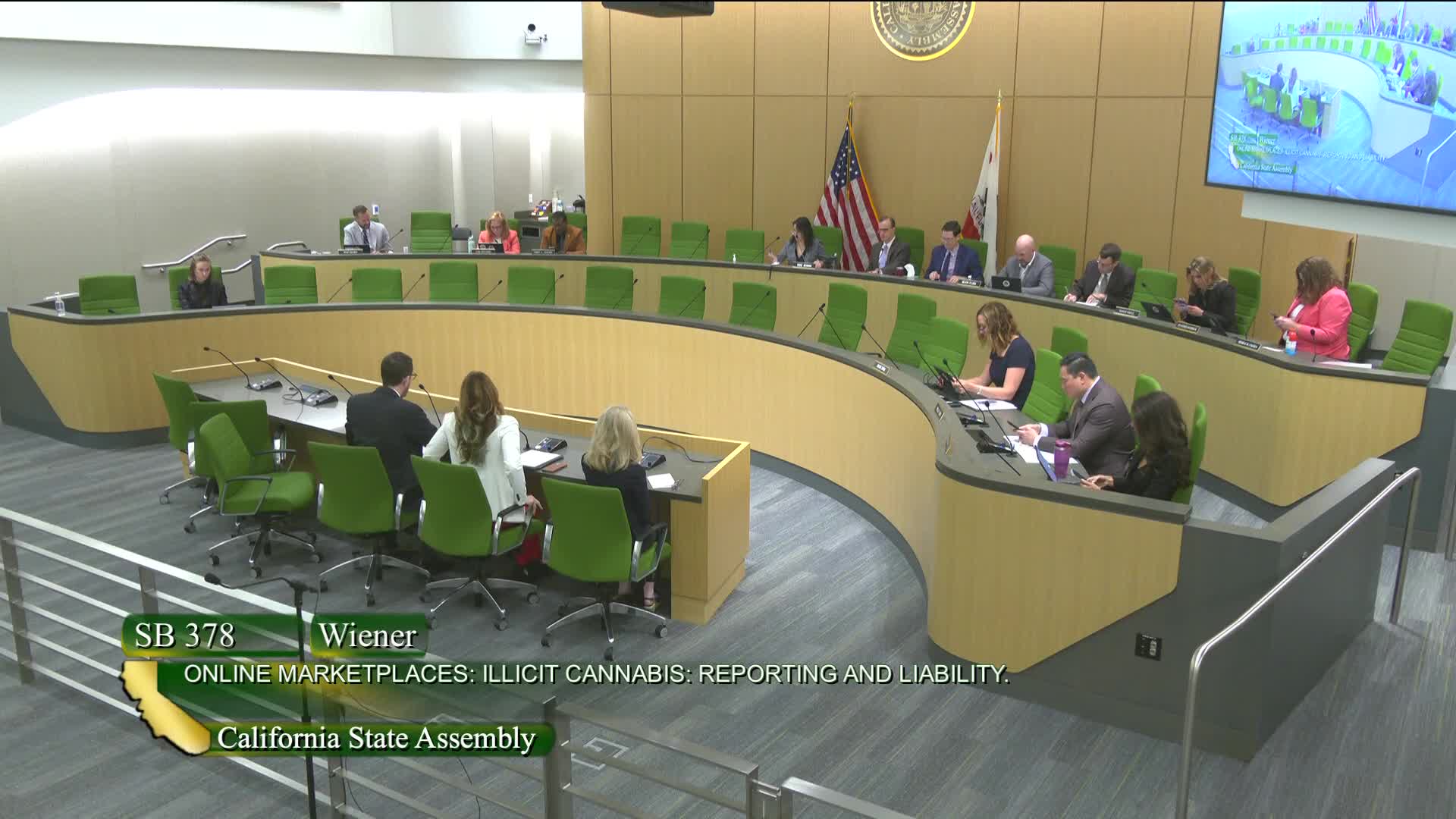
Committee advances bill to hold online platforms accountable for illicit cannabis and hemp sales
Summary
SB 378 (Wiener) would create liability and disclosure requirements for online platforms that facilitate sales of illicit or intoxicating cannabis and hemp products; committee passed the bill while opponents urged narrowing definitions and protections for compliant hemp businesses.
Sen. Scott Wiener presented SB 378, a measure aimed at reducing the online sale of unregulated intoxicating cannabis and hemp products by creating platform accountability and disclosure obligations for sites that facilitate such sales.
Wiener told the Assembly Business and Professions Committee that illicit sellers operate on widely available platforms and deliver products, often with no age verification, directly to consumers. “We set up a legal cannabis market and industry in California subject to many regulations… The products are tested for safety and health,” he said, arguing that an unchecked illicit online market undercuts lawful operators and risks public health.
Supporters included the United Food and Commercial Workers (UFCW) Western States Council, whose legislative director Kristen Heidelbach cited untested products and worker and public-safety concerns, and Tiffany Devitt of Canaccraft, who referenced a study the sponsors called “The Great Hemp Hoax” documenting products that were marijuana rebranded as hemp or synthetic designer drugs. Local governments, county health executives and cannabis industry groups also testified in support, saying the bill closes a regulatory blind spot focused on online commerce.
Opponents urged narrowing the bill’s definitions and liability reach. Rand Martin of the U.S. Hemp Roundtable said good-actor hemp businesses have been harmed by broad enforcement steps and asked for nuance so compliant hemp sellers are not “obliterated.” TechNet’s Jose Torres and counsel for eBay warned the bill’s broad language could sweep in mapping services, search engines, social networks and payment platforms that do not directly sell illicit products and would impose strict liability on platforms with only incidental roles.
Committee members asked about enforcement mechanics; Wiener said the bill currently included a private right of action for harmed parties and that the author would refine standing and other implementation details in subsequent committees. Members also discussed alignment with AB 8 and other efforts intended to define acceptable hemp products and integrate compliant hemp into regulated supply chains.
The committee passed SB 378 to the committees on Privacy and Consumer Protection and on an additional referral (triple referred). The chair noted unresolved scope and implementation questions and said the author had committed to continue work with stakeholders as the bill moves through subsequent committees.