Get Full Government Meeting Transcripts, Videos, & Alerts Forever!
Get email alerts on the Peacekeeping topic
No spam. Unsubscribe anytime.
Swedish commanders detail logistics, training and civil‑military lessons from nearly decade in MINUSMA
Summary
Two former Swedish commanders described how Sweden’s return to UN peacekeeping in Mali required extended logistics planning, focused mission training and close civil‑military coordination to protect civilians and build situational awareness.
Two former Swedish commanders described how Sweden’s return to UN peacekeeping in Mali required extended logistics planning, focused mission training and close civil‑military coordination to protect civilians and build situational awareness.
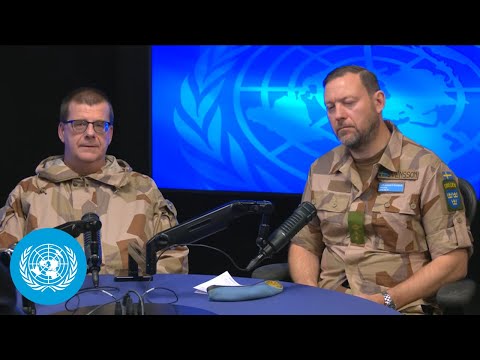
On the United Nations Department of Peace Operations’ Light Coordination Mechanism podcast, Brig. Gen. Per Nielsen, deputy commander of the Swedish Army, and Lt. Col. Karl Manus Svensson of the Swedish Defence Staff reviewed Sweden’s experience in MINUSMA and the lessons they say other troop‑contributing countries can use.
The discussion matters because MINUSMA’s operational environment forced Sweden to adapt doctrine and training: the contingent arrived in a remote, infrastructure‑poor area and elected to be self‑sustaining while establishing a functional camp and surveillance capabilities.
Planning and logistics. Both officers said logistics and transport were the dominant planning challenges. “The logistical challenge was that the means of transportation and the infrastructure was very limited,” Nielsen said, adding that Sweden “had to be self sustainment for the first 2 months as well as build our own camp. We, even, built an airstrip for the UAVs…because the civil population doesn’t really care about if we have the perfect conditions or not.” The commanders said Sweden prioritized being present on time over waiting for ideal conditions.
Training and force preparation. Svensson said his rotation trained together for five years and then undertook “specified mission training, I would say 8, 9 weeks before we enter the mission area.” Training included scenario‑based final exercises, role players and instruction from personnel with recent MINUSMA experience. Both officers emphasized getting realistic cultural and climatic training—for example, preparing troops for extreme heat as seriously as for extreme cold.
Gender, information and operational necessity. The delegation framed gender‑sensitive engagement as an operational imperative rather than a box‑checking exercise. Svensson, who commanded an intelligence, surveillance and reconnaissance unit, said: “since the people is, consists of 50% women, If we don't talk to that 50…we will get less quantity quantitative and qualitative, information.” He argued that talking with women in the population produced different information and improved situational awareness.
Civil‑military coordination. Both officers described building trust with civilian mission components as essential to joint planning and protecting civilians. Svensson credited a “very wise, female head of office” for helping place liaison officers and improve daily coordination with human rights and civil affairs units so that, over time, they could “share information in support of the civil population.” Nielsen said the head of office position “is a very important position. And if you can work together with that position, many doors will open up in the UN system.”
Working with other troop‑contributing countries. The Swedish contingent relied on regional partners for local knowledge and on non‑regional capabilities such as medevac helicopters. “We did not do it ourselves. We did it together with other African nations that knew a lot about the opposing forces,” Nielsen said. He also cited cooperation with a helicopter unit from El Salvador that provided timely medical evacuation, which increased the Swedish contingent’s operational reach and confidence.
Parallel operations and mandate clarity. Both officers said it was important to distinguish MINUSMA’s mandate and rules of engagement from parallel forces operating in Mali — such as France’s initial Operation Serval, subsequent Operation Barkhane and the G5 Sahel force — because civilians often do not distinguish among forces on the ground. “We have to be a little bit careful so we don't mix up our…rules of engagement,” Nielsen said, adding that mandates should complement, not duplicate, one another.
Communications and countering misinformation. The contingent maintained a public information capacity. Nielsen said a public information officer coordinated at regional level and with Force HQ in Bamako; when Swedish uniforms were visible, he believed “the population knew what we stand for,” which helped mitigate disinformation. Both officers said direct dialogue with communities was essential to explain the contingent’s impartial role, especially after shifts in Mali’s host‑nation government made impartiality a more central message.
Return, mental‑health support and institutional learning. The commanders described structured reintegration on return to Sweden, including multi‑day gatherings with medical professionals, parades and awards presented by senior defence leadership. Svensson said Swedish defence bodies and research institutions collected lessons into doctrine and reports; the Swedish Defence Staff organized seminars and the Swedish Defence Research Agency produced interviews and reports that helped preserve institutional memory.
The officers said Stockholm’s approach combined an emphasis on quality and specialized capabilities rather than large troop numbers, and that those choices informed doctrine and training for future contingents.
The podcast was organized by the United Nations Department of Peace Operations’ Light Coordination Mechanism to share troop‑contributing countries’ operational experience and capacity‑building lessons for future UN deployments.