Get Full Government Meeting Transcripts, Videos, & Alerts Forever!
Get email alerts on the Mental Health topic
No spam. Unsubscribe anytime.
BestCare outlines local mental-health, addiction and housing work as state system strains
Summary
BestCare told Jefferson County commissioners on June 16 that local services — from school-based clinicians to a new engagement center and supported housing — are expanding but still face statewide shortages of youth beds, long-term residential care and workforce capacity.
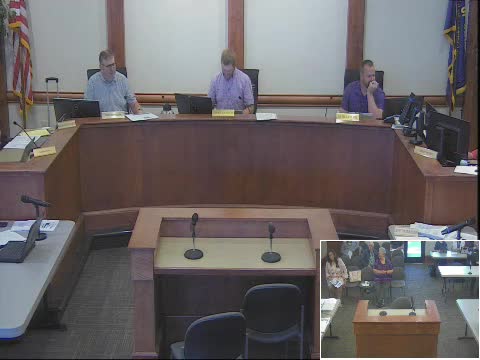
Heather Crow Martinez, a representative of BestCare Treatment Services, told the Jefferson County Board of Commissioners on June 16 that Oregon’s mental-health system is strained and that BestCare is expanding local services to try to plug gaps.
BestCare provides the county’s community mental-health contract. “There are so many complex issues,” Crow Martinez said, summarizing the state-level problems as shortages of children’s services, rising substance-use disorders, an overwhelmed state psychiatric hospital and a lack of long-term care and housing for people with serious mental illness.
Crow Martinez described several local programs BestCare operates or supports. School-based mental-health clinicians cover the 509J and Culver school districts; BestCare also employs clinicians who work in schools part time and year-round at BestCare clinics during summer months. BestCare provides an intensive in-home evidence-based service for children and families (IIBHT) and is pursuing certification for Parent-Child Interaction Therapy (PCIT), a clinic-based program that requires a specialized counseling room and training.
On substance-use disorders, BestCare runs a seven-days-a-week high-intensity outpatient day-treatment program and operates treatment housing tied to that program. Crow Martinez said the program helps people stabilize and re-enter work: “A girl ran up to me in the parking lot ... She said, ‘I got a job.’” Crow Martinez also said BestCare operates several residential treatment centers in the region and provides medication-assisted treatment.
BestCare opened a Burn Engagement Center in December 2024 to increase outreach and engagement for people experiencing homelessness and substance-use disorder; the center has housed clients and funneled others into treatment and housing. Crow Martinez said the center has placed clients in detox and helped clients rejoin families or relocate for treatment when appropriate.
The agency is also expanding supported housing and rental-assistance work: BestCare’s supported-housing program served 44 people in the prior year and had 21 people in the program at the time of the presentation. Crow Martinez said the program combines rental assistance with life-skills and credit-repair work, and that the county’s combination of treatment housing, transition housing and supported housing together reduce street homelessness and related community impacts.
Commissioners pressed on coordination, duplication of services and barriers to access — notably transportation and after-hours availability. Commissioner Simulink said he wants programs aligned regionally and asked whether services could be better coordinated with public-health and other partners to avoid duplication.
Crow Martinez said BestCare is already reaching outside clinic walls, operating mobile crisis teams and performing in-home and community-based work, and welcomed greater cross-agency coordination. She also said BestCare recently hired a full-time mental-health investigator to avoid taking clinicians off their caseloads to handle hospital and court investigations.
Crow Martinez and commissioners agreed on the need for improved transportation and better integration across law enforcement, EMS, public health and treatment services to make services truly accessible.
Commissioners and staff requested follow-up information on program metrics, including counts of people served and recidivism/return-to-care data, plus updates on interagency coordination meetings.