Get Full Government Meeting Transcripts, Videos, & Alerts Forever!
Get email alerts on the Transit Accessibility topic
No spam. Unsubscribe anytime.
Bend accessibility advisory committee presses transit agencies and city on CET fare changes, taxi accessibility
Summary
Bend advisory committee and disability service providers warned that proposed fare changes for Cascades East Transit and limited wheelchair‑accessible taxi service could reduce mobility for people who depend on Medicaid‑funded rides and public transit.
Bend — Members of the City of Bend Accessibility Advisory Committee and local disability service providers told Cascades East Transit and city licensing officials on June 26 that proposed fare changes and limited wheelchair‑accessible taxi service could sharply reduce mobility for people who rely on public transit or Medicaid‑funded rides.
The concerns came during a presentation by Lisa Lang of Full Access High Desert and an impromptu appearance by Bob Johnson, director of Cascades East Transit (CET). Lang described the operational burden her case‑management agency faces when transportation plans change and said the agency serves about 400 clients, 124 of whom have taxi service in their plans and about 60 who use taxi regularly. She warned that rising fares, higher insurance costs for taxi companies and uncertainty about ticketing methods risk creating a “domino effect” that would increase client isolation.
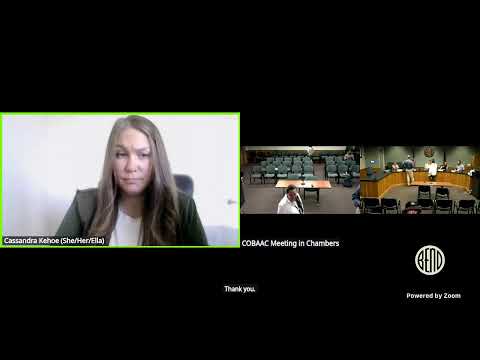
The committee’s accessibility and equity manager, Cassandra (last name not specified in transcript), proposed collecting the committee’s questions and sending them to the city manager, Eric King, for forwarding to CET and the Central Oregon Intergovernmental Council (COIC), the board that approves CET fare changes. Committee chair Liz Woodfin moved that Cassandra act as the conduit; Cassandra later confirmed she would summarize the meeting’s concerns in a memo to the city manager and request that staff forward the questions to COIC and CET.
Why it matters: Committee members and service providers said many CET riders and Medicaid‑funded clients are low income or have disabilities and that sudden changes in price or ticketing could reduce access to work, medical appointments and grocery shopping. Full Access High Desert requested clearer communication from CET and asked whether the city could offer support—grants or other incentives—so local taxi companies could add wheelchair‑accessible vehicles without going out of business.
What CET and city officials said
Bob Johnson, identified in the meeting as director of Cascades East Transit, told the committee that CET has released draft fare materials for public review and outreach and that “nothing is approved yet.” He said the CET board review would continue and that a formal board vote was scheduled for August 7. Johnson described the proposed fares as $2 for a standard route, $1 for a reduced fare and a $3 daily maximum for riders who qualify for reductions. He said the agency plans a mix of digital payment with some cash outlets at hubs such as Hawthorne Station and Redmond.
Johnson added that CET does not currently have funding to expand bus frequency to 15‑minute headways, and that a proposed payroll tax increase in a separate state transportation package would be needed to add drivers and increase frequency over a multi‑year window. On implementation costs, he said the contractor for fare collection and account management is expected to cost roughly 20% of the new fare revenue in the early years.
Ariel V., the City of Bend licensing manager in Community Development, said the city issues vehicle‑for‑hire licenses for taxis, transportation network companies (Uber/Lyft) and other hired vehicles and that the licensing office can act as a conduit to share resources with providers. Ariel said Bend currently has 12 licensed vehicle‑for‑hire operations and that licensing checks business registration, vehicle identification and insurance and forwards applications to fire, risk management and staff for review. She also said some local taxi operators told her they lack funds to buy wheelchair‑accessible vans and that some refer clients who need full mobility assistance to medical transport companies.
Concerns raised by committee members and advocates
- Lisa Lang (Full Access High Desert) said taxi insurance premiums have “doubled and tripled” for some providers and that a door‑to‑door taxi ride can be much more expensive than a standard taxi fare, sometimes reaching $90 one way. - Carl Burnett, a committee member who uses a wheelchair, described long tie‑down and boarding procedures on local buses that can add five or more minutes per rider and suggested some systems elsewhere allow riders more independence. - John Halen urged the committee to press CET on why fares are rising without a corresponding increase in service frequency and asked how cash‑only riders will access the system.
What the committee decided to do
Committee members agreed they would compile specific questions for CET and COIC. Cassandra said she would summarize the discussion and forward the committee’s questions and concerns to city manager Eric King, with a request that the city relay them to COIC and CET and seek responsive information prior to the committee’s next meeting. Several members also suggested inviting CET/COIC staff and a city attorney or legal representative to a future meeting to explain enforcement, fare reduction eligibility, and how cash‑based riders will be served.
Votes at a glance
- Motion to approve draft minutes of the May 22, 2025 meeting: moved by Stephanie Upsman; seconded by Ian Isaacson; outcome: approved unanimously.
Next steps and outlook
Cassandra will prepare a memo summarizing questions and concerns and ask the city manager to forward them to COIC and CET. Committee members asked that CET provide written answers before the committee’s August meeting and, if possible, send a representative to that meeting. Councilor Ariel Mendez (City of Bend) confirmed the COIC board approved the fare changes at its June meeting and that the city’s COIC representative, Councilor Mike Riley, is another contact for the committee’s questions.
Community members interested in the proposals can find CET materials on the COIC/CET website; committee members asked staff to circulate the specific links and to track CET’s August 7 board timeline for votes.