Get Full Government Meeting Transcripts, Videos, & Alerts Forever!
Get email alerts on the Nonprofit Funding topic
No spam. Unsubscribe anytime.
Kodiak assembly debates nonprofit funding process; manager delegation and reporting suggested
Summary
Assembly members discussed how to distribute roughly $100,000 in annual line‑items (college/libraries; health and social services; education/culture/recreation) plus $119,506 in an opioid settlement fund and considered delegating award decisions to the borough manager with a staff review process and a priority matrix.
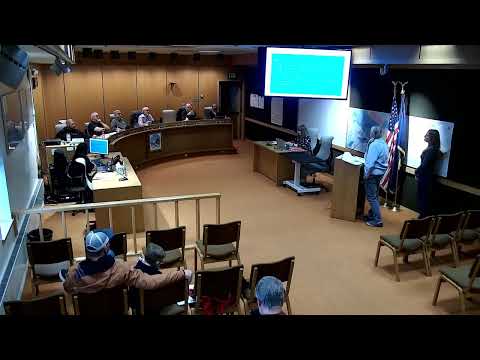
The Kodiak Island Borough Assembly reviewed options for annual nonprofit funding at its June 26 work session and asked staff how the assembly wished to allocate three existing line items (Kodiak College & Libraries; Health & Social Services; Education, Culture & Recreation) and whether to include Fund 273 (opioid settlement proceeds) in the distribution process.
Borough manager Amy Williams said the packet included $100,000 in each of the three line items and that Fund 273 currently held $119,506; she told the assembly applications were due Monday, June 30 and staff would present recommendations at the July 10 work session if the assembly wanted staff input before awards.
Assemblyman Jared proposed delegating award administration to the borough manager and a small staff review team that would apply assembly‑set priorities and present a final proposed award list to the full assembly, rather than negotiating individual line items at length during the annual budget process. "I don't think that we should be the micromanagers of funds, especially when we're talking about $3,000 grants," Jared said, arguing a manager‑led, transparent process could provide predictability and reduce duplicative outreach by nonprofits.
Other assembly members voiced concerns about oversight and the potential for skewed decisions. Steve said he favored the assembly voting on final awards to provide accountability. Several members suggested adding application questions requiring nonprofits to report past use of borough funds and to appear before the assembly or provide regular reports; staff said the application already asks awardees to report how funds were used and that Kodiak College returns unused dollars to the borough when appropriate.
Amy Williams recommended the assembly again set a clear ranking of priorities (a short list used several years ago proved administratively helpful) so staff could apply those priorities in adjudicating awards. Members also proposed requiring large awardees to report more frequently and asking applicants whether they had publicly advocated for their funding prior to the request.
No final decision was recorded; staff said it would return with the applications and a suggested starting allocation at the July 10 work session and that modifications could be made before final awards.
Why this matters: Annual nonprofit awards are a predictable but politically sensitive portion of the borough budget; members said improving transparency, predictability and reporting could reduce last‑minute negotiation and improve accountability.
Looking ahead: Applications are due June 30; staff will prepare a recommendation for the July 10 work session that could include a manager‑led review process and recommended priorities for assembly guidance.