Get Full Government Meeting Transcripts, Videos, & Alerts Forever!
Get email alerts on the Ocean Fisheries Emergency topic
No spam. Unsubscribe anytime.
Kodiak assembly hears bid to back national ocean and fisheries emergency declaration; members ask for more science
Summary
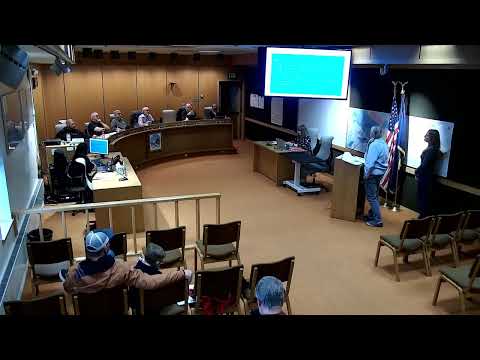
Robert Lindsay of OPR Alaska and ocean restoration advocate Russ George asked the Kodiak Island Borough Assembly on June 26 for local backing of a presidential emergency declaration and federal engagement to address what they described as a decline in ocean productivity affecting fisheries.
Robert Lindsay of OPR Alaska and ocean restoration advocate Russ George told the Kodiak Island Borough Assembly on June 26 they sought local support for a national presidential emergency declaration addressing perceived ocean and fisheries decline and to elevate federal attention to restoration projects.
Lindsay described local observations — seabird die‑offs, low gray whale calving counts and long‑term changes in forage availability — and said the group believes the nation’s ocean resources are at risk. “We think the resources of the ocean in general are in jeopardy and could well be declared a disaster and should be considered a disaster,” Lindsay told the assembly.
Russ George described an approach based on iron‑fertilization experiments (he cited the 2012 Haida Gwaii project) and said his proposal is for a meso‑scale, targeted application in ocean eddies; he said the Environmental Protection Agency had recently shown renewed interest and that federal discussion about an “Ocean Recovery Act” and related executive measures had occurred. George asked the borough for a letter of support demonstrating local grassroots concern and to show community backing for further federally‑led research and possible pilots.
Assembly members and other participants raised substantive scientific and ecological questions. Assemblyman Beau asked specifically about potential unintended consequences — notably domoic acid levels in nearshore shellfish and the risk that large phytoplankton blooms could increase harmful algal toxins. He said the borough packet and the presenters’ materials lacked analysis of those risks and asked for peer‑reviewed studies and input from federal agencies before endorsing a specific project. "Without having this information, I'm just gonna say I can't support it yet," Beau said.
Other assembly members expressed similar caution. Several members asked for controlled, peer‑reviewed studies and at least one university endorsement before the assembly would consider a formal support resolution. Assemblyman Ryan, who identified himself as an environmental scientist, said he would want a controlled study and peer review before offering unconditional support.
Presenters said they were not asking the borough for funding. George and Lindsay described the request as a community declaration of emergency or a letter stating that local leaders view fisheries and ocean resources as sufficiently threatened to warrant federal attention and agency coordination; they said such local statements could help secure federal agency engagement and private or philanthropic backing for research. Presenters also said the group had potential wealthy benefactors interested in funding pilot work and that the project proponents saw the effort as part of developing national legislation (an “Ocean Recovery Act”) and a coordinated federal program.
No resolution was introduced or voted on at the work session. The assembly asked presenters to pursue additional, peer‑reviewed science and agency endorsements and to return with clearer, documented risk‑assessment materials and a narrower set of proposed actions.
Why this matters: Kodiak is a major U.S. fishing port and assembly members described long‑standing economic dependence on marine resources; the proposal would engage federal agencies and potentially authorize experimental restoration work with wide ecological implications.
Looking ahead: Presenters said they will seek additional scientific partners and federal agency conversations; assembly members asked for peer‑reviewed evidence, university endorsements and more detailed risk assessments before the borough would consider formal support.