Get Full Government Meeting Transcripts, Videos, & Alerts Forever!
Get email alerts on the Zoning Code Rewrite topic
No spam. Unsubscribe anytime.
City staff briefs Dallas Planning Commission on zoning-code rewrite, emphasizes more outreach and technical follow-ups
Summary
City planning staff and consultants updated the Dallas City Planning Commission on a diagnostic for a wholesale development-code rewrite — a public outreach phase continues with more virtual sessions in July and a public draft targeted for late 2025.
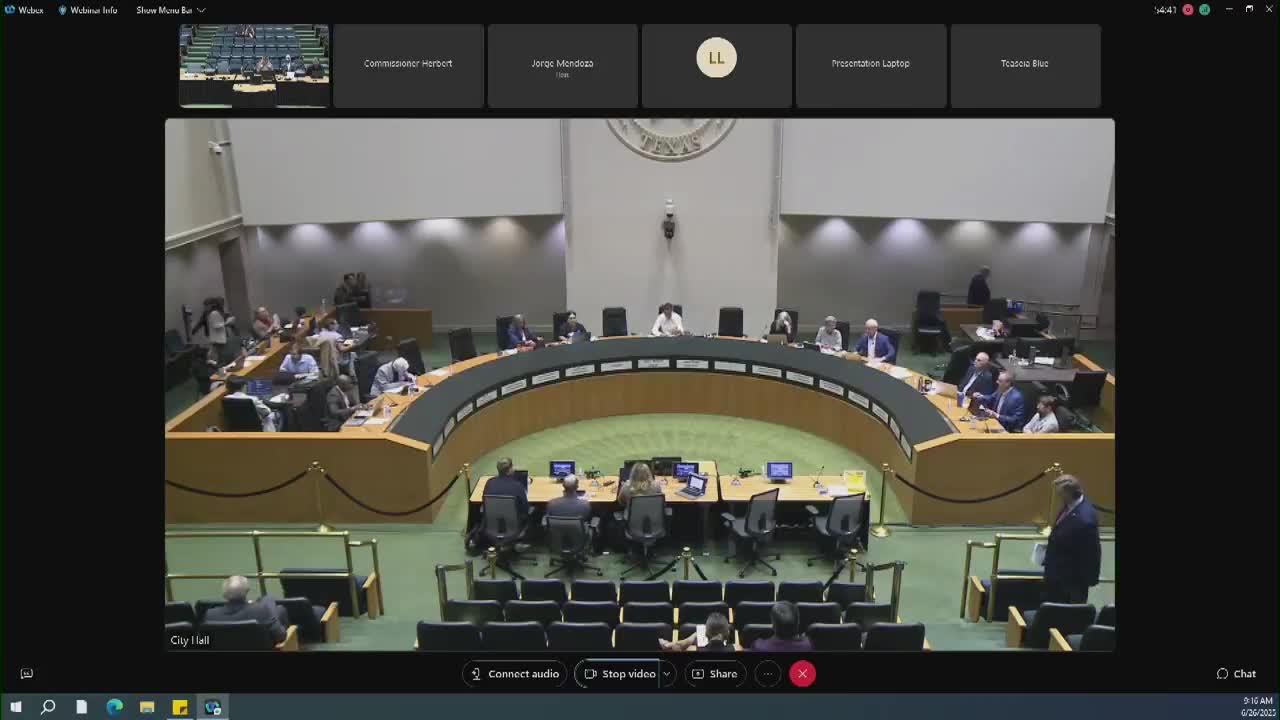
City planning staff and consultants briefed the Dallas City Planning Commission on the citywide development-code rewrite diagnostic on Thursday, outlining outreach findings from a series of community meetings and next steps in drafting a new code.
The staff presentation summarized public input gathered this month at neighborhood meetings, noting recurring themes: housing diversity (including accessory dwelling units), special-use permits (SUPs) for industrial uses, and administrative flexibilites. Staff said their diagnostic intends to preserve single-family districts while creating new parallel districts that would allow additional housing types in appropriate locations. The consultant also described proposed refinements to residential-proximity-slope standards and to how industrial uses are mapped and regulated.
The briefing stressed process details: staff and the consultant plan two virtual webinars on July 16 (noon and 6 p.m.) and are targeting a public draft of the new code near the end of 2025, followed by an extended public-review period in 2026 with red-line revisions and multiple meetings in council districts. Staff said they are coordinating communication materials with a subconsultant and will post clear instructions about how written comments will be collected and incorporated. They emphasized that comments given verbally at public meetings are being flagged for themes but that the project needs written submissions to ensure precise recordkeeping.
Commissioners asked for more clarity about legal review, neighborhood outreach and the mapping process. Staff said the consultant team includes Jim Nias (Jackson Walker) as outside counsel and that the city attorney’s municipal regulatory section led by Casey Burgess and Laura Morrison is involved. On mapping, staff said the code text and the zoning map are separate processes: the draft text can create districts that would be used later on the map only after a public rezoning process. Commissioners repeatedly asked how the draft would protect single-family neighborhoods; staff replied the code will provide tools that implement policy choices directed by the comprehensive plan (Forward Dallas) and that actual map changes would come later and require public hearings before the City Plan Commission and City Council.
Staff said they have been collecting ZIP codes and comment cards from meeting attendees and will produce heat maps and summaries of written comments. Commissioners pressed staff to ensure neighborhood leaders were included in early stakeholder interviews; staff said early interviews focused on technical users of the code and that they had invited neighborhood leaders to subsequent meetings but would continue outreach.
The consultant and staff told commissioners they expect to continue refining technical standards (setbacks, transition standards, ADU rules, SUP renewal policy and industrial compatibility). They acknowledged state legislation recently enacted could affect mapping and implementation and said they will work with city attorneys to determine its effect.