Get Full Government Meeting Transcripts, Videos, & Alerts Forever!
Get email alerts on the Lafco Secession Funding topic
No spam. Unsubscribe anytime.
Los Angeles Council debate centers on conditions for city’s $265,000 contribution to LAFCO secession study
Summary
Council members, residents and legal staff debated whether the city should attach conditions to its $265,000 share of a state‑ and county‑backed Local Agency Formation Commission (LAFCO) study of proposed secession petitions for the San Fernando Valley and Harbor area. A council amendment to strip the funding condition failed 7‑8 after several days
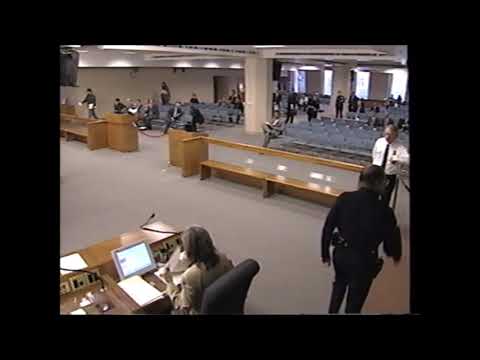
The Los Angeles City Council spent much of its session debating whether the city should attach conditions to $265,000 it agreed to contribute toward a Local Agency Formation Commission (LAFCO) secession study for the San Fernando Valley and the Harbor area, and whether LAFCO may use public funds to prepare initial fiscal analyses or draft reorganization proposals.
Supporters of removing the condition argued the city should not try to limit LAFCO’s discretion; opponents said the condition simply restates legal limits on how LAFCO may use public funds. Councilman Bernsen brought an amendment to remove the paragraph conditioning the city’s funding; that amendment failed on a 7‑aye, 8‑no roll call.
Why it matters: The council’s decision affects whether the locally funded portion of a state‑ and county‑backed study can be used in ways city officials consider to be the applicants’ responsibility. The dispute also raised broader political tensions about secession and representation, and prompted repeated requests for clarifying legal advice about the Cortese‑Knox Act and Government Code provisions governing LAFCO’s role.
What council members and others said Jeff Breen, president of Valley Vote, told the council, “Any attempt to restrict or control the scope of the study is inappropriate,” and urged members to support the motion backing an unconditioned study contribution.
Public commenter Larry Calamine reviewed LAFCO’s funding history and the petition counts, telling the council the state had agreed to fund 80 percent of an estimated $2,650,000 study and that “the city has yet to fund the $265,000” it pledged as 10 percent. He said attempts by the city to attach conditions had been rejected by LAFCO and warned that conditioning the funds could be perceived as an attempt “to subvert the LAFCO process.”
Several council members urged de‑escalation. Councilmember Feuer proposed a short continuance and a city‑LAFCO meeting to resolve outstanding questions; Councilmember Wax warned that added conditions and mixed legal messaging had “fueled the seeds of distrust” and could be seen as an effort to undermine the study. Councilmembers who supported retaining the condition said it simply codified the city attorney’s legal advice that public money should not be used by LAFCO to prepare applicants’ reorganization proposals.
Legal advice and staff explanations City Attorney Jim Hahn told the council it remained the city attorney’s advice that under the Cortese‑Knox Act petitioners must present reorganization proposals to LAFCO and that LAFCO’s funded role is to analyze proposals and review data. City attorneys Merkin and McCosker expressed the same legal concern, saying LAFCO “would be unlawful” to the extent it used public funds to prepare proposals before an applicant submitted one.
LAFCO staff representatives and others said the commission faced a practical problem: applicants cannot prepare realistic proposals until some of the technical data is assembled, and the question was which party should fund and prepare which pieces of work. LAFCO commissioners indicated they would accept city funding for specific data‑collection tasks but that the commission could not be dictated to by the city.
Council action and outcome - Councilman Bernsen moved an amendment to remove the paragraph that had been added as a funding condition; the motion was debated at length and failed on a roll call, 7 ayes, 8 noes. - A procedural previous‑question motion to end debate was carried earlier (previous question: 15 ayes). No further substitute motion removing the condition passed on the floor during the portion of the meeting recorded here.
Details in evidence and history Public speakers referenced a LAFCO scoping study received in January 1999 and a 7‑step LAFCO plan to involve applicants and jurisdictions. Speakers cited petition counts (approximately 202,000 signatures for the San Fernando Valley petition and about 18,200 for the Harbor Area petition) and an estimated total study cost of about $2,650,000, allocated 80% state ($2,120,000), 10% county ($265,000) and 10% city ($265,000).
What the council did not decide The council’s failure of the Bernsen amendment left the specific language and legal questions unresolved on the council floor at the end of this transcript segment. City attorneys were asked to continue advising council staff; speakers repeatedly urged a short summit with LAFCO staff to clarify acceptable uses of the funds and reduce the risk of litigation.
Next steps reported or requested Council members asked for continued dialogue with LAFCO and for staff to report back with clarifying language and options. Several council members said they wanted LAFCO to proceed with an objective, independent analysis and avoid any impression that the city was attempting to dictate outcomes.
Ending note: The dispute highlighted both a legal question — how broadly the city may condition the use of its share of the study funds under the Cortese‑Knox Act and related state law — and a political divide about secession and representation. The recorded action during this meeting was the council vote to reject the amendment to strip the funding condition; further procedural and legal steps were discussed but not resolved on the record in this transcript.