Get Full Government Meeting Transcripts, Videos, & Alerts Forever!
Get email alerts on the Budget And Fees topic
No spam. Unsubscribe anytime.
Wyandotte Creek GSA adopts FY2025–26 operating budget and sets lower per‑acre fees
Summary
The Wyandotte Creek Groundwater Sustainability Agency board adopted a FY2025–26 operating budget and approved an operating-fee schedule that is below previously projected amounts; the board also discussed a possible fee‑study memo from Hansford Economic Consulting and limits on changing subbasin boundaries set by state guidance.
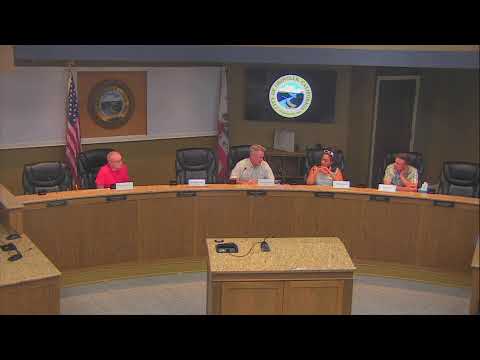
The Wyandotte Creek Groundwater Sustainability Agency board adopted a fiscal year 2025–26 annual operating budget and approved an operating-fee schedule based on that budget, the agency said during its meeting. The fee resolution passed with four votes in favor and one member absent; the budget resolution was adopted as presented.
The budget and fee decisions fund core GSA operations and compliance with state groundwater law (SGMA). Dylan, GSA staff, told the board the budget supports administration, staff support, and SGMA compliance and that the overall fee-setting budget used to calculate fees is $214,500. He said the single notable change from the May draft was the program‑manager line item, reduced to $48,000 from $60,000 after updated labor‑cost information; SGMA‑compliance costs remain $26,500 and the GSA administration portion $188,000.
Board action and why it matters
The board adopted Resolution No. 2025‑01 to approve the FY2025–26 operating budget and authorized the chair to sign the resolution. The board then adopted Resolution No. 2025‑02 setting FY2025–26 operating fees and requesting Butte County to collect those fees on the property‑tax roll. The fees the board approved for the year are: $0.86 per acre for nonirrigated parcels, $7.82 per acre for irrigated surface‑water parcels, and $12.30 per acre for irrigated groundwater parcels. Staff noted the approved fees are below amounts projected in the GSA’s earlier five‑year fee study and below the maximum fees shown in staff tables.
Votes at a glance
- Resolution 2025‑01, FY2025–26 annual operating budget: adopted (vote tally not specified in the public record available in the transcript). The resolution authorizes the chair to sign and implements a fee‑setting budget of $214,500 used to calculate fees.
- Resolution 2025‑02, FY2025–26 operating fees and request to Butte County to collect on tax roll: adopted, tally reported as 4 yes, 0 no, 1 absent. Approved per‑acre fees: $0.86 nonirrigated; $7.82 irrigated surface water; $12.30 irrigated groundwater.
Public comment and local concerns
Susan Simms, a Wyandotte Creek resident and farmer, told the board that reporting and compliance costs are “excessive” for small‑scale operators. “Our reporting and cost pressures are excessive,” Simms said, adding that she uses both surface water (South Feather) for irrigation and a well for domestic use. Her remarks asked the GSA to consider the financial burden on small farmers as it implements monitoring and fee requirements.
Fee‑study discussion and subbasin boundaries
The board also discussed a planned memo from Hansford Economic Consulting to analyze how a fee structure similar to the nearby Vina GSA would translate to the Wyandotte Creek subbasin. Catherine Hansford, consultant, and staff previously prepared example tables that show what per‑parcel and per‑acre charges would look like under alternative methodologies. Board members noted the Vina GSA’s structure has more parcels to spread costs over, which helps explain differing fee levels.
Board members and staff asked whether subbasins could be merged to change fee burdens. Cammy, GSA staff, explained that Bulletin 118 from the California Department of Water Resources established subbasin boundaries and that those exterior basin boundaries cannot be changed by the GSA; internal boundary adjustments made during GSA formation altered some internal lines, but merging subbasins is not a feasible option under the state’s process.
Other staff updates
Staff said they have begun outreach for a community well monitoring program, including mailed postcards to properties believed to have domestic wells and early positive response. Management committee members mentioned internal discussions about forming subcommittees and scheduling recurring "data gap" meetings and calendar holds for 2026. The board noted a $100,000 placeholder for a potential fee study that the agency may draw on if it chooses to commission a formal study.
Process notes and next steps
The board removed agenda item 6 (a review of a draft five‑year potential fee study update) from the meeting and agreed those who wished to discuss the potential fee structure could do so during public comment at the end of the meeting or at an upcoming meeting. The board’s next meeting was announced for August 28. No further formal actions on subbasin boundaries or a fee study contract were taken at this meeting.