Get Full Government Meeting Transcripts, Videos, & Alerts Forever!
Get email alerts on the Contraband Investigation topic
No spam. Unsubscribe anytime.
TDCJ inspector general: multi‑jurisdiction strike force intercepts drugs and synthetic cannabinoids mailed to facilities
Summary
Lance Coleman, inspector general, described multiagency operations that intercepted drugs and synthetic cannabinoids being mailed into prison mail rooms and led to multiple arrests and indictments.
The Texas Department of Criminal Justice’s inspector general described multiagency operations that intercepted drugs and synthetic cannabinoids being mailed into prison mail rooms and led to multiple arrests and indictments.
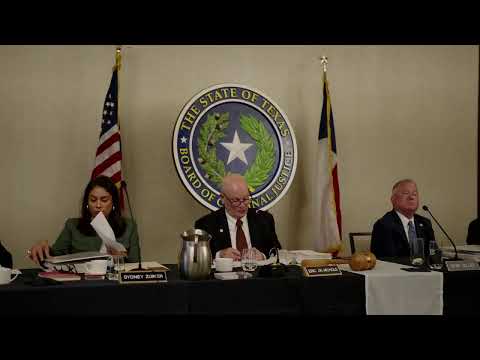
Lance Coleman, inspector general, told the Board of Criminal Justice that investigators worked with the agency’s mail rooms and the state fusion center to develop leads that produced arrests in Odessa, Lampasas, Killeen, Laredo and Austin. “We started intercepting that contraband in the mail rooms, and then we developed information to get search warrants to go out and actually arrest these individuals,” Coleman said.
Coleman showed board members photos of books and other packaging that, he said, were “loaded with synthetic k2 on the pages” and described other seized items, including cell phones, laptops and a bag of methamphetamine. He said investigators found packages prepared to be mailed and described a method of preparing methamphetamine that was ground, liquefied and sprayed onto paper or pages for shipment into the system.
The inspector general said one person charged in the case was out on an $850,000 bond and faced several first‑degree felony counts; another investigation stemming from a 2024 traffic stop led to a large strike force action in April that resulted in search warrants and arrests of former employees and implicated inmates. “On April 9, OIG special operations, strike force, our unit investigators, and over 100 state, federal, and local officers converged on the Texarkana area,” Coleman said. He said a Bowie County grand jury later indicted 19 people on first‑degree felony counts alleging organized criminal activity.
Board members praised the work and noted the effect on staff morale. Vice Chair Johnson said corrections staff who learned of the arrests “are so happy about the arrests… they actually feel safer in their job.” Board Secretary Dr. Rodney Burrow added that frontline officers were “proud of the agency for catching the bad guys.”
Coleman told the board his office has strengthened partnerships with federal, state and local law enforcement, including the FBI, Homeland Security and the U.S. Marshals Service, and expects additional results as investigations continue. When asked about the street value of seized drugs, Coleman said the investigations remain active and analysts are still processing evidence; he said he hopes to provide a total at a future meeting.
Coleman also described a planned unit signage campaign that will label unit entry areas as “contraband‑free zones,” with graphic signs the agency will install to warn visitors and staff about prohibited items and consequences for attempting to bring contraband past the gate.
No formal board action was recorded specifically on the investigations; board members asked questions and expressed support for the OIG and its law‑enforcement partners.
Ending: The inspector general said the agency will continue coordinating with partners to prevent contraband from entering facilities and to pursue prosecutions when criminal activity is identified.