Spring ISD outlines draft optimization plan, new feeder maps and proposal to change Winchi’s accountability status
Loading...
Summary
Spring Independent School District officials presented a draft optimization plan and new feeder maps Wednesday evening, proposing boundary changes, targeted school consolidations and a recommendation to change how Winchi High School is counted for accountability — steps district leaders said are meant to improve academic continuity, reduce transportation costs and better align programs with student population shifts.
Spring Independent School District officials presented a draft optimization plan and new feeder maps Wednesday evening, proposing boundary changes, targeted school consolidations and a recommendation to change how Winchi High School is counted for accountability — steps district leaders said are meant to improve academic continuity, reduce transportation costs and better align programs with student population shifts.
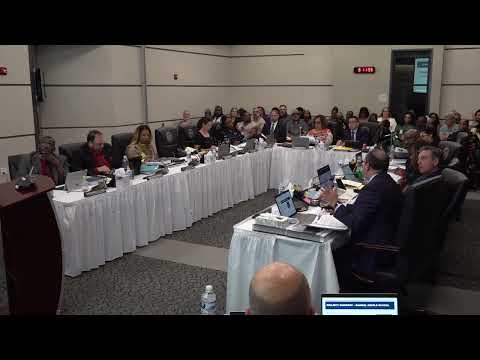
District Chief of Innovation and Student Success Dr. Matthew Parasoft told the board the draft approach grew from community input gathered March–May, including roughly 10 in-person sessions, two virtual meetings and 325 survey responses. The district said about 300 people participated in the in-person meetings and asked the board to review the draft before a planned round of additional stakeholder meetings. Parasoft said trustees will receive formal recommendations in September, with any boundary or consolidation changes slated to take effect with the 2026–27 school year.
Why it matters: The draft is intended to increase efficiency across Spring ISD campuses that are operating under capacity and to ensure students move through clearer feeder lines for “academic continuity,” Parasoft said. The presentation ties optimization to larger facility and program decisions — including potential school closures — and to ongoing efforts to expand college and career pathways at middle and high schools.
Key points from the presentation
- Community input and schedule: The district conducted multiple outreach events March–May and received 325 survey responses; staff will run a second round of stakeholder meetings in the coming weeks and return final recommendations in September. Parasoft said the community meetings are posted on the district optimization web page and that the district will continue a three-step engagement process.
- Capacity and consolidation: Spring ISD staff reported that districtwide operational capacity is roughly 60%, with some campuses operating near or above capacity and others at 30–40%. Staff said they are evaluating building age, deferred-maintenance cost and demographics to determine which campuses could be consolidated or closed.
- Feeder-pattern changes: Draft feeder maps aim to create more square, contiguous attendance zones that align with major dividing roads and reduce the number of neighborhoods split among multiple middle or high schools. Parasoft said the maps attempt to keep neighborhoods together to strengthen feeder relationships and program pipelines from elementary to high school.
- Winchi High School recommendation: District staff proposed “decoupling” Winchi’s state accountability ID so students who attend Winchi daily would return to their zoned comprehensive high school for state accountability purposes. Parasoft said the move would allow Winchi to expand CTE and other choice seats without further lowering comprehensive high schools’ accountability results. He said students would retain Winchi programming and could still participate in athletics and PVA at their zoned schools. The administration plans to bring a formal recommendation for board action on this point at a later meeting; it is not a vote tonight.
Board and trustee concerns
Trustees pressed district staff on the process for pivoting if enrollment continues to fall and asked for clearer contingency language about when the board would revisit consolidation decisions. Trustee Correa and others said the district needs formal mechanisms to pause, adjust or return to the board if enrollment or demographic assumptions change. Trustee Newhouse and others asked for stronger communications to principals and for training and tools so principals can use district data and the MoCA facility system effectively.
Implementation timeline and next steps
Staff said they will: 1) hold five additional stakeholder meetings in the coming weeks, 2) meet with principals for operational feedback, 3) finalize ROI work on athletics, CTE and PVA by August, and 4) return full Spring Strong Future Ready recommendations to the board in September. Any school-closing or consolidation recommendations would be included in that September package; feeder changes being discussed now assume current schools remain open unless consolidation is later proposed.
Community and operational context
Staff said enrollment declines (about 4,000 students lost over recent years) and new charter competition contributed to the need for right-sizing. Parasoft emphasized the plan is data-driven and that staff will monitor demographic shifts and adjust recommendations if conditions change. Trustees asked staff to commit to a clear re-evaluation process should enrollment or legislative funding change.
Ending note: The board did not vote on consolidation or Winchi’s accountability proposal at the meeting; staff sought public feedback and scheduled follow-up sessions before bringing final recommendations to the board in September.