Get Full Government Meeting Transcripts, Videos, & Alerts Forever!
Get email alerts on the Development Code Implementation topic
No spam. Unsubscribe anytime.
Charlottesville staff outline multi‑year plan to refine development code, address stormwater and housing barriers
Summary
Neighborhood Development Services presented a fiscal 2026 work plan and a staged set of development‑code amendments to Charlottesville City Council June 16, detailing staffing, process changes, environmental/stormwater study work and short‑term rental outreach while noting persistent barriers affecting project approvals.
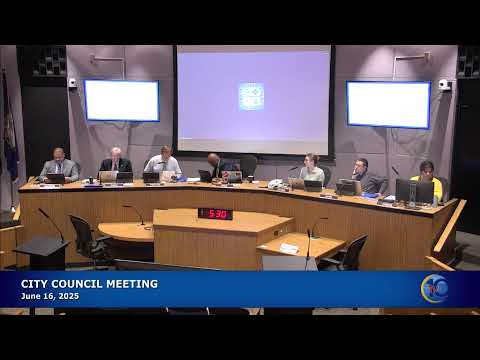
Neighborhood Development Services (NDS) Director Kelly Brown told the Charlottesville City Council on June 16 that the department is pursuing a multi‑year program of technical fixes, policy reviews and public engagement to implement the city’s development code, adopt targeted amendments and support housing production while protecting public safety and environmental resources.
Brown said the city’s development code was adopted in December 2023 and went into effect in 2024, and that NDS is now tracking implementation issues and preparing a fiscal year 2026 work plan that prioritizes nondiscretionary life‑and‑safety services, equity, staff capacity and alignment with council strategic goals. “My name is Kelly Brown. I am the director of Neighborhood Development Services, and I’m here today to present to you an update on the development code implementation,” she said.
The presentation outlined accomplishments from the prior year (including participation in CARTA, Move Safely Blue Ridge planning, a pump track at McIntyre Park, downtown café standards updates, and a revamped NDS website), staffing changes and recruitment needs, and a two‑part code‑amendment program staff calls Tier 1–3. Brown said NDS has 31 staff and is reviewing a temporary plan‑review position to increase permit review capacity.
NDS Development Planning Manager Matt Aufley provided detail on how the code has performed in practice. “We’ve had 90 pre‑application meetings in just over a year,” Aufley said, while noting only a small number of projects have completed the approval process to date. Staff reported that most proposed projects fall in the 6–12 unit range (the so‑called “missing middle”) but that utility constraints, stormwater requirements, fire access and some discretionary approval hurdles have limited conversions from concept to application and from application to approval.
Why this matters: Council members and staff said the code’s unit‑based approach aims to increase housing supply, but practical obstacles — technical, regulatory and financial — are limiting near‑term production. The work plan and amendment program are intended to remove unnecessary obstacles while preserving public‑safety and environmental protections.
Key components of staff’s plan and timeline
- Three‑tier amendment structure: Tier 1 (technical corrections and minor clarifications, including incorporation of legislative changes from the Virginia General Assembly); Tier 2 (refinements and usability improvements, e.g., fee schedule additions such as an application fee for sublots); Tier 3 (major policy changes requiring analysis and broad public engagement, such as how height and building “links” for townhouses are defined and the role of the RNA district). Staff said Tier 1 and Tier 2 items will be batched and advanced periodically so routine fixes are not brought individually to public hearing.
- State legislative and administrative changes: Staff noted recent state changes shorten certain review timelines (for example, permit acceptance windows) and shift a majority of administrative approvals (subdivisions, development plans, final site plans) from the planning commission to staff.
- Schedule: A development‑community listening session is planned for July, a planning‑commission work session on Tier 2 items in August, initiation of zoning text amendments and a fee‑schedule update in the fall, and a public hearing in October. Final recommendations were described as likely to reach council in November–December.
Selected proposed changes and pilot approaches
- Administrative relief for small projects: Staff proposed exempting 1‑ and 2‑unit projects from the formal development‑review sequence so they may proceed directly to building‑permit review while still receiving zoning compliance checks at permit stage. Staff said that practice existed under the old code but has been difficult to track under the new, more vertically detailed code.
- Addressing “attached dwellings”/side‑setback issues: The code’s unit‑based language and a 4‑foot side setback on zoning‑lot lines make some common attached forms (duplexes, triplexes) functionally difficult. Staff presented an alternate approach to allow single‑family‑attached forms without the costly sublot workaround currently used by applicants.
- Build‑to and small accessory structures: Staff proposed ways to permit small outbuildings (sheds, workshops) without forcing owners to first meet front‑yard “build‑to” requirements by constructing larger front additions.
- Fees and sublots: Tier 2 work includes adding an application fee for sublots and clarifying how sublots are handled in review.
- Short‑term rental review: NDS is running outreach and an online survey (open through June 30) and has mailed postcards to known operators. The ordinance dates to roughly 10 years ago and staff estimate about 400 short‑term rentals in the city; staff said they will bring amendment recommendations by the end of the year with potential ordinance changes effective in spring 2026. Outreach, ordinance amendment options and stepped enforcement (including warning letters to some non‑owner‑occupied properties) are part of the three‑pronged approach (outreach, ordinance amendments, enforcement).
Environmental and stormwater review
Brown and staff told council they will develop a formal scope this summer for a study of environmental regulations (including on‑site stormwater management) to balance housing goals with protections for tree canopy, critical slopes, streams, floodplains and water quality. Staff noted state law sets a minimum disturbed‑area threshold for on‑site stormwater management (staff identified the commonly used 10,000 square feet disturbed‑area threshold in discussion) and that the city’s local requirements have sometimes been more stringent than the state’s. The scope will evaluate whether thresholds and mitigation strategies remain appropriate given the unit‑based code and whether systemwide public investments or regulatory adjustments could reduce barriers for smaller infill projects.
Property maintenance and “restabilizing” complex properties
Brown described a new internal “restabilizing property” team to coordinate city services for properties with complex code and health concerns. Staff said examples that have required multiagency responses include severe hoarding that creates rodent and biohazard risks and buildings that are structurally unsafe. The team includes members from social services, public safety, the city attorney’s office, Region Ten behavioral‑health partners and others. Brown said limited funds are available to assist remediation; where necessary staff pursue court remedies and seek to recoup costs when possible.
Council questions and next steps
Council members asked which barriers most often stop projects (utilities, stormwater/detention footprint, and fire access were repeatedly cited); raised concerns about floodplain mapping and long‑term climate risk; and asked whether financial tools such as tax abatements are being studied to accelerate housing production. Brown said NDS is studying financial tools as part of a broader market assessment and that the housing staff from the Office of Community Solutions will be embedded into NDS to continue housing program work.
Quotes from staff
“We’ve had 90 pre‑application meetings in just over a year,” Matt Aufley said, summarizing applicant interest and the gap between early conversations and completed approvals.
“We are a department of 31 staff,” Brown said, describing NDS capacity and recruitment needs.
What was decided or directed
- Staff will advance Tier 1 and Tier 2 code amendments for public hearings this fall and continue developing scope and engagement plans for Tier 3 topics.
- Staff will develop a stormwater/environmental review work plan this summer with internal partners (Public Works, sustainability/climate teams) and report back with recommendations.
- Staff will continue short‑term rental outreach through June 30, pursue enforcement where appropriate, and aim to bring ordinance amendment recommendations by year end.
Ending note
Council recessed to a closed session later in the meeting under cited Virginia code provisions; the policy and code work described above will return to public hearings later this year as staff moves Tier 1 and Tier 2 amendments forward and scopes deeper Tier 3 analysis.