Get Full Government Meeting Transcripts, Videos, & Alerts Forever!
Get email alerts on the Budget Finance topic
No spam. Unsubscribe anytime.
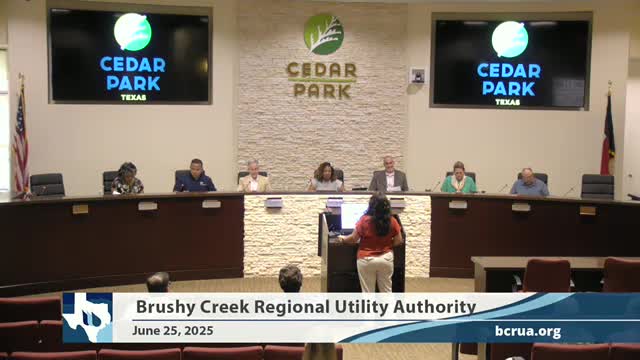
Brushy Creek utility board adopts FY 2025–26 operating and debt-service budget
Summary
The Brushy Creek Regional Utility Authority approved a $77.18 million operating budget (excluding debt service) and a $30.79 million debt-service budget for fiscal year 2025–26; board also reviewed allocations and per-thousand-gallon operating costs.
The Brushy Creek Regional Utility Authority on March 26 approved its FY 2025–26 operating and debt-service budget amid a staff presentation showing moderated year-over-year increases and updated water-demand projections.
Staff reported a total operating budget, excluding debt service, of $77,180,000, an 11.2% increase over the prior fiscal year. The total debt-service budget was listed at $30,790,000. Staff attributed much of the operating increase to higher flows driving power and chemical costs; combined water take for the three participating cities was estimated at about 18.4 million gallons per day, a 10.5% increase over the prior year.
Staff also noted the budgeted operations-and-maintenance (O&M) cost per thousand gallons changed modestly from about $1.06 to $1.07 per thousand gallons compared with the previous year. Staff said the budget includes updated tracking of chemical costs and a downward trend in year-over-year increases for several major categories such as repairs and maintenance.
The board voted to approve the budget “subject to the approval of the participating cities,” consistent with the authority’s master contract. The motion passed on a voice vote with no recorded opposition.
Why it matters: The BCRUA operating and debt budgets fund plant operations and ongoing capital projects, and the figures feed into the participating cities’ own fiscal-year budgets and rate planning.
Board discussion: Directors praised staff for the additional detail in the personnel and repairs-and-maintenance lines and asked clarifying questions about the capital-improvement plan and Phase 2A estimates, which staff said reflect figures submitted with the SWIFT financing application. Staff noted debt-service tables do not include Round Rock’s separate debt-service treatment for Phase 2A projects where applicable.
Ending: The board approved the FY 2025–26 budget and will forward it to the participating cities for their respective approvals and for incorporation into each city’s fiscal planning process.