Get Full Government Meeting Transcripts, Videos, & Alerts Forever!
Get email alerts on the Opioid Settlement Funding Allocation topic
No spam. Unsubscribe anytime.
Bangor advisory committee begins planning for use of opioid-settlement funds; state technical-assistance center offers tools
Summary
At its first meeting the newly formed City of Bangor advisory committee heard a presentation from the Moss Center, discussed immediate priorities including housing, detox and harm-reduction services, and agreed on next steps including requesting spending projections and a community resource profile.
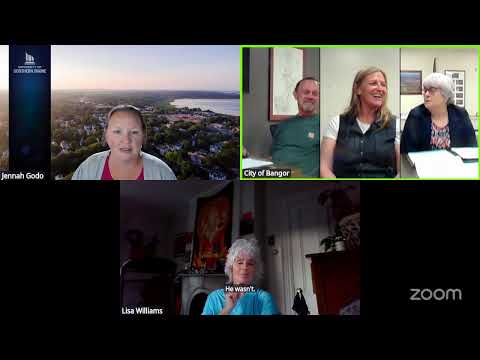
A newly formed City of Bangor advisory committee met to begin planning how to spend the city's opioid-settlement funds and received a presentation from the Moss Center, a state-supported opioid settlement technical-assistance center that offered templates, evaluation tools and outreach support.
The Moss Center presentation explained how the statewide settlement is split among subdivisions, the main recovery fund and the attorney general's office, and offered resources to help Bangor develop spending priorities, grant templates and public-facing tracking dashboards. Jenna Godo, outreach and communications coordinator for the Moss Center, said the center's mission is to “expand the capacity of Maine communities with receiving the settlement funds to really implement and think about those data driven evidence based strategies.”
Committee members raised several urgent priorities they said should be considered for funding: expanded housing and shelter options, local detox capacity, intensive case management in response to a recent HIV outbreak, and harm-reduction services including discussion of supervised consumption sites. Several members emphasized supporting and scaling existing local providers rather than creating unsustainable new programs.
Godo described three core Moss Center services the committee could use: outreach and communications, community engagement to support spending-plan development, and monitoring and evaluation, including public dashboards. She offered to send the committee guidance documents, RFP templates and spreadsheets used elsewhere and to compile a community profile summarizing local data and resources.
Committee members and presenters agreed on immediate administrative follow-ups. The Moss Center will provide the slide materials, templates and the documents it referenced; the city will provide a projection of Bangor’s settlement payments over time; the committee asked the Moss Center to compile a community-resource profile for Bangor; and members were asked to bring their top three funding priorities to the next meeting. The chair said the committee is expected to meet twice monthly through December unless extended.
Participants discussed questions committee members said must be settled before awarding multiyear grants: how long the city can contract for services, whether settlement funds may be invested to extend their yield, and what monitoring and renewal criteria should be applied to multi-year awards. The city solicitor and assistant city solicitor were scheduled to attend the next meeting to brief the group on the city's procurement, ethics and Freedom of Access Act obligations.
The meeting closed with consensus on several process points: the Moss Center will assemble and circulate materials, the city will circulate the payment schedule for the settlement funds, and committee members will prepare suggested priorities and possible program partners for review at the next meeting.