Lifetime Citizen Portal Access — AI Briefings, Alerts & Unlimited Follows
UN leaders present 'Seville commitment' to close $4 trillion SDG financing gap; U.S. withdraws from final text
Loading...
Summary
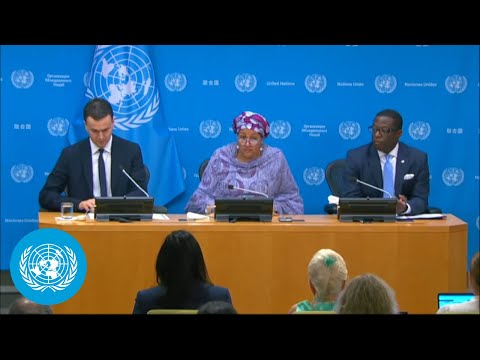
Deputy Secretary‑General Amina Mohammed and ambassadors from Spain and Zambia briefed reporters on the Seville conference outcome, saying member states agreed by consensus on a package to catalyze investment, address debt and reform the international financial architecture. The United States formally withdrew from the final text.
Deputy Secretary‑General Amina Mohammed told reporters that United Nations member states have reached consensus on a “Seville commitment” to be adopted at the Financing for Development conference in Seville in a few days, a package she said aims to catalyze investment, address mounting public debt and give developing countries greater voice in global economic governance.
Mohammed said the outcome is intended to help countries meet the 2030 Sustainable Development Goals after a decade in which “we've seen mounting debt burdens and declining investment” that have reduced funding for food, health, education and water. “This offers us a chance to change course, to catalyze investment, but also to address debt and sustainable development, to reform the rules of the system and to put people's needs at the center,” she said.
The document, speakers said, proposes an ambitious slate of measures. Ambassador Cholad Milambo of Zambia, speaking for the four core facilitators (Mexico, Nepal, Norway and Zambia), said the text “recognizes the $4,000,000,000,000 SDG financing gap” and launches a package aimed at closing it. Key elements described by United Nations officials include a political push to triple lending by multilateral development banks (MDBs); a target for countries to reach at least 15 percent tax‑to‑GDP ratios backed by a commitment to double international support for strengthening tax systems; creation of debt‑related tools such as a global debt registry and a “borrowers’ club” to amplify debtor countries’ voices; and a new playbook for allocating special drawing rights (SDRs) to speed emergency financing.
Speakers stressed that the agreement was negotiated by consensus. Mohammed said member states had “got to consensus” after difficult negotiations and that the collective presence of heads of state, development banks, private sector leaders and civil society in Seville would “send a good signal for multilateralism.” Milambo described the outcome document as the result of more than a year of negotiations and extensive consultations with private sector, civil society and academics.
Officials acknowledged obstacles to implementation. Mohammed and Milambo said implementation — including capitalizing MDBs to meet the tripling target and operationalizing new SDR guidance — will require political will and further cooperation across governments, multilateral institutions and the private sector. “Now the heavy lifting begins as we transition to the next phase and arguably the most critical, which is implementation,” Milambo said.
The briefing addressed two politically salient facts about the final text. First, Mohammed confirmed that one member state, the United States, formally withdrew from the final outcome document. “When one important member state walks out of the room on incredibly important issues to billions of people, it is regrettable,” she said, adding that the United Nations will continue to engage that member state on implementation after Seville. Second, officials noted the conference will include a business forum and private‑sector participation; Mohammed said chief executives from food systems, digital infrastructure and energy companies will take part and that some private‑sector announcements were expected in Seville.
Participants at the briefing cited other elements of the package: a stronger focus on development effectiveness, text encouraging South‑South and triangular cooperation, and measures to support domestic resource mobilization, including a commitment to direct roughly 5 percent of relevant finance to capacity building for tax systems. On official development assistance (ODA), Mohammed and other speakers acknowledged declining ODA levels in recent years and noted the Secretariat and other actors will seek a more constructive narrative and broader set of contributors to close financing gaps.
Officials urged civil society to remain engaged after Seville to press for delivery. Mohammed said civil society “need[s] to keep the pressure up on meeting the commitments because they're not yet met” and emphasized that consensus on a document is only the start of implementation work.
The Seville Financing for Development conference is scheduled to convene world leaders and finance ministers in the coming days; the Seville commitment was described as to be adopted there next week. Speakers framed the agreement as an attempt to renew momentum for the Addis Ababa Action Agenda and the 2030 SDG agenda, while acknowledging that further negotiations and institutional steps will be required to translate the text into finance on the ground.