Get Full Government Meeting Transcripts, Videos, & Alerts Forever!
Get email alerts on the Water Quality Algae topic
No spam. Unsubscribe anytime.
Fairfield County council deadlocks on $30,000 request to treat Lake Wateree algae
Summary
After a public presentation and hours of testimony, Fairfield County Council split 3-3 on a $30,000 request to support a Lake Wateree algae treatment program; supporters urged immediate action while some council members questioned ongoing costs and priorities.
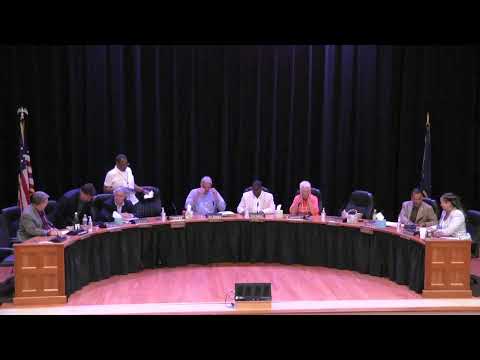
Fairfield County Council on June 9 heard hours of public comment and an expert presentation on toxic cyanobacteria affecting Lake Wateree and deadlocked on a request for $30,000 to support an initial algae-treatment program.
The council heard from Dr. John Rogers, professor emeritus at Clemson University, who described filamentous cyanobacteria (Lyngbya/lingbia) in the lake that can produce dermal toxins and other compounds harmful to animals and irritating to humans. "It's irritating to people. It can cause adverse effects over time if you're a repeated swimmer," Dr. Rogers said, adding that targeted algaecides registered by the U.S. Environmental Protection Agency can be used and that he was offering pro bono work and in-kind support from manufacturers for field demonstrations.
The request was made by the Lake Wateree Association (LWA) and its members. Daniel Ting, speaking for LWA, described the association's fundraising and argued the fireworks and other community activities show local support and economic benefit tied to the lake. "By law, funds designated for a specific purpose must be used accordingly," Ting said when describing how LWA raises earmarked donations for events and lake programs.
Supporters, including residents and LWA leaders, emphasized local economic stakes. Thomas Ford, a long-time association leader, said the association had approved $10,000 unconditionally toward treatment and described the association's reserve as a long-term investment used for legal contingencies and lake work. Speakers also said the full annual cost to treat the entire lake was estimated at about $320,000; the first-year plan would target roughly half the lake and seek about $160,000 in combined funding from multiple entities.
Opponents on council and some other speakers urged caution about committing recurring county funds. One council member noted competing county needs—singling out a request for senior services funding—as a reason for concern about committing $30,000 now and potentially more in subsequent years. The council attempted a motion to fund the LWA request for $30,000; the vote was tied 3-3 and therefore failed.
What was clear from the meeting: residents and the association urged early intervention, citing risks to recreation, fisheries and property values, while some council members sought firmer evidence of projected costs, limits on county exposure and clearer plans for multi-jurisdictional funding. Dr. Rogers and LWA representatives said they had in-kind contributions from algaecide manufacturers, volunteer monitoring programs and technical partners, and that the Catawba Water Management Group would manage funds and contracts if the program were funded.
Council members and staff also clarified that LWA would not receive the county check directly; the funds would be administered by the regional management group that would run the treatment program. Dr. Rogers volunteered his time and said he could match county funds; LWA leaders described additional fundraising and volunteer monitoring already underway.
The council did not adopt the $30,000 appropriation at the meeting. Members emphasized that a future appropriation could be considered at a later budget meeting and that any subsequent funding would require a separate vote.
The public record from the meeting shows considerable community engagement, including comments from residents who said they had developed rashes after contact with the algae, and statements that Lake Wateree generates significant property-tax and tourism revenue for Fairfield County.