Lifetime Citizen Portal Access — AI Briefings, Alerts & Unlimited Follows
House Education Committee advances bill to let states use charter grant funds for preplanning
Loading...
Summary
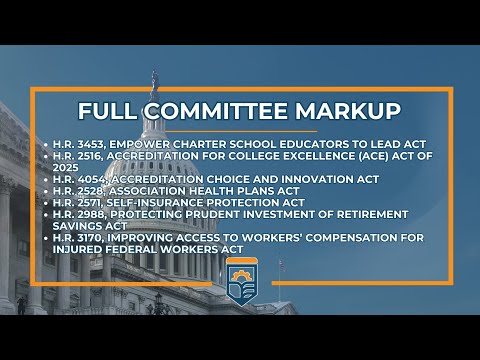
The House Education and Workforce Committee approved H.R. 3453, the Empower Charter School Educators to Lead Act, after partisan debate over accountability, funding flexibility and virtual charter schools. The committee adopted an amendment in the nature of a substitute and reported the bill to the House, 20–15.
Representative Julia Letlow, sponsor of H.R. 3453, told the House Education and Workforce Committee the bill would let states receiving Charter Schools Program (CSP) funds use a modest portion of existing grant dollars to provide planning awards to prospective charter leaders.
Letlow said the measure "authorizes planning awards for educators with at least 4.5 years of school based experience" and increases the share of CSP funds that state entities may use for technical assistance from 7% to 10%. She said the bill "does not create a new program or authorize new spending" and leaves states free to implement planning grants or not.
Opponents, including Representative Adams and Representative Suzanne Bonamici, argued the change would funnel taxpayer dollars toward start‑ups that may never open and weaken oversight. Bonamici offered an amendment to bar CSP funds under the bill from being used to support virtual charter schools, saying virtual charters have "consistently shown abysmal academic outcomes." That amendment failed on a recorded vote, 15–19; a second amendment from Representative Scott requiring desegregation assessments in preplanning also failed, 15–20.
Supporters including Representative Kiley and Representative Onder defended the bill as a modest, optional use of federal CSP funding to reduce start‑up barriers and expand school choice. Kiley said charter schools are "public schools" that must comply with federal civil rights laws and renewal requirements. Opponents warned the provision reducing the share going to grantees and creating a revolving flexible fund could be used for consultants rather than classrooms.
The committee agreed to an amendment in the nature of a substitute and ordered the bill reported to the House by a recorded vote of 20 yeas to 15 nays.