Get Full Government Meeting Transcripts, Videos, & Alerts Forever!
Get email alerts on the Economic Development topic
No spam. Unsubscribe anytime.
Gallatin committee opens discussion on central business improvement districts; schedules outreach
Summary
The Gallatin City Council Committee heard a presentation on central business improvement districts (CBIDs) and voted to return the matter to the July work session for an informational meeting with property and business owners.
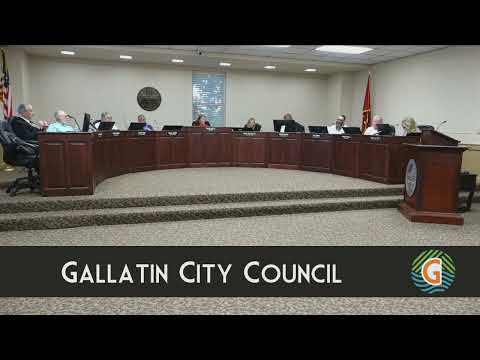
The Gallatin City Council Committee on June 24 heard a detailed presentation on central business improvement districts and voted to place further discussion and outreach on the July 22 work-session agenda.
The item drew a presentation from Bridal Garrison, an attorney with the Bradley law firm, who described the CBID as a state-authorized tool that allows property owners within a designated area to pool funds through a special assessment to pay for services such as sanitation, security, marketing, façade improvements and certain public infrastructure. Vice Mayor Hayes introduced the discussion and Rosemary Bates, the city’s economic development director, helped coordinate the presentation.
Garrison said the mechanism is “a self-help district” created by state statute and noted municipalities use a 1990 act that gives flexibility on term, services and governance. She told the committee a district’s revenue typically comes from a special assessment on properties in the district and that the funds can be used either to pay yearly costs or to secure debt for public improvements. “You can use [the funds] for sanitation, parking services, design services, security, events for the community,” Garrison said.
Garrison walked the committee through common implementation details discussed at length during the meeting: a CBID is usually landowner-driven (a petition period of up to one year), a petition often must be signed by at least half the property owners representing two-thirds of assessed value to initiate the process, governments are normally exempt unless they opt in, and local management may be delegated to a separate nonprofit district management corporation that administers services.
Michelle Ju Vance, a resident who addressed the committee during public recognition, urged the council to adopt a district model for South Water and the downtown square based on her experience in California. “The dramatic turnaround of the area was the result of two people who worked hard and poured themselves into implementing the Business Improvement District,” Ju Vance said, describing façade upgrades, pocket parks and regular events that reactivated commercial corridors.
Council members asked practical questions about assessment methods, whether assessments could be tied to sales or services, how quickly assessment revenue would arrive, and whether districts must be contiguous. Garrison said assessments are commonly based on assessed value but can be structured using lot or building square footage, frontage or other factors and that the statute allows flexibility on contiguity. She offered a Nashville example rate—about $0.10 per $100 of assessed value—saying rates above that can risk driving businesses away.
Members also discussed seed funding and alternatives to assessments, noting the city or an industrial development board could provide initial funds so a newly formed nonprofit would not need to wait a year for the first property-tax-derived receipts.
The committee voted to add CBID discussion and an informational meeting for interested property owners and businesses to a future agenda; members directed staff to facilitate outreach. No formal district formation or ordinance was adopted at the meeting.
Next steps: the committee asked staff and the city’s economic development office to host outreach and an informational session for property owners and business operators so that a landowner-driven petition process, if pursued, would be informed by local participation and by the new zoning ordinance under review.