Get Full Government Meeting Transcripts, Videos, & Alerts Forever!
Get email alerts on the Veterans Tax Policy topic
No spam. Unsubscribe anytime.
Disabled veterans urge city to revisit property‑tax abatement income cap
Summary
A 100% disabled veteran told the commission the City of Philadelphia’s income cap for property‑tax relief for disabled veterans effectively excludes some who qualify on service and disability grounds, and he urged the commission to advocate for change.
Omar Muwakil II, a retired master sergeant who said he is rated 100% disabled by the U.S. Department of Veterans Affairs, told the Veterans Advisory Commission that Philadelphia’s property‑tax abatement for disabled veterans is unfairly limited by an income cap and urged officials to base eligibility on service, disability status, residency and ownership rather than income.
“The current criteria, which kept eligibility for property tax abatement at income of less than $114,000 per year, ... undermines the principles and the fairness and respect for service,” Muwakil said during the meeting. He described himself as willing to work with the director and the commission to address veteran homelessness and transition issues but asked the body to reconsider the income threshold used for tax relief.
Muwakil said the income cap is “authorized by the Pennsylvania Constitution” as part of the underlying legal framework governing the benefit but argued the cap “punishes those who have been both successful in a civilian life, and that have been severely impacted by their military service.” He asked the commission to weigh changes that would base abatement eligibility on service and disability status rather than an income cutoff.
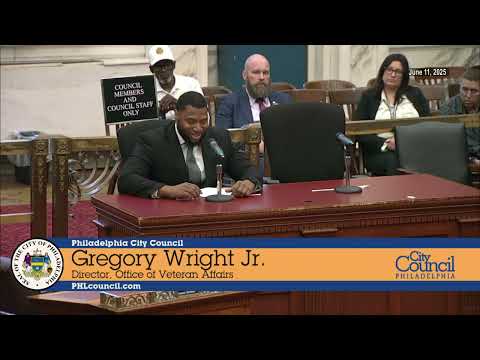
Director Gregory Wright thanked Muwakil for his remarks and the speaker offered to work with the commission and director’s office. The commission did not take formal action on the tax‑abatement remarks during the meeting; Muwakil’s comments were presented during the public comment portion and were framed as a request for future advocacy.
The transcript records the concern and the speaker’s offer to collaborate but does not include a city legal analysis, any council motion, or a staff recommendation on changing abatement criteria. Any policy change would require additional legal review and action by the City of Philadelphia and, where applicable, the Pennsylvania Legislature or constitutional process referenced by the speaker.