Get Full Government Meeting Transcripts, Videos, & Alerts Forever!
Get email alerts on the Veteran Homelessness topic
No spam. Unsubscribe anytime.
Commission meeting spotlights veteran homelessness, nonprofit coordination and job‑placement gaps in Philadelphia
Summary
Commissioners and community speakers urged the City of Philadelphia Office of Veterans Affairs to prioritize homelessness prevention, better coordination with nonprofits and VA, and job pipeline development to help veterans maintain housing and stability.
Multiple speakers at the City of Philadelphia Veterans Advisory Commission meeting urged the newly formed commission and the Office of Veterans Affairs to prioritize preventing veteran homelessness, improving coordination with nonprofits and the U.S. Department of Veterans Affairs, and strengthening job pipelines.
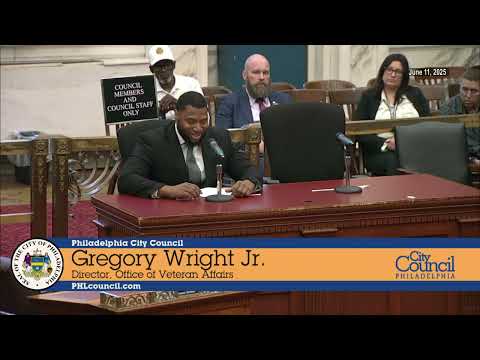
Commissioner Frank McKelvey asked how commissioners “are going to better the homeless veterans throughout the city,” saying homelessness among veterans is rising. Director Gregory Wright responded that the office’s work includes connecting veterans to employment, mental‑health resources and housing providers and that his team and partners vet housing placements to help veterans sustain tenancies.
Wright described staff and partners who “vet the apartment or the place of housing” and said the office’s aim is to identify underlying causes of homelessness rather than just placing people into housing. He urged organizers and commissioners to “show up” at outreach efforts and to steward partnerships that link veterans to jobs and clinical care.
Nonprofit leaders told commissioners that many veteran-serving groups operate with little or no city support. A speaker identified in the transcript as Hari, who runs a veteran services operation, said she has been running large-scale distributions and is paying for storage and supplies out of pocket; she urged the commission to “connect these organizations with the Veterans Advisory Council” and asked that city funding and coordination be more evenly distributed among providers.
Tyrone Rucker, identified as district commander of the First District of Philadelphia, described street-level needs and urged the commission to help younger veterans whom he said often distrust older veteran organizations. Joe Eastman, a longtime veteran services provider, advised the commission that programs must be ready when a person is ready to come off the street and recommended the city collect hiring data to determine whether veterans are applying for and receiving city jobs.
Representatives of community groups described ongoing direct services: the New Beta Military Fraternity said it feeds the homeless every Tuesday and packs 1,500–2,000 meals monthly; other speakers said they run stand‑down events and job-readiness programming. A nonprofit speaker said she is organizing a September stand‑down at the School of the Future and expects to serve more than 500 veterans that day.
Speakers urged better connections with the VA when claims are denied. Wright said his office includes veteran service officers and offered to receive referrals: “If someone says, hey, my claim was denied, let’s find out why,” he said, and urged commissioners and providers to send veterans to his office for assistance.
The discussion repeatedly returned to two themes: operational coordination (making city, nonprofit and federal supports interoperable) and readiness (ensuring services are immediately available when a veteran is ready to accept help). No formal votes or policy changes were recorded at the meeting; participants requested follow-up coordination and partnership with the director’s office.