Get Full Government Meeting Transcripts, Videos, & Alerts Forever!
Get email alerts on the District Report topic
No spam. Unsubscribe anytime.
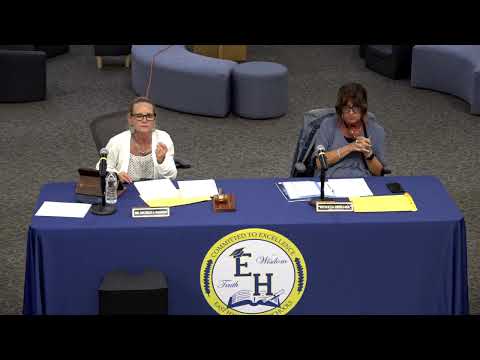
Superintendent presents end‑of‑year district report: attendance, literacy gains, grants and program growth
Summary
The superintendent gave an end‑of‑year presentation summarizing attendance trends, reductions in suspensions, literacy and math gains, career and technical education expansions, grant awards (including a $500,000 opioid trust fund grant), and other operational highlights.
The superintendent delivered an end‑of‑year presentation summarizing accomplishments, data trends and priorities for the coming year across culture and climate, academics, finance and operations, and talent.
Attendance and truancy: The district’s self‑reported chronic absenteeism rate for the year was 16.5 percent, up from 15.2 percent the prior year, driven in part by winter illnesses, the superintendent said. The presentation referenced district strategies to encourage attendance, such as recognizing students with strong or improving attendance and personalized attendance plans. The middle school attendance rate was highlighted at about 15 percent; that building’s rate had fallen from 23 percent in a previous year, and staff were invited to present their family‑engagement work statewide.
Discipline and climate: The superintendent reported reductions in in‑school and out‑of‑school suspensions and expulsions compared with 2021–22, crediting restorative practices and school‑level efforts. The district adopted the Panorama survey platform and reported favorable student responses on measures such as goal‑directed behaviors and connectedness (90% favorable for grades 3–5 on goal‑directed items; 84% favorable for connectedness at 3–5), with lower but positive results at middle/high levels.
Literacy and math: District data presented for K–8 showed movement on iReady and other benchmarks. The district reported an increase in the percentage of students at benchmark on math from 10% at the start of year to 38% by the end of the year (districtwide K–8 assessment snapshot referenced by administration). On reading, the district moved students from 39% at risk in fall to 24% at risk by the end of the year, the superintendent said, and a matched cohort of current third graders who entered kindergarten in 2020–21 showed marked improvement from kindergarten baseline to end of third grade.
Targeted interventions and summer programming: The district will run a summer program beginning Monday focused on K–3 students (105 students enrolled plus 18 more from competitive funding) and additional programming for newcomer multilingual learners (12 of 26 invited accepted). The superintendent said the district blended grant and operational funds to create a model aimed at being sustainable beyond the grant window.
Pupil services and grants: The district reported 574 students with IEPs under IDEA and 213 students under Section 504. The superintendent announced that the district received a $500,000 opioid trust fund grant over three years to support prevention and interventions for students affected by neonatal opioid withdrawal syndrome (NOWS) and to provide family supports; that grant will fund a multi‑person team and early identification efforts.
Career/technical education and college readiness: The district highlighted expansion of career pathways (aviation, maritime, greenhouse/agriculture), plans to pursue VOAG designation to recruit students from other districts (which could generate tuition revenue), and growth in dual‑credit enrollments (over 400 enrollments). The district reported higher on‑track percentages for ninth graders (projected ~87%) and a four‑year graduation rate projected near 86% for the coming year; officials noted that graduation statistics exclude students who move to adult education programs.
Technology and operations: Technology services reported a 94% contactable rate via ParentSquare and that staff mitigated more than 500 phishing attempts during the year. The district is launching a redesigned website (targeted July 7) and ParentSquare Pay for easier family payments. Food service management had its first profitable month in May and, per contract terms, the district expects contract guarantee reconciliation after June.
Talent and retention: The superintendent reviewed hiring and resignations by role, noted significant paraprofessional turnover and the top reasons staff cited for leaving (salary, professional opportunity, workload). The district reported initiatives including an exit survey, partnerships with higher education (a residency program funded by Department of Labor grant to pay mentor teachers $6,000), and efforts to convert paraprofessionals into certified teachers.
Why it matters: The report aggregates operational data and sets out monitoring and program priorities for 2025–26: continued focus on attendance, literacy and numeracy interventions, expansion of CTE pathways, grant‑funded prevention work, and recruitment/retention strategies.
Questions and follow‑up: Trustees requested additional reports, including embargoed state assessment numbers and comparative paraeducator ratios with neighboring towns. Administration agreed to provide additional data and to monitor the items discussed.