Get Full Government Meeting Transcripts, Videos, & Alerts Forever!
Get email alerts on the Facilities And Capital Planning topic
No spam. Unsubscribe anytime.
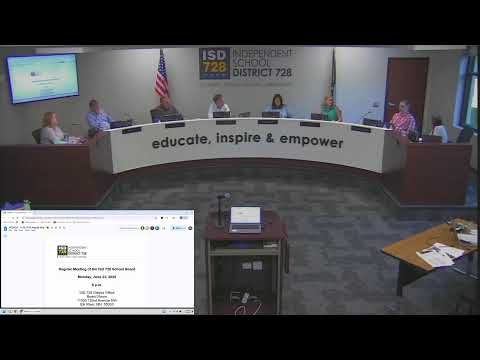
Elk River board approves 10-year long-term facilities maintenance plan
Summary
The Elk River School District board voted to approve a 10-year Long-Term Facilities Maintenance (LTFM) plan that pairs LTFM funds with remaining referendum dollars and anticipates periodic LTFM bond requests to pay for deferred building projects and routine infrastructure needs.
The Elk River School District Board on a voice vote approved the district's 10-year Long-Term Facilities Maintenance (LTFM) plan, which pairs LTFM funds with remaining referendum revenue and projects routine and planned building work through 2031.
Kim Eisenchek, Business Services director for Elk River School District, told the board the referendum approved by voters totaled $113,000,000 and that interest earnings raised the available total to about $116,500,000. "I am here to ask for your approval of the LTFM plan. It's a 10 year plan," Eisenchek said during the presentation. She said roughly $3.5 million in interest has been earned on referendum funds and that the district has ongoing projects that will draw on both referendum and LTFM funding.
The plan shown to the board details projected revenue and expenditures for the next 10 years and itemizes the first four years because those are the years in which LTFM funds will be spent in partnership with referendum proceeds. Eisenchek described routine district maintenance categories (examples: HVAC/electrical repairs, chillers, parking-lot crack-filling and restriping) and singled out an annual health-and-safety budget line the district expects to spend about $900,000 a year on.
Board members asked about a projected dip in LTFM spending around 2031. "So with that, I'd open it up to the board for any questions," Eisenchek said; Director Steinbrecher pressed the district for clarity on the 2031 reduction, noting that maintenance on 22 buildings will continue to be costly. Eisenchek replied the decline reflects planning assumptions and would give the board flexibility to redirect funds to address capacity needs in the south part of the district if the board chooses.
Eisenchek also explained the district plans to request LTFM bonds every two cycles to ensure the funded referendum and maintenance promises are completed. The board voted by voice to recommend school board approval of the plan; the motion carried.
The district will submit the required LTFM documents to the Minnesota Department of Education (MDE) so the plan can be used for levy, aid, and bond-authority calculations. Eisenchek emphasized the revenue side includes levy and aid projections and debt-service assumptions tied to periodic bond requests.
The board's vote was a recommendation to approve the 10-year LTFM document so the district can forward it to state authorities and continue planned procurement and bidding steps for projects that meet bid thresholds.