Get Full Government Meeting Transcripts, Videos, & Alerts Forever!
Get email alerts on the Special Education topic
No spam. Unsubscribe anytime.
District reports special-education growth and compliance improvements; adds classrooms
Summary
The board heard a year-end report from the district's Office of Exceptional Children: enrollment in special education rose, two new classrooms will open next year, and compliance measures show marked improvement.
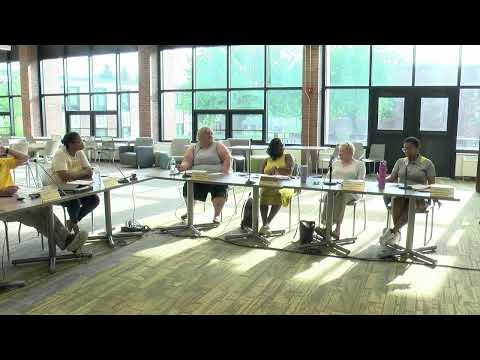
The South Euclid Lyndhurst Board of Education received a year-end report Tuesday from Jen Moles, the district's director of exceptional children, who described enrollment growth, new program placements and improved compliance metrics.
"Just last year, who we served for, the last 12 calendar months, we had 805 school age students with IEPs and ETRs...and a 113 preschool IEPs and ETRs," Jen Moles said. She reported the district is currently planning for 689 school-aged students with disabilities and 70 preschoolers enrolled for the upcoming fall and said the district has added two special-education teacher positions.
Moles told the board the district will open a new multiple-disabilities unit at Roland Elementary and move an autism unit to Adrian (from Sunview) because of capacity. "Adrian will have our autism unit and Roland will add a third classroom for students with multiple disabilities," she said.
Moles said the district met Ohio's compliance indicators for special education and that graduation and dropout performance for students with disabilities was strong. "Our graduation is right around 93 percent," she said.
The director described an internal monitoring process that involved teams from each building reviewing evaluations and individualized education programs quarterly. She said the district reduced noncompliance for ETR (evaluation team report) summaries from 89 percent needing improvement to 8 percent by May after targeted interventions and training.
Superintendent Capel and board members praised the work and asked about professional development and funding. The superintendent said professional development for special education will primarily be supported by Title I allocations and internal staff, though Title II funds for professional development were cut in half and the district is reviewing options.
Why this matters: The report shows both program expansion to meet student need and measurable improvement in compliance and documentation, which affect state reporting, program funding and students' access to services. The board did not take separate action on Moles' report; related personnel and program changes appeared later on the consent agenda and were approved.