Get Full Government Meeting Transcripts, Videos, & Alerts Forever!
Get email alerts on the Lake Management topic
No spam. Unsubscribe anytime.
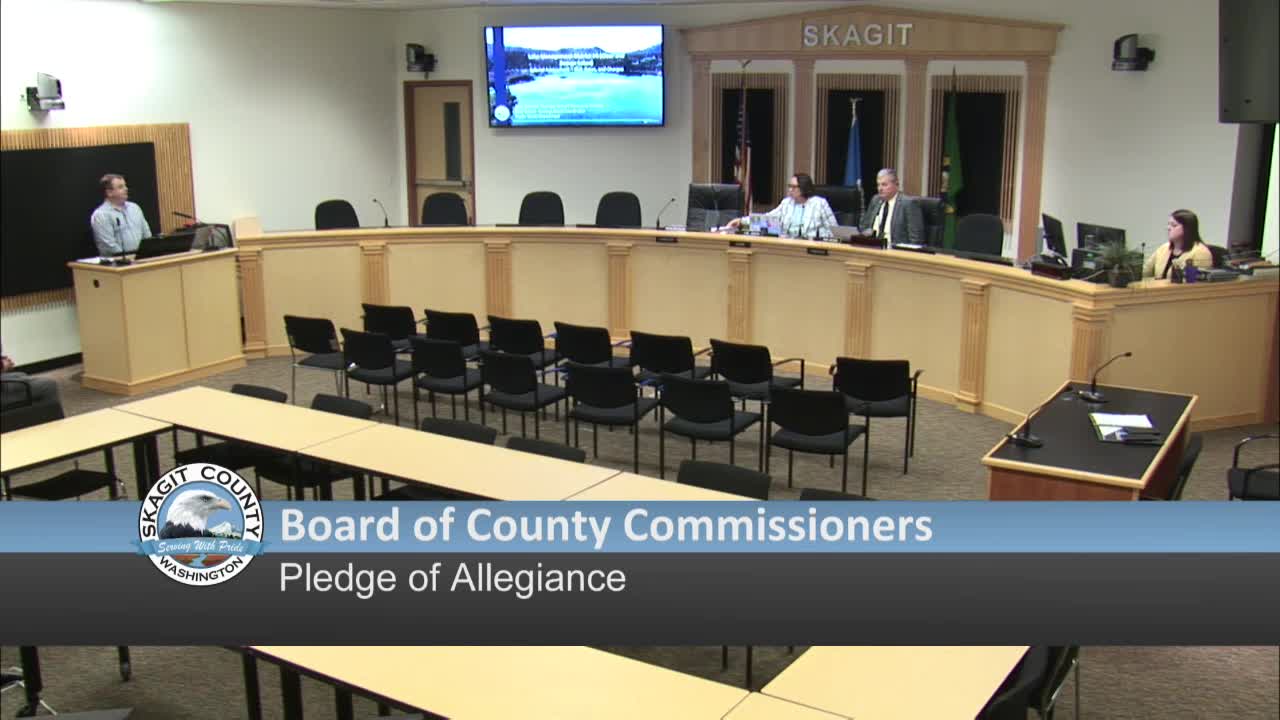
Skagit County commissioners approve sending ballot to Clear and Beaver Lakes property owners to reform Lake Management District 4
Summary
After a public hearing, commissioners authorized submitting a ballot measure to property owners to reform Lake Management District 4 and raise a 10-year special assessment to pay for expanded aquatic weed control and related lake-management work.
Skagit County commissioners voted 2-0 to submit a ballot question to property owners around Clear and Beaver Lakes to reform Lake Management District Number 4 and increase its special assessment rates. The action follows a public hearing during which county staff described rising treatment costs and a schedule required by state law.
The proposal would replace the district's existing 10-year assessment with a new 10-year plan to fund aquatic noxious-weed control, surveying and mapping, permit fees, public notifications and treatment work. Jen Johnson, Natural Resources Division manager for Skagit County Public Works, said the district was last reformed in 2017 and runs through 2028 but that rising contractor estimates and higher chemical and labor costs prompted an early reformation.
Johnson said the county sent a newsletter and survey to property owners and that a small number of respondents supported rate increases to allow necessary treatments. "We did receive some responses and overwhelmingly people said please increase the rates in order to do the treatments necessary to control them," Johnson said.
Evan Emrick, the county's noxious-weed coordinator who staffs the lake districts, described how district funds pay for annual lake surveying and mapping to track algae and aquatic vegetation, permit costs to apply pesticides, public notification and the actual treatments. Emrick said proposed work targets submerged vegetation such as broad pondweed and floating plants including fragrant water lilies, which are listed as a Class C noxious weed and can lower oxygen levels and harm native fish. He said contractor estimates have been running about $10,000 higher per year than current collections and that the county proposed an overall 10-year total of roughly $430,419 compared with about $208,000 under the current plan.
A resident, David Olson, testified that some properties near his neighbor had not received spraying in recent years despite paying the fee, and asked the county to confirm targeted treatment areas. County staff said some properties have declined herbicide treatments and that the state permit limits what percentage of certain species (notably lilies) may be treated in a single year, requiring prioritization around the lake.
If the commissioners' action proceeds, the county will mail ballots to property owners adjacent to Clear and Beaver Lakes for a 22-day voting window (state law requires a 20-30 day period). Ballots will be counted and a simple majority among returned ballots is required for reform. County staff said an additional public-notice and appeal period and final public hearing are scheduled under the timeline; staff also noted the county must follow the procedural dates established in state law (RCW).
The commissioners closed the public hearing and approved the resolution to submit the question to property owners. The vote to submit the question carried 2 to 0. County staff said, if ballots show a close result, they will provide additional outreach and education before the final adoption hearing scheduled for October.