Get Full Government Meeting Transcripts, Videos, & Alerts Forever!
Get email alerts on the Animal Control topic
No spam. Unsubscribe anytime.
Sedona council defers animal-display ordinance after questions on licensing, private ownership and euthanasia
Summary
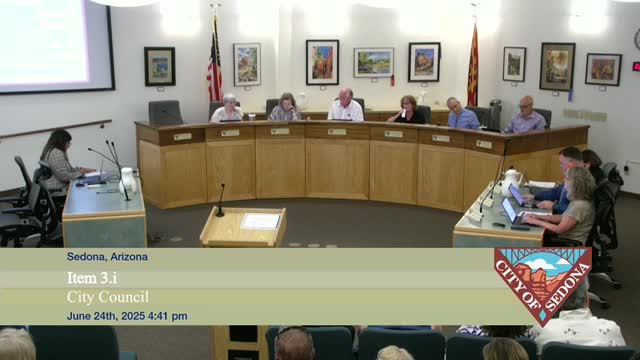
The Sedona City Council on Tuesday deferred consideration of an ordinance that would restrict public displays and performances involving wild and exotic animals, citing remaining legal and practical questions about enforcement, private‑property displays, licensing and the circumstances under which animals might be confiscated or euthanized.
The Sedona City Council on Tuesday deferred consideration of an ordinance that would restrict public displays and performances involving wild and exotic animals, citing remaining legal and practical questions about enforcement, private‑property displays, licensing and the circumstances under which animals might be confiscated or euthanized.
Councilors said the city needs clearer code language before adopting the measure. Councilor Dunne, who asked for the item to be pulled from the consent agenda for discussion, said emails from residents had revealed "confusion" about whether private owners walking a parrot or other pet in public would be covered by the prohibition. "We wanted to make it clear in the ordinance what was and was not supported," Dunne said during the discussion.
Why it matters: The draft ordinance (agenda item AB 32‑17) would add a new chapter to Sedona City Code Title 6 to regulate the public display or performance of wild or exotic animals. Councilors and police said the current draft leaves open whether ordinary private pet‑owners would be treated the same as commercial exhibitors, and whether the city would have adequate discretion to avoid draconian outcomes such as immediate confiscation or euthanasia. The council directed staff to return with wording that explicitly ties enforcement to the intended harms and clarifies the rights of private owners.
What councilors and staff asked for - A clear definition of the critical term "benefit," so the code distinguishes private, noncommercial pet‑ownership and incidental photos from paid or commercial displays. City Attorney Monique (surname not provided) read the ordinance definition of "display" for the council and described it as a "two‑prong" concept — an act to exhibit an animal plus a resulting benefit to a live audience — and said a definition of "benefit" would help link the two parts. She read the draft: "display means to exhibit, show, hold, or use for photographs with members of the public of wild or exotic animals for the benefit of a live audience." - Replacing mandatory enforcement language with officer discretion. Staff proposed changing a provision that currently says an officer "shall" issue a written warning on first violation to say an officer "may" issue a documented warning, to match current practice and give officers discretion. - Stronger text on placement and disposition. Staff proposed revising a sentence that copies Arizona Game and Fish language about confiscated animals to require that the confiscating agency "shall make a reasonable effort to find suitable placement" for an animal, rather than leaving placement to a purely permissive standard. Staff also proposed adding a clause that, when euthanasia is considered, it should occur only after consultation with a veterinarian or a recognized wild/exotic‑animal expert. - Explicit limits for private‑property activity and licensing. Several councilors and speakers argued the draft should be clear that private, noncommercial ownership — for example, a person walking a pet parrot who accepts no payment — is not a display targeted by the ordinance. Some councilors questioned whether the draft’s licensing requirements should apply to private‑property displays.
Public speakers and enforcement concerns Three public speakers who identified themselves as Sedona residents and animal‑care providers urged the council to narrow or rewrite the ordinance. Alan Abuhaj said the draft as written could allow confiscation and euthanasia after a first offense and urged the council to tighten the language; he told the council that "confiscation and euthanasia, in my opinion, is unacceptable" as a routine outcome. John Duff, who said he has operated animal exhibits in Uptown Sedona, asked councilors to "strike the words ‘performance’ and ‘benefit’" and said their activities are "all about education." Seth Byerley, who said he represents a separate local animal‑care group, told the council his group has "had no trouble in the past two years at all" and asked the city not to make one person’s incidents determine policy for all groups.
Police and legal perspective Police and legal staff said the draft was intended to provide preventive authority where current code leaves police reactive options only after an injury or criminal abuse is proven. Commander Chris Dallida, Sedona Police Department patrol commander, told the council the ordinance should be read as prohibiting only displays that include both an exhibition and a benefit to the exhibitor. "It’s not for somebody who’s walking their dog down the street who takes a selfie with somebody else," Dallida said. He added that decisions to euthanize animals historically come from veterinarians or judicial orders, not solely from police, and that euthanasia is an "absolute last resort." City Attorney Monique and police staff said they would draft language to make the evidentiary standard and the agency decision process clearer.
Council action Councilor Kinsella moved to defer the ordinance so staff could revise the language on the points discussed. The motion to defer to a future meeting (council discussed returning the item on August 12 but noted August availability depends on agenda scheduling) passed unanimously. The council directed staff to prepare revised ordinance language that: 1) defines "benefit," 2) clarifies the scope of "display" and whether private, noncommercial owners are exempt, 3) replaces mandatory first‑offense penalties with officer discretion, and 4) adds clear steps for confiscation, placement and euthanasia, including consultation with veterinarians or animal‑welfare experts.
What’s next Staff said they will draft the revisions, coordinate with police and, where helpful, with Arizona Game and Fish, then return the amended ordinance to a future council meeting. The council asked staff to provide the revised language to councilors for review before the revised ordinance is posted for a meeting. The council did not adopt any ordinance on June 24; the proposal was postponed for further drafting.
Ending The deferral leaves the core policy question open: how to balance public safety, animal welfare and the rights of private owners and nonprofit exhibitors. Councilors said they want an ordinance that prevents exploitation and public‑safety incidents while protecting private, noncommercial pet owners and providing clear, humane procedures for cases requiring confiscation.