Get Full Government Meeting Transcripts, Videos, & Alerts Forever!
Get email alerts on the Humanitarian Disaster Response topic
No spam. Unsubscribe anytime.
UNOPS chief urges sustained funding and safe access after Myanmar’s March earthquake
Summary
Jorge Moreira da Silva, executive director of the U.N. Office for Project Services (UNOPS), described extensive damage and urgent humanitarian needs in Myanmar after a March 28 magnitude-7.7 earthquake and urged donors to provide sustained funding and for parties to the conflict to allow safe access for relief.
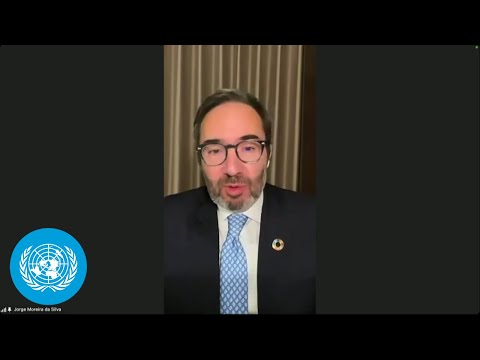
Jorge Moreira da Silva, executive director of the U.N. Office for Project Services (UNOPS), said during a virtual briefing that his recent visit to Myanmar found “immense” reconstruction needs after the March 28 magnitude-7.7 earthquake and that humanitarian access must be sustained despite continuing conflict.
The briefing, hosted by the United Nations Correspondents Association, focused on the immediate humanitarian response and early recovery needs in Yangon, Sagaing and Mandalay, areas Moreira da Silva said were heavily damaged by the quake and still struggling amid ongoing conflict and monsoon-season risks.
UNOPS, which Moreira da Silva described as the U.N. entity with the largest presence in Myanmar, has deployed personnel and resources on the ground for three decades. “Immediately after the earthquake, UNOPS worked swiftly with our partners, mobilized $25,000,000, and scaled up our response to reach half a million people with life‑saving assistance,” Moreira da Silva said.
Why it matters: The earthquake struck a country already facing protracted displacement and active hostilities. Moreira da Silva said the disaster aggravated preexisting humanitarian needs and that access limits and insecurity threaten both relief and reconstruction efforts.
Damage and needs described
Moreira da Silva reported that, before the quake, more than 3,500,000 people were displaced by conflict in Myanmar. He said the population now in urgent need in the most affected areas exceeds 6,300,000 people. He also cited an estimate that over 2,500,000 tons of debris must be removed to allow reconstruction work to proceed.
“The conflict never stopped,” Moreira da Silva said, describing strikes and continued displacement he witnessed near internally displaced persons centers. He said many people remain in temporary shelter without access to clean water or basic services as the monsoon season increases flooding and disease risks.
Funding and reconstruction estimates
Moreira da Silva cited figures published by the World Bank indicating an initial damage estimate of about $11 billion, and said full reconstruction could cost “two to three times more.” He also said the U.N. humanitarian appeal at the time of the briefing was $275,000,000 and that only about 22% of that appeal had been funded.
Access, localization and safeguards
Moreira da Silva emphasized the need for “safe, sustained access” by humanitarian actors and repeated calls for parties to the conflict to uphold obligations under international humanitarian law. He said UNOPS has developed local partnerships over 30 years that permit the agency to deliver assistance without compromising localization or risking aid diversion.
Q&A highlights
Edith Ledera of The Associated Press asked whether the ongoing military situation would deter donors. Moreira da Silva replied that the conflict had not ceased and that, despite the instability, withholding support would be unjustified. “I don't think that the fact that we are dealing with an ongoing conflict justifies any delay or postponement in support of Myanmar,” he said.
When asked by Evelyn Leopold of the Dag Hammarskjold Fund for Journalists whether UNOPS would advocate a weapons embargo, Moreira da Silva declined to address arms embargoes, saying UNOPS focuses on operational support and that he echoed broader U.N. calls for ceasefire and reconciliation.
Context and next steps
Moreira da Silva said UNOPS and partners are shifting from immediate response to early recovery and that much larger flows of funding will be required to restore services and rebuild livelihoods. He urged continued donor support and reiterated that reconstruction should aim to support a broader path toward peace and civilian protection.
The briefing concluded after a short question-and-answer session with journalists; Moreira da Silva invited follow-up engagement with the press.