Lifetime Citizen Portal Access — AI Briefings, Alerts & Unlimited Follows
IAEA chief urges diplomacy after reported strikes on Iran nuclear sites, convenes Board of Governors session
Loading...
Summary
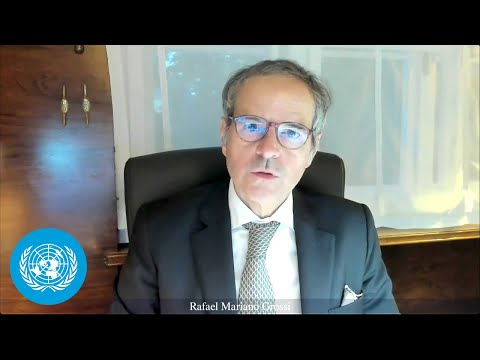
Rafael Mariano Grossi told a United Nations meeting that recent bombardments at Iran's nuclear sites risk damaging the global nonproliferation regime and said he has convened a special session of the IAEA Board of Governors in Vienna to continue consideration of the situation.
Rafael Mariano Grossi, director general of the International Atomic Energy Agency, told a United Nations meeting that recent bombardments at multiple Iranian nuclear sites and the risk of wider military escalation threaten the global nuclear nonproliferation regime and that the IAEA is ready to act to protect nuclear materials and restore inspections.
Grossi opened by saying, "the nuclear nonproliferation regime that has underpinned international security for more than half a century is on the line," and announced, "I have convened a special session of the board of governors of the IAEA tomorrow morning in Vienna to ... continue the consideration of this issue." He urged a return to diplomacy and inspectors: "We must return as the secretary general just said to the negotiating table and allow the IAEA inspectors, the guardians of the NPT to go back to Iran's nuclear sites and account for the stockpiles of uranium, including most importantly the 400 kilograms of enriched uranium at 60%."
Grossi reported observable damage at several facilities based on information available to the IAEA. He said craters are visible at the Fordow enrichment site, indicating the reported use of ground-penetrating munitions, and that the United States has publicly confirmed using such munitions. He said additional buildings at the Isfahan site were struck overnight, with the United States confirming the use of cruise missiles, and that entrances to tunnels used for storage of enriched material at Isfahan "appear to have been hit." At the Natanz enrichment site, Grossi said the fuel enrichment plant "has been hit again" and that the United States confirmed using ground-penetrating munitions. He added that Iran has informed the IAEA there has been "no increase in off-site radiation levels at the three sites."
Grossi stressed that establishing facts on the ground is a prerequisite for any arrangement and that facts can be established only through inspections: "Any agreement ... will have as a prerequisite the establishment of the facts on the ground. This can be done only through IAEA inspections." He said inspectors already in Iran must be allowed to work under safe and secure conditions and that any special measures Iran takes to protect materials can be implemented "in accordance with Iran's safeguards obligations with the agency."
The IAEA chief warned of the broader consequences of attacks on nuclear facilities, saying armed attacks "should never take place and could result in radioactive releases with great consequences within and beyond the boundaries of the state" that was attacked. He offered the agency's assistance: "With your support ... the IAEA can deploy nuclear safety and security experts to Iran immediately in addition to our safeguards inspectors wherever they are needed," and said he was prepared to travel "immediately and to engage with all relevant parties."
Grossi concluded by urging restraint and diplomacy and by warning of the risks of nuclear proliferation: "We will not be safer if there are more nuclear weapons in more states around the world." The meeting's presiding officer then thanked him for his briefing.
Notes: Grossi said the IAEA cannot yet assess the extent of underground damage at Fordow. His accounts of weapons types and strikes were described as "consistent with statements from the United States." Iran's reported lack of increased off-site radiation was conveyed to the IAEA by Iranian authorities and reported by Grossi.