Get Full Government Meeting Transcripts, Videos, & Alerts Forever!
Get email alerts on the Travel Policy topic
No spam. Unsubscribe anytime.
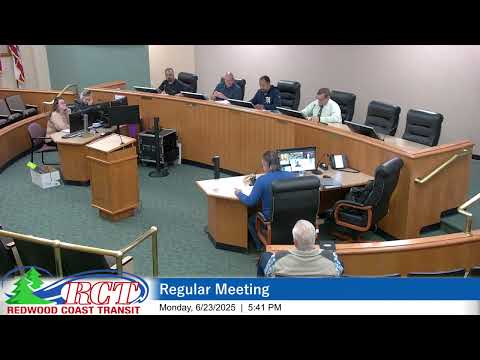
Del Norte RCTA adopts travel policy, later reconsiders rules on lodging, meals and restaurant transport
Summary
The Del Norte County Regional Transit Authority approved a travel policy for board members and contract staff, then voted to reconsider and amend sections banning short-term rentals and requiring meal receipts.
The Del Norte County Regional Transportation Agency (RCTA) board adopted a travel policy for contract staff and directors and later voted to reconsider and amend parts of that policy, removing a ban on short-term rentals, allowing reimbursement for transportation to restaurants while traveling on agency business, and eliminating a receipts requirement for meal per diems.
The board first considered the travel policy under agenda item 4. Executive Director Joe (last name not specified) told the board the policy was the agency’s first and is intended to allow contract staff and directors to attend transit conferences and professional-development events. He said the agency included $1,200–$1,500 in next year’s budget to cover two staff trips per year, and that the agency’s management contract rates are low compared with market rates, which constrains internal funding for travel.
The board voted to approve the policy at that meeting by unanimous roll call. Later in the same meeting, one director asked the board to reconsider specific provisions after expressing concern the policy as written would (1) prohibit reimbursement for transportation to restaurants while attending conferences, (2) bar Airbnb/VRBO lodging unless no other lodging is available within 50 miles, and (3) require submission of meal receipts even though meals otherwise would be reimbursed at federal GSA per diem rates.
After discussion, the board moved to reconsider and amend the policy. The amendment that passed struck the clause forbidding reimbursement for transportation to restaurants, removed the categorical ban on Airbnb/VRBO lodging (so alternatives are permitted if cost-competitive or otherwise reasonable), and removed the requirement that board members, the executive director and employees submit receipts for meals when meals are reimbursed at GSA per diem rates. The amended travel policy was approved by unanimous roll call vote.
Why it matters: the policy establishes how RCTA will pay for conferences, training and other travel for a management team that is structured as a contractor providing most of the agency’s management. The changes adopted during the meeting align the policy with common practice of reimbursing reasonable lodging and using GSA meal rates without requiring every meal receipt.
Details and context: Joe said RCTA’s management contract rate is about $80 per hour to keep the agency’s management line near $100,000 annually; he said that rate is well below typical consultant rates and leaves little room to absorb travel costs without a specific budget allocation. The originally proposed travel budget line was described as roughly $1,200–$1,500 per year to cover a couple of trips. Board members discussed whether travel should be included in the contractor agreement or funded separately; the board retained the budgeted amount rather than increasing the contract line.
The board’s amended policy also aligns with county and state practices mentioned during the discussion: speakers noted that some agencies use GSA per diem rates rather than requiring meal receipts, and that hotel markets (for example, Downtown Sacramento) can make hotels scarce or expensive during major events, which was cited as a reason to permit reasonable short-term rental lodging when cost-effective.
What’s next: The board approved the amended travel policy and the agency will implement the reimbursement procedures under the revised language. The board discussed monitoring expenses and can revisit the policy or budget in future meetings.
Speakers quoted or attributed in this article come from the meeting record and include Executive Director Joe and voting board members identified in the transcript.