Get Full Government Meeting Transcripts, Videos, & Alerts Forever!
Get email alerts on the Tax Increment Financing topic
No spam. Unsubscribe anytime.
Public commenter and supervisors debate TIF guidance; county to refine joint-review direction
Summary
A public commenter urged stricter county guidance on tax incremental financing; supervisors debated a committee resolution directing Marathon County’s representative at TID joint review boards and asked staff to clarify language before Tuesday’s meeting.
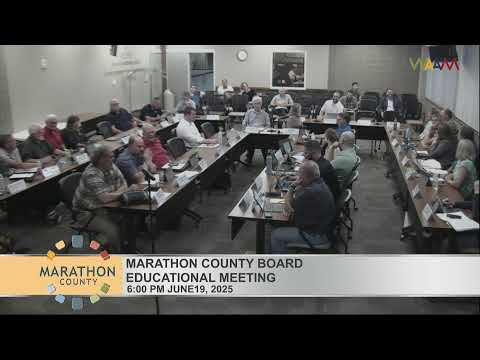
A Marathon County resident warned the Board of Supervisors that local use of tax incremental financing (TIF or TID) is excessive and urged stronger county guidance on June 19, prompting several supervisors to debate the wording of a committee resolution that would direct the county’s joint-review-board representative.
Peter Weinshank told the board during public comment that “Marathon County TIF right now is pretty much out of control,” and that 10% of county property is in tax incremental districts and that one-third of current TIDs have had their lifespans extended. He criticized a committee draft resolution (listed in the packet as Resolution 36-25) for omitting language he had proposed requiring the county finance director to vote only for proposed TIDs that meet the Department of Revenue’s joint review board best practices and to require any new TID to repay taxpayers within 38 years; he said the committee draft instead only asks the finance director to “consider” best practices and only requires termination within 38 years, an outcome Weinshank called “pointless” because state law, he said, already limits new TIDs to 27 years.
Supervisors discussed the proposal at length. Supervisor Fifrick defended cautious TID use as an economic development tool and said TIDs have helped projects that created jobs and investment. Supervisor Marash said the county’s representative used committee guidance at a June 12 joint-review-board meeting and cited three recent votes by that representative where she supported or opposed amendments based on alignment with county priorities. Supervisor Marshall and others flagged a “perverse incentive” in state law: developing inside a TID can increase net new construction counts and thus future levy limits for the municipality. Several supervisors said the 38-year figure in Weinshank’s proposed language needs clarification because current statutes allow a TID for 27 years with potential extensions; Supervisor Robinson suggested reconciling the intent of the parties so the language is not read as permitting a 38-year TID.
No final vote on Resolution 36-25 was recorded in the June 19 transcript; supervisors asked staff to clarify the resolution’s language and to bring a revised version back to committee or the board before the next meeting.