Get Full Government Meeting Transcripts, Videos, & Alerts Forever!
Get email alerts on the Renewable Energy Siting topic
No spam. Unsubscribe anytime.
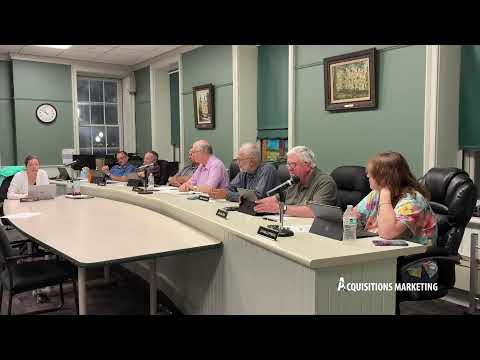
Planning board authorizes draft negative declaration for 59‑acre Goshen solar project after glare and visual mitigation discussion
Summary
The Planning Board authorized staff to draft a negative declaration for Solar Liberty’s 58.9‑acre solar project, conditioned on additional glare analysis and proposed plantings to reduce visibility from Millburn Road, Moonlight Trail and nearby residences.
The Town of Goshen Planning Board on June 5 authorized staff to draft a draft negative declaration under SEQRA for Solar Liberty Energy Systems’ proposed 58.9‑acre solar energy system, while directing the applicant to refine glare and visual mitigation details.
Ari Goldberg, attorney for the applicant, and project consultants presented written responses, visual simulations and a glare study submitted May 29. Nate Bombas of Lavelle Associates summarized glare modelling and new visual simulations that used geolocated photos and 3‑D modeling to show project visibility from six key vantage points, including Millburn Road and Moonlight Trail. The glare analysis identified limited yellow glare hours in certain places; consultants reported that most residential locations showed no yellow glare but that brief visibility could occur along short stretches of roadway.
“Millburn had the potential for green glare, 131 hours per year, but elsewhere the study shows 55.9 hours of yellow due to arrays 1A and 1C,” a consultant summarized in the meeting. The applicant added two additional planting areas (one adjacent to Moonlight Trail and one in the southwest corner of the parcel) and proposed 6‑foot plantings at Areas 1 and 2 with a one‑for‑one replacement ratio for native species. The team said Area 5 (near Moonlight Trail) is slated for 46 eastern red cedars; Areas 1 and 2 would receive 35 and 27 evergreens respectively; Area 4 would get about 20–24 trees.
Board members asked for more granular glare outputs—time of day and exposure duration at specific observation points—and requested the applicant model proposed mitigation (staggered 8‑foot plantings, or other plant sizes/densities) at the identified observation points to verify effectiveness. At least one board member said the applicant’s supplemental analysis had reduced predicted impacts and asked staff to prepare a draft negative declaration so the board could consider it at a future meeting; another member expressed continued concern and asked that the applicant fund attorney review if the draft is controversial.
Why it matters: The project is large and sited near residences and scenic corridors; glare and visual impacts were the primary outstanding issues in the board’s environmental review. The board signaled willingness to proceed toward a negative declaration provided the applicant demonstrates mitigation at the specific observation locations raised by the board.
Next steps: The applicant agreed to produce additional targeted glare tables (location, time window and hours) and to model the proposed additional plantings and any updated obstruction layers. The board directed staff to prepare a draft negative declaration for consideration; if adopted, the board would still require final visual simulations and planting bond/maintenance provisions during site plan review.
Ending: Solar Liberty left the meeting with direction to refine glare mitigation modelling and planting plans; the board authorized drafting a negative declaration but kept the door open for further review depending on the follow‑up analysis.