Get Full Government Meeting Transcripts, Videos, & Alerts Forever!
Get email alerts on the Fare Policy topic
No spam. Unsubscribe anytime.
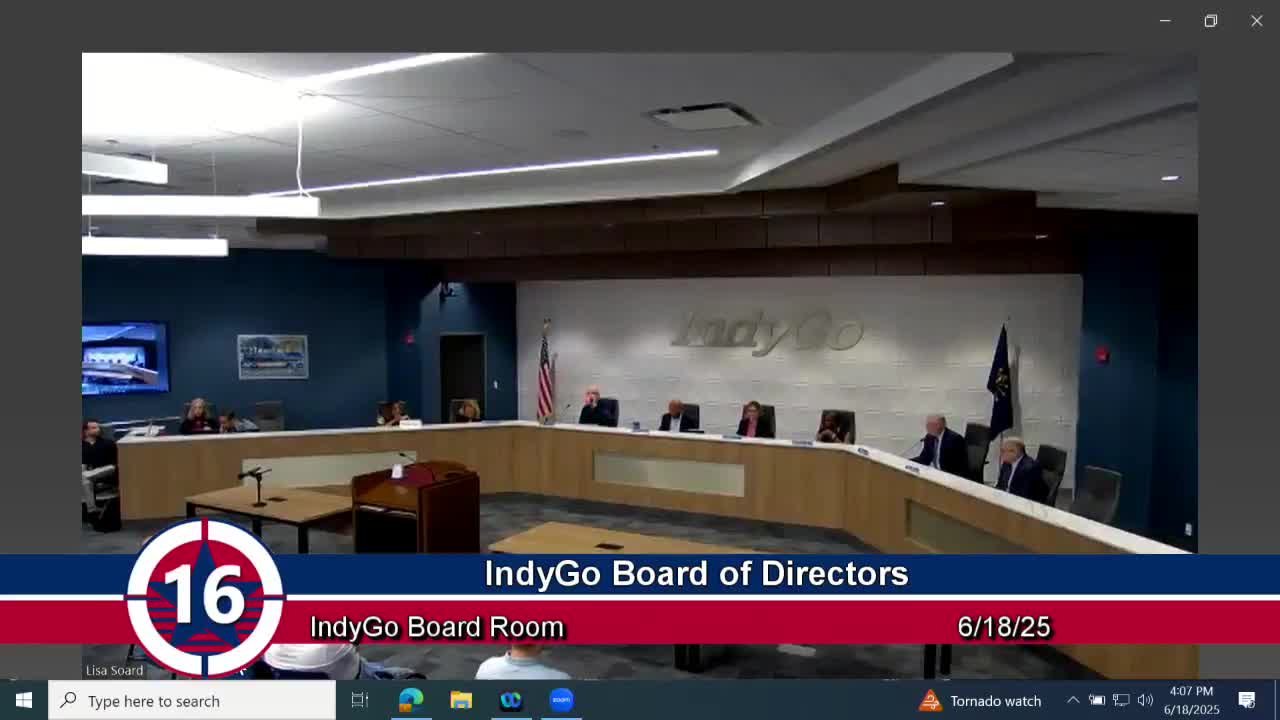
Indigo hears widespread concern about proposed fare increase and paratransit costs at June 18 public hearing
Summary
Indigo leaders presented a proposed update to the agencyfare policy that would raise the fixed-route base fare from $1.75 to $2.75 and increase paratransit fares; dozens of riders, disability advocates and daily commuters told the board the changes would disproportionately harm people with low incomes and those who rely on paratransit.
IndigoPresident and CEO Jennifer Pierce presented a proposed fare-policy update during a public hearing June 18, 2025, telling the board the recommendation follows a year-long review and would take effect Jan. 1, 2026, if adopted. The proposal would raise the standard fixed-route two-hour fare from $1.75 to $2.75 and the half-fare from $0.85 to $1.35; it would also raise daily and weekly fare caps and change several pass offerings.
Why it matters: the increase would raise paratransit (Indigo Access) fares tied to the base fare and, riders and advocates said, could substantially raise the cost of routine trips for people with disabilities and low incomes. Commenters described daily and weekly cost impacts in concrete terms and urged either a phased increase, parity for fare capping on paratransit, or other mitigations.
Pierce told the board the proposal responds to inflation and rising operating costs. "We have not adjusted our fixed route base fare in more than 15 years," she said, citing increases in fuel, labor and construction costs and presenting operations metrics (operating expenses per vehicle revenue hour rising from about $105 in 2013 to roughly $180 in 2023). The packaged proposal shown to the board would: increase the base fixed-route two-hour fare from $1.75 to $2.75; raise the one-day cap from $4 to $6 and the one-week cap from $15.75 to $24.75; and retire certain multi-ride and monthly passes in stages (no longer sold as of 07/01/2026 and no longer accepted as of 07/01/2027 if the policy is adopted).
The presentation also described changes to Indigo Access (paratransit) fares tied to the new base fare. Under the proposal, trips wholly within the ADA area (identified by Pierce as within three-quarters of a mile of fixed routes) would move from $3.50 to $5.50; trips beginning or ending outside that ADA area (the premium area) would move from $7 to $11 for scheduled service and from $10 to $15 for same-day service. Pierce said the 2x/4x multipliers applied to paratransit relative to base fare would not change, but raising the base fare drives the dollar increases.
Public commenters: dozens of people spoke in person and online, with many emphasizing the effect on people with disabilities, people on fixed incomes or those who use paratransit for work. Chris Hollingsworth, who identified himself as the "MAC chair," said, "Imagine the price of a gallon of gas going up overnight by $1.8. That's what a 57% increase looks like," and urged either a phased increase or fare-capping parity for paratransit riders. A number of speakers who said they are blind or have disabilities (including Christopher Meyer and Susan Jones) described living on fixed incomes and urged offsets or protections for Indigo Access riders. Other speakers (for example, Marissa Byers and Carrie Schmid) urged a smaller or incremental increase and recommended improvements to the payment experience, incentives for employers and higher child-fare caps.
Speakers also noted differences in fare relief: Pierce highlighted MyKey fare capping, bulk pass discounts available to employers and targeted half- or free-fare programs for seniors with Medicaid and for veterans. Pierce said more than 10,500 veterans already have personalized cards enabling free rides. She also described extensive outreach so far: seven public meetings held with 14 total scheduled, more than 7,500 page views on the agency's "Value of Transit" webpage and 60 written comments received to date.
Board process and next steps: Director Gardner closed the hearing after speakers finished and reminded the public the board would not vote at the June 18 meeting. The board will consider the policy and is scheduled to vote Aug. 21, 2025. Pierce and staff encouraged people with questions to attend additional public meetings and to submit comments at indigo.net.
The hearing produced multiple specific requests for board consideration, including phased implementation, application of fare capping to paratransit, preservation of monthly unlimited passes for budget-sensitive riders, and clearer outreach to employers about bulk pass programs. Those requests were recorded in the meeting and will be part of the record the board reviews before any vote.