Get Full Government Meeting Transcripts, Videos, & Alerts Forever!
Get email alerts on the Governance Charter topic
No spam. Unsubscribe anytime.
Town counsel says town charter and state law override committee rules; chair retains procedural authority
Summary
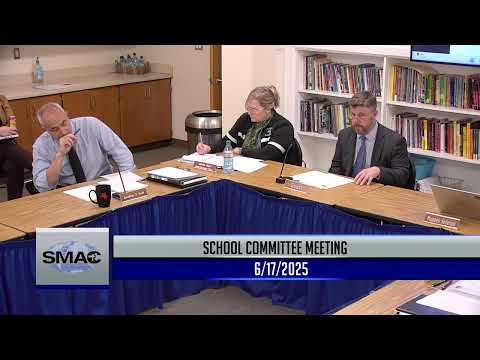
Town Counsel Brian Winter told the Stoughton School Committee on June 17 that the town charter and state law sit above committee rules and regulations, while chairs retain recognized procedural authority under the open meeting law; the committee discussed next steps, including a vote on any agenda-template changes.
At its June 17 meeting, the Stoughton School Committee heard legal guidance from Brian Winter, town counsel for the town of Stoughton, on the relationship between the town charter, state law and the school committee’s own rules and regulations.
Winter told the committee the charter occupies a high legal tier. He said the charter "is actually on par and has the same same status as state law," and explained that bylaws, rules and local regulations are meant to fill the operational gaps left by broader, higher‑level law. Winter added that many operational matters — scheduling, meeting order and agenda layout — are typically left to a committee’s chair for pragmatic reasons.
Why it matters: committee rules that conflict with higher law can be invalidated; at the same time, overly prescriptive local regulations can limit the committee’s flexibility to respond to changing circumstances or to accommodate public participation. Winter recommended the committee reexamine its old rules and regulations and work with its counsel to put any necessary changes in place.
What Winter told the committee Winter outlined a legal hierarchy that places the charter and state statutes at the top, followed by bylaws/ordinances and then board or committee policies and rules. He said the town charter and state law “supersede” committee regulations when they conflict, but that regulations and policies serve important, local operational purposes. Winter said those regulations can be revised by the committee and that some of Stoughton’s rules date to the 1950s and “warrant a reexamination.”
On the chair’s role, Winter cited the open meeting law and standard parliamentary practice as recognizing a distinct executive function for the chair around procedural questions. He described that authority as practical and traditionally exercised by the chair — for example, setting meeting nights or the operating order — but emphasized that such procedural authority is not meant to replace the membership’s collective decisionmaking on substantive matters.
Committee responses and next steps Several committee members pushed back or sought clarification. A member cited the Massachusetts Association of School Committees’ (MASC) view that "the agenda is the property of the body, not the chair," and argued any change to the agenda template should be decided by the five‑member committee. Winter and the committee agreed the relationship is nuanced and that boards differ; Winter stressed the importance of flexibility for routine administrative tasks while preserving the committee’s authority to adopt or amend regulations.
The committee received a memo from the school committee’s counsel, Joe Emerson, who could not attend; Chair Maggie Bridal said Emerson reviewed Winter’s memo and agreed with its take. Committee members discussed asking MASC to return for further discussion. Several members said they want a future vote on any formal changes to the standing agenda template.
Actions recorded - The committee voted 5–0 earlier in the meeting to take the agenda out of order to accommodate invited presenters (moved by Armando; seconded by Jillian). That procedural vote occurred before Winter’s presentation and was distinct from the later discussion about whether the agenda template itself should be amended.
Ending Committee members asked staff to circulate the legal memos and to schedule follow‑up: several members requested a formal vote at a future meeting if the committee chooses to amend its rules or to adopt a clarified agenda template. The committee also discussed inviting MASC back to explain its guidance on chair vs. body authority.