Get Full Government Meeting Transcripts, Videos, & Alerts Forever!
Get email alerts on the Solid Waste topic
No spam. Unsubscribe anytime.
Olmsted County adopts updates to solid-waste ordinance covering cannabis disposal, battery returns and recycling education
Summary
The Olmsted County Board approved revisions to Chapter 3,500 of the county code to add state-mandated cannabis waste assurance, require retailer battery-device take-back and strengthen recycling education and hauler reporting; the board adopted tiered administrative penalties and adjusted tipping fees.
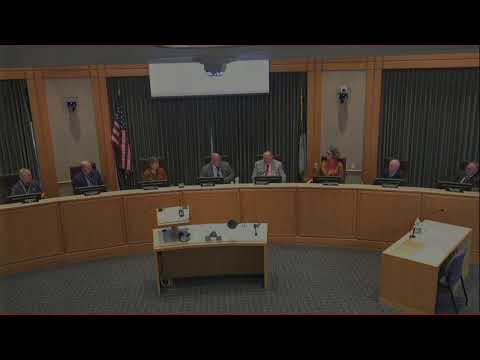
Olmsted County commissioners on an unrecorded voice vote adopted updates to Chapter 3,500 of the Olmsted County Code of Ordinances that revise solid-waste provisions including new cannabis disposal rules, battery-powered device return requirements for retailers, expanded recycling education and reporting for haulers, and adjusted tipping fees.
The changes were presented by Alex Kremenga, solid waste assurance coordinator with Olmsted County Environmental Resources. Kremenga said the cannabis-related provisions are required by state statute and establish disposal processes, remediation methods and recordkeeping expectations for retailers and cultivators. He said the health department will oversee licensing and will use the ordinance language to set recordkeeping standards.
The ordinance also requires retailers that sell battery-powered delivery devices to accept and manage returns of those devices, citing fire-safety risks when lithium batteries are disposed at transfer stations, landfills or waste-to-energy facilities. Kremenga said the county outlined options for treating those returns as hazardous waste, and included recycling, recordkeeping and fire-safety requirements for retailers.
Other revisions approved include updated tipping fees (with demolition identified as a key driver for increases), clarified definitions of “generator” and “person,” and an alignment of Class E licensing periods to run January 1 through December 31. The board also directed annual customer recycling-education by Class A haulers and required education for new customers so county guidance and hauler communications align.
The ordinance establishes a tiered administrative-penalty structure for violations; Kremenga told commissioners the intent is to clarify how administrative penalties will be applied rather than relying on a single penalty level. The updates also affect county-operated services and facilities, including the recycling center, landfill, waste-to-energy facility and transfer stations.
During the public hearing portion, teacher Laura Meyer urged more recycling outreach for schools, saying her facility had “absolutely 0 attempt to do any recycling” and asking whether funding could support school recycling programs. Commissioners and staff responded that school recycling outreach was outside the immediate ordinance language but could be addressed through public outreach and existing county and city education programs.
Commission discussion noted the board had reviewed the ordinance at prior meetings (May and June 3) and that the document had been the subject of multiple work sessions. After the public hearing closed, a commissioner moved to adopt the ordinance changes; the motion was seconded and the board voice-voted in favor. The meeting record shows the motion carried.
The ordinance text and implementation details such as exact fee schedules, the final penalty tiers, and specific enforcement procedures were presented in staff slides and discussed at the meeting; the ordinance adoption references state statute for cannabis disposal but does not cite a specific statute number in the discussion.