Get Full Government Meeting Transcripts, Videos, & Alerts Forever!
Get email alerts on the Contracts Audits topic
No spam. Unsubscribe anytime.
Council auditors find payment and liquidated‑damages calculation problems in residential haulers contracts
Summary
The Council Auditor reported that payments to residential waste haulers were largely supported and authorized, but the solid waste division miscalculated liquidated damages, included some charges outside contract scope and had timeliness issues; auditors will follow up in 12–18 months.
Bridal Parks of the Council Auditor’s Office presented the residential haulers audit (Report No. 891) to the Finance Committee on June 17 and concluded that while most payments from the city’s solid waste division “were properly supported and correctly authorized,” the department’s methods for calculating liquidated damages and some invoice items were flawed and caused payment accuracy issues.
Parks said the audit covered calendar years 2021–2022 and tested invoices and payments totaling roughly $76.4 million. The auditors recalculated payments, performed judgmental premise counts and reviewed customer complaints to validate liquidated damages. Parks said the auditors found a set of specific concerns: a $600,000 payment recorded in November 2021 that appeared outside contract terms, a roughly $66,000 reduction in another payment tied to third‑party hiring during driver shortages, and errors in how liquidated damages were calculated and applied across months. “Liquidated damages can be assessed and can be reversed in subsequent months if certain criteria are met . . . We found that the liquidated damages calculation was 7.7 to 12,600,000 less than it should have been calculated as,” Parks said (auditors’ numeric finding presented in the report). Parks also said some complaints closed in different months were not properly counted against performance, and the liquidated‑damages approach sometimes ignored caps that limit per‑route assessment.
Parks identified other payment errors, including monthly premise‑count problems that led to a net underpayment of about $36,000 across haulers; two haulers exceeded their annual fuel cap, which auditors said resulted in nearly $350,000 of overpayment; and invoice templates and the inclusion of items outside contract scope created risks. Parks said the solid waste division agreed with the findings and attributed some issues to the exceptional circumstances of 2021 (driver shortages and recycling suspensions), but auditors recommended policy and procedure improvements.
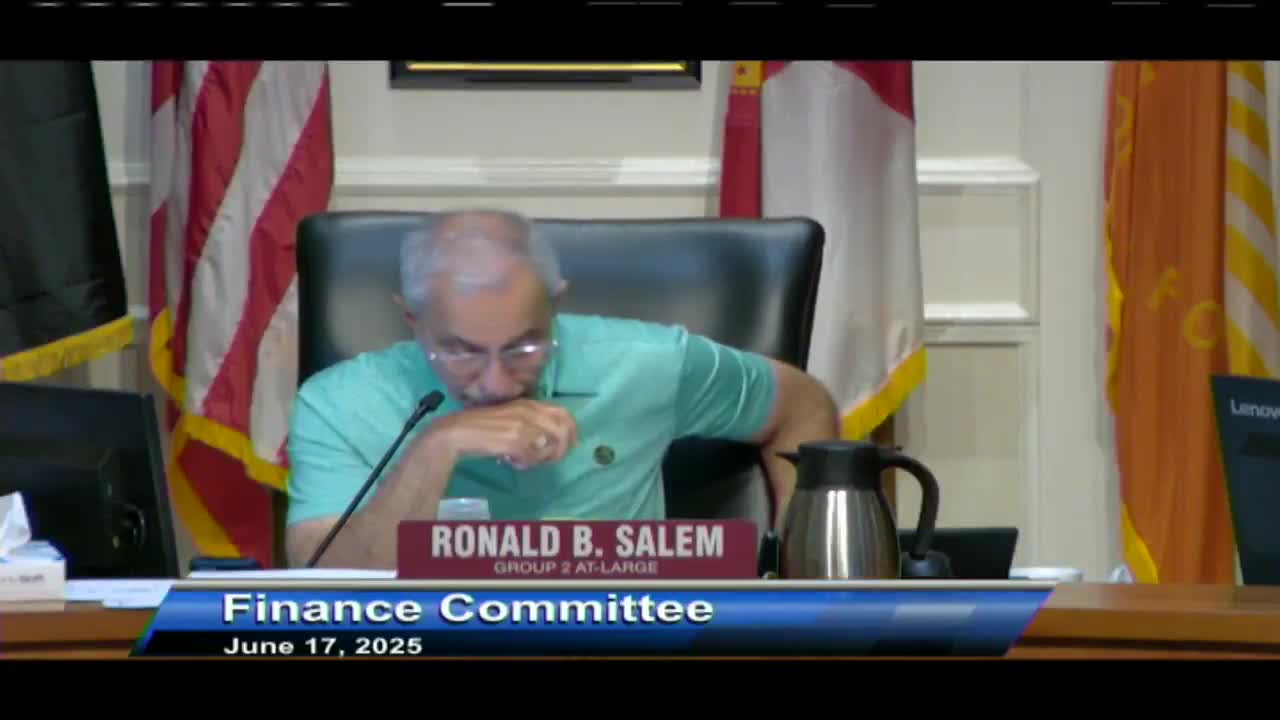
Committee members asked about audit follow‑up. Parks said auditors generally return in 12–18 months “to see you actually put in the new processes and have been doing it for about a year,” and that auditors will follow up on unresolved items and communicate progress to the committee. Committee Chair Ron Salem and Council Member Sanders asked that staff provide reconciled lists of reserve withdrawals and related budget impacts in writing; the auditors and staff agreed to provide additional documentation.
Parks also noted there were timeliness problems with city payments. The audit recommends system and process changes to invoice templates, liquidated‑damages calculations and payment controls; the solid waste division indicated agreement with the recommendations and has met with the new director to begin implementing changes.
The committee did not take a formal vote on the audit; auditors will monitor corrective actions and report back within the stated follow‑up period.