Get Full Government Meeting Transcripts, Videos, & Alerts Forever!
Get email alerts on the K 12 Education Lcap topic
No spam. Unsubscribe anytime.
SFUSD LCAP advisers call for staffing stability, stronger mental-health supports and early-literacy screening
Summary
The San Francisco Unified School District LCAP advisory committee presented four priority recommendations to the school board, urging steps to shore up staffing pipelines, expand mental-health and whole-child services, implement tiered academic interventions and strengthen culturally responsive teaching.
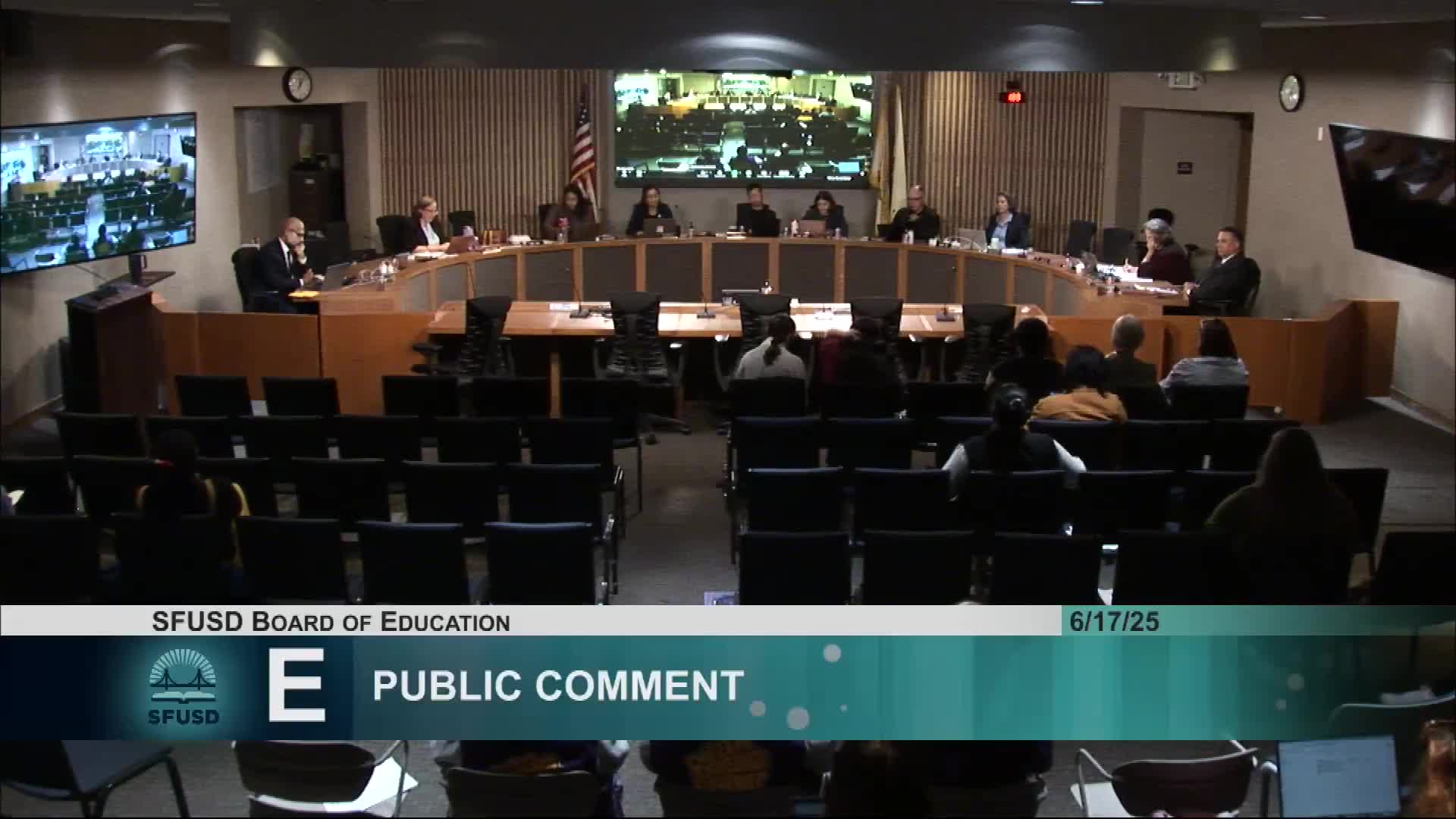
The Local Control and Accountability Plan advisory committee (LCAP) presented four priority recommendations to the San Francisco Board of Education on June 17, asking the district to prioritize staffing stability, mental-health and whole-child supports, targeted academic interventions and culturally responsive professional development.
The committee said persistent teacher and support-staff shortages are driving uneven class coverage and larger combination classes at high-need schools. "Families are especially worried about the growing number of combination classrooms and larger class sizes," LCAP representative Luz Woyanka said, urging measures to "rebuild our staffing pipelines" so paraprofessionals and district staff can earn credentials and remain in SFUSD.
Committee members emphasized early intervention in reading and math, calling for universal screening and rapid tier-2 responses in grades K–2 and the expansion of evidence-based literacy interventions in middle school. The advisory’s early-literacy presenter said in-person screening and one-on-one assessments are critical: "Stop using screen-based assessments for grades K through 2—teach kindergartners how to read with books and not screens," she said.
The LCAP advisory also recommended sustained investment in school-based wellness staff, consistent multi-tiered behavioral health systems, and wellness centers at secondary schools. On cultural responsiveness the committee urged standardized districtwide training developed with parents and community partners and greater alignment of advisory resources.
Superintendent Hsu and staff told the board they will present formal district responses to the LCAP recommendations at next week's meeting.
Why it matters: The LCAP guides how state LCFF funds are spent on SFUSD’s highest-need students. The advisory’s recommendations focus on operational and program changes that would affect hiring, professional development and how early-literacy progress is measured and remediated across the district.
What’s next: Staff will submit a formal response at the board’s next meeting and will show how LCAP priorities map to the superintendent’s proposed budget for 2025–26.