Get Full Government Meeting Transcripts, Videos, & Alerts Forever!
Get email alerts on the Overdose Prevention topic
No spam. Unsubscribe anytime.
Toledo health officials report drop in opioid deaths, warn prevention funding remains at risk
Summary
Toledo Lucas County Health Department described declines in opioid fatalities and outlined harm-reduction programs—including naloxone distribution, vending machines and a syringe service program—while urging continued funding and transparency for opioid settlement and state dollars.
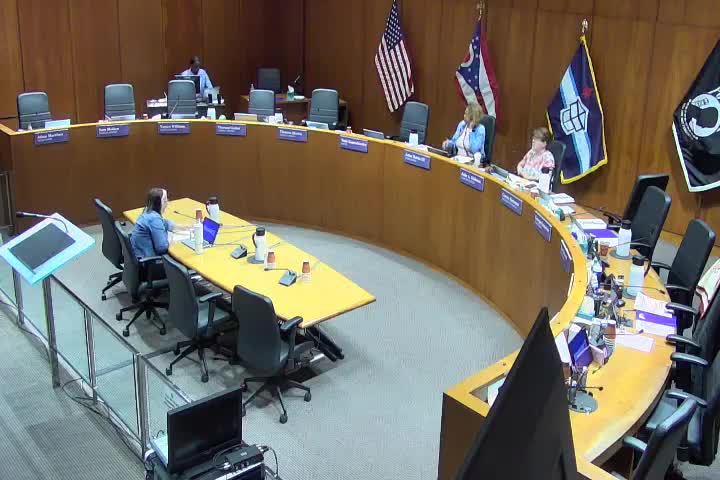
Majh Berryman, supervisor of injury prevention at the Toledo Lucas County Health Department, told the Toledo City Council Public Safety and Criminal Justice Reform Committee on June 18 that opioid-related fatalities in Lucas County declined to 159 in 2024, a drop from 2023 and nearly 50% lower than 2020.
Berryman said the department partners with the Lucas County Coroner's Office to analyze overdose deaths and previously convened an overdose fatality review (OFR) to identify gaps in the community system of care. "While we've seen encouraging reductions in substances like cocaine, alcohol, and the illicitly made fentanyl, there are still threats that emerge every day," she said, citing emerging sedatives such as xylazine and rising stimulant-involved deaths.
The health department described several active harm-reduction efforts that it says help reduce fatalities and guide strategy. In the past year the department distributed more than 18,000 naloxone kits and documented just shy of 2,000 reported overdose reversals. The department operates a mobile naloxone unit for targeted distribution, eight harm-reduction vending machines with plans to add three more, and offers “nalox boxes” for partners and a mail-order naloxone program that ships statewide. Berryman said the department also completed more than 300 organized overdose-education and naloxone trainings in 2024.
"Naloxone is simple, safe, and legal," Berryman said. "The only job that naloxone has is blocking opioids from attaching to the opioid receptors on the brain to reverse an overdose and restore breathing." She noted the department receives naloxone through Project DAWN and that Toledo Fire and Rescue also uses kits supplied through that program.
Berryman highlighted the Northwest Ohio Safe Services syringe program (NOS), which opened in August 2017 and provides anonymous, needs-based syringe access, testing for HIV, hepatitis C and syphilis, and linkage to care. NOS, she said, serves hundreds of individuals monthly and uses text alerts to warn the community of increased overdose activity.
Committee members asked how long naloxone remains effective and under what circumstances it should be used. "It's so critical to give naloxone the minute you see someone who is unconscious," Berryman replied, adding that earlier administration increases the chance of successful reversal.
Both committee members and health department staff raised concerns about near-term funding. Berryman and a county representative said they are watching federal and state budget actions closely and that some proposed budget language addresses treatment but omits explicit references to overdose prevention and harm reduction. "I always fear [Project DAWN] could be on the table for removal," Berryman said, noting the practical implications if the department had to buy the volume of kits it currently receives from the state.
Why it matters: Committee members and health officials said continued funding and transparency—particularly for opioid settlement dollars—are critical to sustain naloxone distribution, syringe services and other interventions that health officials attribute to declining overdose deaths. The department urged the committee to keep harm-reduction funding on the public-safety radar as budget decisions unfold.
Ending: Berryman encouraged collaboration and data sharing, pointing to the Lucas County Substance Use Response Coalition (formerly the Opiate Coalition) and upcoming community events: the coalition meets Aug. 6 at the Lucas County EMS Building, and the Chalk the Walk memorial ceremony will be Sept. 13 at Promenade. She closed by thanking the committee for the opportunity to present.