Get email alerts on the Parking And Transportation topic
No spam. Unsubscribe anytime.
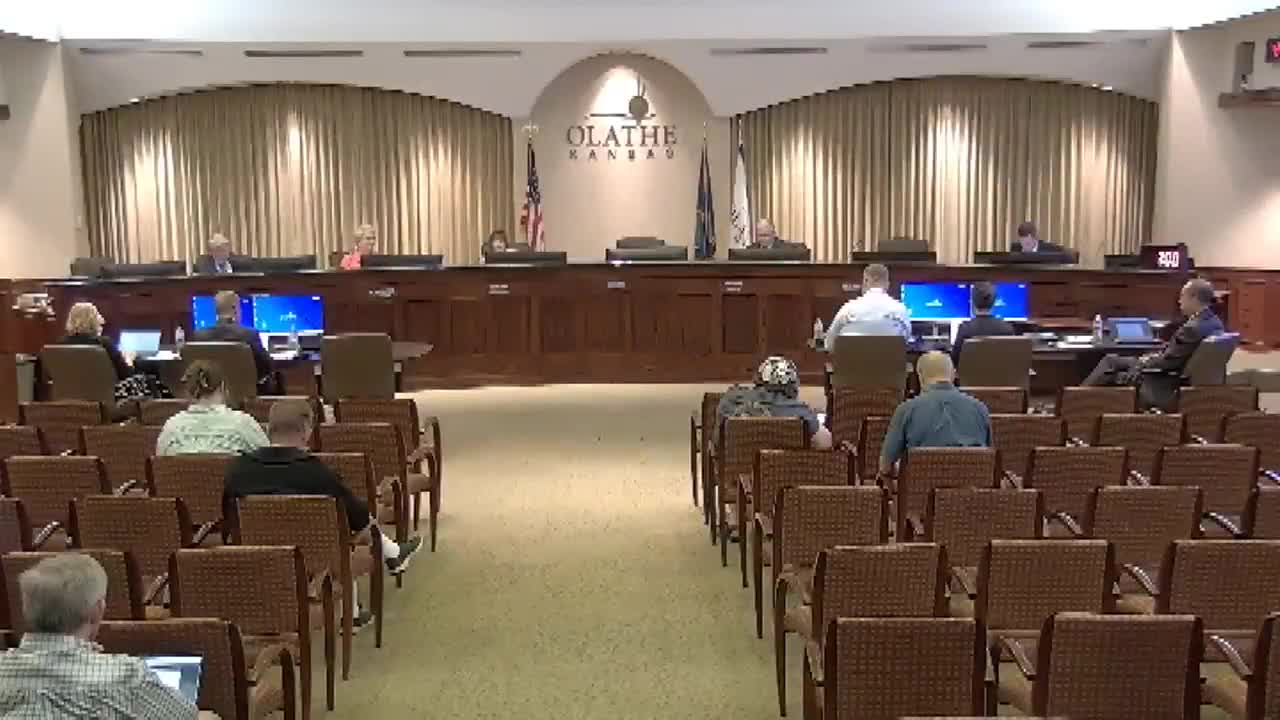
Olathe council approves MOU with Johnson County and authorizes City Hall parking garage project
Summary
The Olathe City Council on June 17 approved an interlocal agreement with Johnson County and authorized a roughly $22.5 million City Hall parking garage project intended to add about 225 net new spaces downtown; the council and staff said a design-build RFQ will follow and the county will contribute $11 million.
The Olathe City Council on Tuesday approved an interlocal cooperative agreement with Johnson County and authorized the City Hall parking garage project, a downtown parking structure the city estimates will cost about $22,500,000 and add roughly 225 net new parking spaces.
The council voted 5-0 to approve the interlocal agreement and, separately, to authorize the project. The county approved its portion of the agreement June 5 and is committing $11,000,000 toward the work, city staff said.
City staff said the project responds to a long-running downtown parking shortfall identified in updated consultant work by Walker Consultants. Deputy Director of Infrastructure Zach Hardy told the council the “proposed project has about 380 total parking spaces with about 225 net new parking spaces if approved,” and that the team plans to issue a design-build RFQ in July and return to council with a recommended award likely in October.
Why it matters: Council members and staff said the garage is intended to support the county courthouse, City Hall, the library and downtown development north of Santa Fe Street. Council members pressed staff for more detail about alternatives, cost per space, construction impacts and aesthetics before design is finalized.
Key project details - Draft budget presented to council: $22,500,000 (includes two years of inflation and additional project costs) - County cost share: $11,000,000 (per MOU) - Estimated total stalls: about 379–380 - Estimated net new stalls: about 225 (staff noted earlier consultant alternatives ranged from about 155 to 370 net new, depending on layout) - Structure: three levels, ~128,000 sq. ft.; design-build procurement planned; timeline estimate by consultant: 14–18 months construction, target opening mid‑summer 2027 if schedule holds - Project code: PN6-CD-003-25
During discussion, council members raised cost and scope questions. Infrastructure Director Mary Yeager said Walker used about $40,000 per parking space as a baseline for the alternatives and that when aesthetics, security and technology are added the per‑space estimate grows to a $45,000–$49,000 range. Yeager said the earlier 2024 capital improvement program included a $30,000,000 figure; staff later revised estimates as the consultant updated assumptions.
Councilmember Dean Felter pressed staff about the structure’s footprint and asked staff to consider acquiring adjacent properties rather than siting the garage immediately up to existing front yards: “I just don't like the idea of a big 3 story garage going right up into the front yard of 3 existing homes which are historic and have been there a long time,” he said, asking staff to study options to move the footprint north or otherwise reduce impacts on existing homes.
Councilmember Ron Gilmore asked whether the council was ready to approve the MOU and move forward with procurement. City staff said approval authorizes the RFQ and committee process; the city will own and operate the garage after construction and the MOU gives the county a seat on the project committee.
Design and procurement issues Staff emphasized the RFQ/design-build stage will refine many open issues, including: - construction method (cast-in-place concrete versus precast, which has different durability, aesthetics and cost tradeoffs); - ADA capacity and how the facility will serve courthouse and City Hall users (the MOU requires staff-to-staff review with the county on ADA parking every two years); - EV charging infrastructure, including conduit for future expansion and the possibility of DC fast charging if cost and partners support it; - site staging and short-term parking impacts during construction.
Deputy Director Hardy said the Walker study provided a range of six alternatives (labelled A–F), noting Alternative A would have produced about 524 total spaces (370 net new) and Alternative E about 279 total (155 net new); staff selected an option within the middle of that range after accounting for expected near‑term downtown projects.
Next steps If council’s authorization stands, staff will issue an RFQ in July and form a joint city–county selection committee. Staff said they expect to return to council with a recommended design-build award later in the year and bring preliminary designs to the council for review before construction begins.
Votes and formal actions - Interlocal cooperative agreement with Johnson County for design and construction of expanded and new parking facilities in downtown Olathe (approved 5‑0) - Resolution authorizing the City Hall parking garage project PN6‑CD‑003‑25 (approved 5‑0)
Ending Council members repeatedly said they wanted the final design to be high quality and complementary to the courthouse and library architecture; several asked staff to study whether additional lands to the north could be incorporated to increase capacity and reduce impacts on nearby homes. The city will move to procurement and return with a recommended design‑build team and preliminary designs for further council review.