Get Full Government Meeting Transcripts, Videos, & Alerts Forever!
Get email alerts on the Public Comment Hate Speech topic
No spam. Unsubscribe anytime.
Jewish residents and allies tell Loudoun supervisors to condemn antisemitic rhetoric at board meetings
Summary
Dozens of public commenters urged the Board of Supervisors to denounce antisemitic speech they said has dominated limited public‑comment time and to change rules to keep meetings focused on county business; board members expressed differing responses.
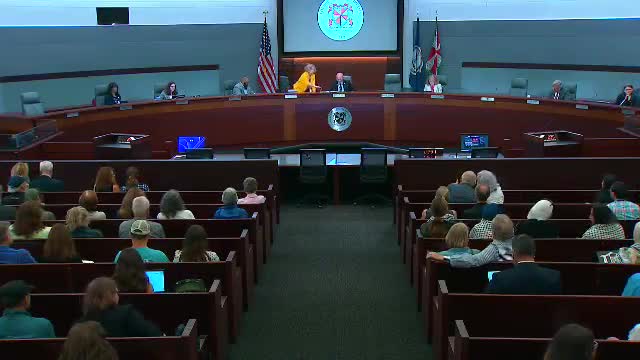
Scores of residents used the meeting’s public‑comment slot to press the Board of Supervisors to speak out against antisemitic rhetoric that many speakers said has become common in the chamber.
“Week after week, anti‑Israel speakers have used this public forum to spread hateful, inflammatory rhetoric,” said one commenter. Multiple speakers told the board that comments using phrases they described as antisemitic have escalated into threats and violence elsewhere and have made Jewish constituents afraid to attend meetings or to speak publicly.
Why it matters: Commenters said the recurring rhetoric has real‑world effects: they cited recent violent incidents in Washington, D.C., and Boulder, Colo., and described local intimidation, vandalism at schools and threats linked by speakers to anti‑Jewish language used in earlier public comments. Many asked the board to adopt stronger rules or a formal, public condemnation of antisemitism.
What commenters asked for: Requests included an unequivocal board statement condemning antisemitism; stricter enforcement of public‑comment rules to keep remarks focused on county business; and protections for residents who say they have been harassed or intimidated. Several speakers said they represented Loudoun Jewish organizations and noted recent guidance from Loudoun County Public Schools about anti‑Semitic incidents in schools.
Board reaction: Several supervisors told speakers they supported a clear condemnation of hate. Others urged the public to keep comments focused on local issues and suggested the board consider rule changes to limit public‑comment time or require comments to be relevant to county business. Multiple supervisors acknowledged the tension between free speech and the need to prevent intimidation and the spread of hateful rhetoric.
Public‑meeting context: The board’s rules limit public comment to 2½ minutes per speaker and the public‑comment session was capped at 90 minutes; several speakers said limited slots have been used repeatedly by those discussing the Israeli‑Palestinian conflict rather than local zoning, transportation or school issues.
Bottom line: Commenters asked the board to act publicly against antisemitism and to change public‑comment procedures if necessary. The board did not adopt a formal policy or resolution on the issue during the meeting; several members said they would consider follow‑up steps and that county staff and legal counsel would advise on options.