Get Full Government Meeting Transcripts, Videos, & Alerts Forever!
Get email alerts on the Parklet Ordinance topic
No spam. Unsubscribe anytime.
Planning Commission backs amendment to Mount Shasta parklet rules, sends ordinance to council
Summary
The Mount Shasta Planning Commission voted unanimously to recommend the City Council amend Municipal Code chapter 19.03 to add design permanence and character standards for parklets, and found the action is not a CEQA project.
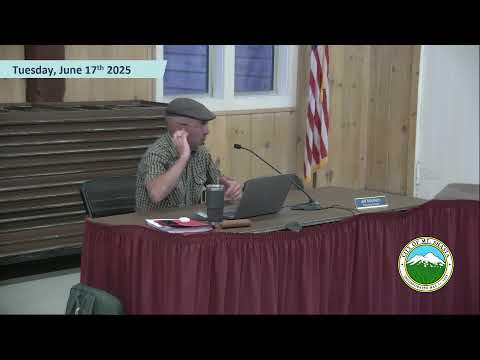
The Mount Shasta Planning Commission voted unanimously on June 17 to recommend that the City Council adopt changes to the city's parklet ordinance that add design-permanence and character standards and to find the action is not a project under the California Environmental Quality Act. Planning Commissioner Belinda Hagera moved the resolution; it was seconded by Commissioner Alan Pardee and carried without opposition.
The vote follows a public hearing and detailed staff presentation on a narrow amendment to Mount Shasta Municipal Code chapter 19.03 (Parklet Dining). Planning staff asked the commission to limit the amendment to one new item (referred to in the staff report as "item X") that addresses construction materials and techniques, vicinity design context and coherent design character. "All the other components of that existing park ordinance under this action will remain the same. We are only adding item X," planning staff said during the hearing.
Why it matters: staff told commissioners the change is intended to ensure parklets advance downtown aesthetics and long-term durability rather than degrade the streetscape, and to give the city clearer grounds to require applicants to use more permanent construction where appropriate.
During deliberations commissioners focused on design clarity and enforcement. Commissioners asked whether existing parklets would be required to meet the new standards immediately or at permit renewal; staff said current permits are issued annually and that any changes would be implemented when permits come up for renewal. Commissioners also pressed for examples and objective references applicants could be required to meet. The planner recommended citing existing nearby public or building elements as examples and holding applicants to those references.
Staff detailed several elements the amendment is intended to clarify or enable: specification of high-quality materials ("masonry, heavy timber, cast iron or steel frames"), requirement that barriers be vehicle-rated or otherwise sufficient to protect parklet users at posted speeds, and routine maintenance requirements already present in the ordinance. Commissioners suggested the city could develop preapproved plan options and stronger direction about barrier treatments (concrete planters, boulders, steel) rather than allowing ungainly concrete blocks.
The motion approved by the commission directed city staff to transmit the commission's resolution (PC 25-01) to the City Council for two readings; the resolution includes a CEQA finding that the action "fails to meet the definition of a project" and therefore is not subject to CEQA review and an attached ordinance amendment as an exhibit.
Commissioners received and accepted a staff response to a written public comment from Dayla Forrest; no members of the public addressed the commission during the hearing on this item.
The commission's action will be placed on the City Council docket for two readings; if the council adopts the amendment it will take effect 30 days after adoption, staff said.
"The goal here is to make sure these parklets ... improve the downtown aesthetic and not degrade it," one commissioner said during the discussion.
Ending: The Planning Commission approved the recommendation unanimously and transmitted resolution PC 25-01 to the City Council. The council will consider the amendment in two readings; staff will notify existing permittees about the timing for compliance and renewals.