Get Full Government Meeting Transcripts, Videos, & Alerts Forever!
Get email alerts on the Economic Development topic
No spam. Unsubscribe anytime.
EDC and Canon present options for Fulshear Fast Track; council debates cost and measures of success
Summary
The Economic Development Corporation and The Cannon reported progress on the Fulshear Fast Track entrepreneur program and offered three options for year‑three support. EDC recommended a tapered contract with The Cannon; councilmembers expressed concerns about measurable ROI and requested clearer success metrics before committing more funds.
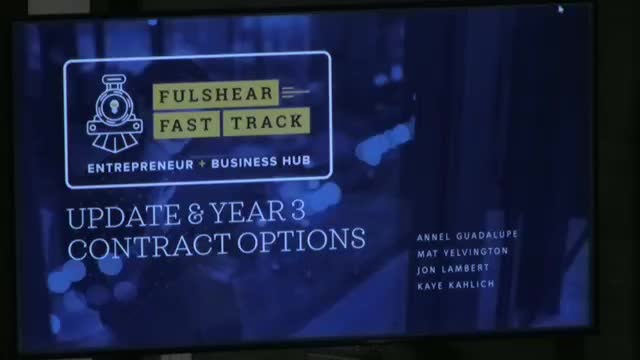
Fulshear’s Economic Development Corporation (EDC) presented a midterm report and options for year‑three of the Fulshear Fast Track entrepreneurial program at the June 17 council meeting. The Cannon (startup incubator operator) summarized program metrics and proposed three contract options; the EDC advisory board recommended Option 3, which would taper The Cannon’s direct role while building EDC staff capacity.
Program update: EDC staff reported that the Fast Track program hosted 11 entrepreneur events in 2025 with average attendance near 9–10 people and that membership stood near 143. The program has run investor gatherings, workshops (including an AI event) and a home‑business accelerator. The EDC said it is working to connect local investors to startups and to engage high school students in entrepreneurship events.
Options for year 3: The Cannon outlined three options: (1) continue the original phased contract ramping up to greater support; (2) transition responsibilities to a new full‑time EDC staff position while The Cannon provides a limited handover; (3) The Cannon provides part‑time ongoing support while the EDC hires an in‑house lead. The EDC staff proposed a fourth option to pause renewal and carry selected programming in‑house with existing staff.
Board recommendation and council reaction: The EDC Type A board favored Option 3 (Cannon part‑time support with in‑house lead). Councilmembers raised questions about measurable returns: how many new taxable businesses have been created, whether the program generated sales tax or created jobs, and what counts as success. Some councilmembers said the city already funds community events and questioned whether $200,000 per year in program funding—an amount the EDC has used to run the program—was justified without clearer financial return metrics.
EDC and Cannon responses: The Cannon’s CEO said culture and community building are long‑term investments and that some returns (company formation, investor networks, later‑stage revenue) take multiple years to materialize. EDC leaders noted the program has contributed to small business support and help for entrepreneurs who otherwise lack access to mentorship, investor introductions and tailored programming.
Next steps: Councilmembers asked staff and the EDC to bring clearer performance metrics and financial projections to the July budget discussion. Several councilmembers expressed support for continuing the program with refined success measures; others favored pausing the contract to reset goals and metrics.
Speakers quoted in this article include EDC staff, The Cannon representatives and members of the EDC advisory boards; discussion occurred during the presentation and the budget‑planning portion of the June 17 meeting.