Get Full Government Meeting Transcripts, Videos, & Alerts Forever!
Get email alerts on the Transportation Infrastructure topic
No spam. Unsubscribe anytime.
Highway 36A coalition presses long‑term plan for north‑south freight corridor
Summary
A regional coalition advocating a new Highway 36A alternative route presented a decades‑long route study and environmental review plan to Fulshear council on June 17, describing proposed alignments, anchor crossings and a multi‑county approach to move freight and relieve local roads.
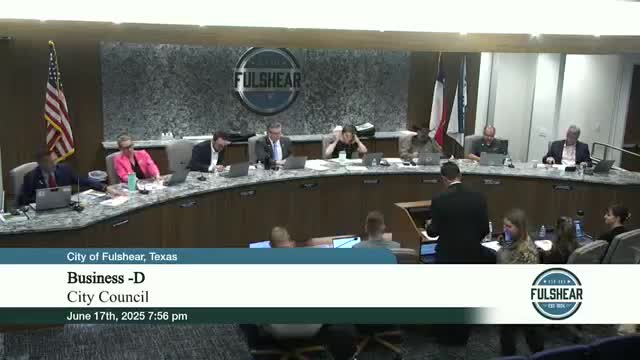
Representatives of the Highway 36A coalition briefed the Fulshear City Council on June 17 about a long‑range plan to develop an alternative north‑south freight corridor — informally called Highway 36A — intended to divert through‑freight from local roads and provide hurricane evacuation relief.
Overview and study status: The coalition described the corridor concept as a multi‑county effort linking Brazoria, Fort Bend and Waller counties and connecting the Port of Freeport to I‑10 and Highway 290. TxDOT has engaged consultants and bifurcated the route‑study area into southern and northern segments; the coalition said the southern segment is roughly a year ahead in the study process. TxDOT will conduct route and environmental studies with public engagement meetings planned through the study timeline.
Proposed alignments and anchor points: Presenters described potential anchor crossings at Woods Road (I‑10) and James Muse Parkway (Highway 290) and said the route would likely follow the west side of Needville and continue north to intersect I‑10 near existing freight nodes. Coalition members stressed the project’s freight‑mobility, economic and hurricane‑evacuation benefits and said TxDOT is exploring corridor widths of roughly 400–450 feet to preserve right‑of‑way.
Local implications raised by council: Councilmembers asked whether the corridor would use existing highways or require bypasses, where crossings would be anchored near Fulshear and Simonton, and whether future development could preclude the corridor. Presenters said the route would generally avoid running through city cores when possible and that TxDOT is studying multiple alignments; they urged residents to attend upcoming TxDOT public meetings and review the project website (TxDOT Highway 36A) to provide input.
Why it matters: The coalition argued the corridor would ease heavy truck traffic on FM 359/362 and reduce congestion on local roads while supporting freight‑dependent economic growth tied to the Port of Freeport. The route study and environmental review processes will determine final alignments and potential impacts to local properties.
Next steps: TxDOT‑led studies will hold public engagement meetings; the coalition encouraged residents and officials to monitor the TxDOT project web page and participate in public input opportunities.