Get Full Government Meeting Transcripts, Videos, & Alerts Forever!
Get email alerts on the Signage Codes topic
No spam. Unsubscribe anytime.
Parents, principals and residents debate LED marquees in Fulshear public hearing
Summary
At public hearings on proposed amendments to Articles 2 and 3 of Fulshear’s Coordinated Development Ordinance, residents argued LED electronic marquees would harm the city’s character while school officials said digital signs would improve real‑time communication with families.
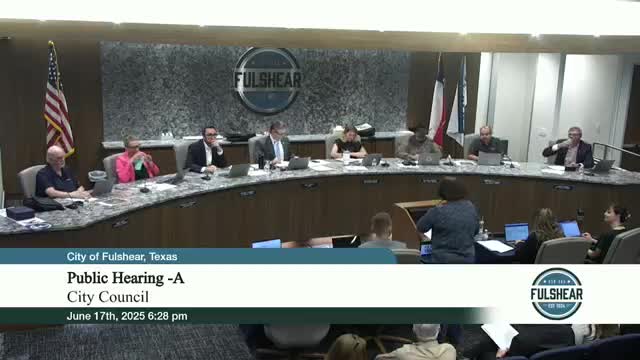
Fulshear residents and school officials debated whether to allow LED electronic marquees on school campuses during a June 17 public hearing over proposed amendments to Articles 2 and 3 of the Coordinated Development Ordinance (CDO).
Why it matters: The proposed change would allow electronic/digital signs in certain circumstances. Supporters said marquees improve timely communication with families and staff; opponents said they are a safety distraction, harm “sense of place,” and that allowing them for schools would legally force the city to open them to other entities.
What speakers said: Kaye Kolick, a Fulshear resident and CDO committee participant, summarized legal limits on message‑based regulation and cited Reed v. Town of Gilbert (U.S. Supreme Court, 2015) to explain why a city cannot regulate signs based on message. Kolick said prior advisory committees and consultants consistently advised against LED signs, arguing they lead to proliferation, light pollution and driver distraction.
Michelle Gascamp, principal of Greenbelt Elementary, told council a digital marquee would allow the school to deliver timely safety notices and event updates. She said the current manual marquee is outdated and that digital signs would improve school‑to‑home communications and family engagement.
Council discussion and requests: Multiple speakers, including a member of the Planning & Zoning Commission, said the original intent discussed in P&Z was to limit any electronic signage to schools only, but warned that legal limits on content‑based sign restrictions could prevent such a narrow allowance. Council members asked staff to provide clearer legal analysis and to specify precise restrictions (size, hours, brightness, permitted locations) before adopting CDO changes.
Outcome and next steps: Council opened and then closed the public hearing and later postponed action on the CDO amendments until the July 1 meeting to allow legal review and clearer draft language about permitted signage. Speakers on both sides of the issue asked the city to clarify whether any allowance would be limited to school properties and, if so, how that limitation would be enforced under state and federal law.
Speakers quoted in this article addressed the public hearing portion of the June 17 meeting.