Get Full Government Meeting Transcripts, Videos, & Alerts Forever!
Get email alerts on the Conflict Related Sexual Violence topic
No spam. Unsubscribe anytime.
UN speakers call for funding, accountability to halt intergenerational harm from conflict-related sexual violence
Summary
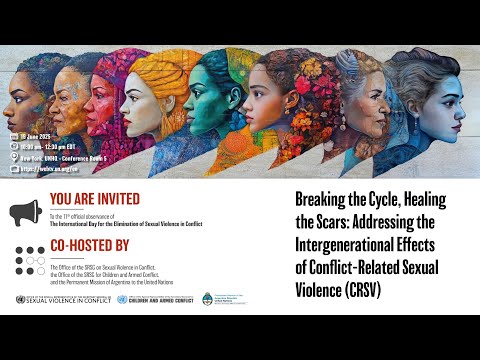
United Nations officials, survivor advocates and member-state representatives at an event marking the International Day for the Elimination of Conflict‑Related Sexual Violence urged more funding, survivor‑centered services and stronger accountability to prevent harm that stretches across generations.
United Nations officials and civil‑society leaders on [the commemoration day] said the international community must match words with resources and legal action to stop conflict‑related sexual violence and the intergenerational trauma it causes.
Pramila Patten, the Special Representative of the U.N. Secretary‑General on Conflict‑Related Sexual Violence, opened the event by saying the crime is “the most enduring tactic of war” and adding that “trauma has no expiry date.” Patten and other speakers described rising verified cases, chronic undercounting, and persistent gaps in survivor services and accountability.
The gathering, co‑hosted by Argentina’s Permanent Mission to the United Nations, brought statements from U.N. officials, survivor representatives and more than two dozen member states. Speakers highlighted long‑term consequences for survivors and their families — including physical and psychological injury, economic exclusion, stigma and risks faced by children born of sexual violence in conflict — and called for sustained, coordinated responses.
“The implementation gap is, in reality, a funding and access gap,” Patten said, urging replenishment of the conflict‑related sexual violence (CRSV) multi‑partner trust fund that supports operational work on the issue. Virginia Gamba, Under‑Secretary‑General and Special Representative for Children and Armed Conflict, emphasized that children are also victims and witnesses and called for their inclusion in reparations, services and peace processes.
U.N. reporting cited at the event said the secretary‑general’s annual compilation recorded more than 4,500 U.N.‑verified cases across 21 country situations — a 20 percent increase from 2023 — and noted that over 90 percent of victims are women and girls. Panelists cautioned that U.N. figures likely undercount the true scale because many survivors never reach clinics or courts.
Survivor testimonies and partner videos were central to the commemoration. A video statement by the Abuelas (grandmothers) of the Sepur Sákar case in Guatemala was presented, describing a national court conviction for crimes that included sexual slavery and the grant of collective reparation measures. Speakers also included civil‑society activists and youth advocates who urged survivor leadership, gender‑sensitive long‑term psychosocial care, economic empowerment and legal reform.
Member states used their floor time to announce funding commitments, program examples and policy positions. Several delegations highlighted support for interagency coordination through UN Action against Sexual Violence in Conflict, training for law enforcement and judiciary actors, targeted sanctions or prosecutions for perpetrators, and investments in survivor‑led organizations. Multiple speakers urged that at least 2 percent of humanitarian and crisis response aid be allocated to gender‑based‑violence prevention and response.
Speakers also stressed the connection between impunity and recurrence. Several delegations urged stronger national legal frameworks, better documentation and cooperation with international investigators and prosecutors. France, Lithuania and others referred to the U.N. team of experts and to efforts to build prosecutor and judge networks; Ukraine described national efforts to register CRSV cases and to create survivor support legislation despite ongoing hostilities.
Panelists repeatedly warned that cuts to humanitarian funding threaten lifesaving CRSV services. “Thousands of survivors will lose access to medical care, psychological support, shelter, and legal redress,” Patten said. Advocates at the event urged donors to prioritize sustained core funding for local women‑led organizations and trauma‑informed services.
The commemoration concluded with a call for survivor‑centered, trauma‑informed approaches that include accountability, restoration and measures to prevent the transmission of trauma across generations. Several delegations invited colleagues to follow‑up events and side sessions to advance operational and legal cooperation.